Phase 4: First Assessment &Feasibility Report
Design, Upgrading, and Preparation of Nine (9) Forestry Nurseries
Uzbekistan Resilient Landscapes Restoration Project (RESILAND CA)
Report Title:
Dargom Forest Nursery
First Assessment &Feasibility Report

Prepared by:
İsmail Belen
International Consultant – Forestry Nursery Design and Preparation
Date: 6 March 2026
1. Introduction, Context and Policy Framework 4
1.2 Alignment with the Uzbekistan–2030 Strategy and National Environmental Priorities 5
1.3 District Context: District Context: Dargʻom (Dargham), Samarkand Region 6
1.3.1. Administrative Position 7
1.3.2. Distance to Major Centers 9
1.3.3. Surrounding Settlements 9
1.3.4 Landscape and Agro-Ecological Context 10
1.3.5 Strategic Position within the Regional Ecological Framework 11
1.3.6 Functional Implications for Nursery Development 11
1.4 Field Mission and Site Assessment Findings – Dargʻom (Dargham) Nursery 11
1.4.1 Visit to the Dargʻom (Dargham)Nursery 11
1.4.2. Observation and Strategic Assessment 12
1.4.3 Water Resources and Hydrogeological Feasibility 14
1.4.4 Energy Infrastructure and Accessibility 15
1.4.5 Integrated Strategic Conclusion of the Field Assessment 16
1.5. Conclusion of First Assessment &Feasibility Report 17
Introduction
This First Assessment & Feasibility Report is prepared for Dargʻom Ko‘chatcilikka Ixtisoslashgan Davlat O‘rmon Ishlab Chiqarish Korxonasi (Dargom Specialized State Forest Seedling Production Enterprise) in line with the “Technical Disposition for the Design, Upgrading, and Preparation of Forest Nurseries in Uzbekistan (RESILAND CA Nursery Framework – RNF).”
Hereinafter, Dargʻom Ko‘chatcilikka Ixtisoslashgan Davlat O‘rmon Ishlab Chiqarish Korxonasi (Dargom Specialized State Forest Seedling Production Enterprise) will be referred to as “Dargom Nursery.”
The report has been developed as an integral component of the consultancy services under Contract No. LRP/IC/08, titled “International Consultant to Provide Technical Expertise for the Design, Upgrading, and Preparation of Nine (9) Forestry Nurseries.”
To this end, Mr. İsmail Belen, International Consultant, visited the Dargom Nursery located in Tayloq District (Tayloq tumani) of Samarkand Region, on 4 February 2026 and subsequently finalized this First Assessment & Feasibility Report in line with the contractual scope and in close cooperation with the authorities of the Agency for Expanding Forests and Green Areas and Combating Desertification (O‘rmonlar va Yashil Hududlarni Kengaytirish hamda Cho‘llanishga Qarshi Kurashish Agentligi).
With the completion of this report, Phase 4 – Assessment & Feasibility (First Assessment & Feasibility Report) for Pastdargʻom Nursery has been concluded. Subject to the approval of RESILAND CA+ PIU, the project will proceed to the subsequent phases:
- Phase 5 – Nursery Design: Detailed Nursery Designs
- Phase 6 – Technical Specifications & BoQ: Technical Specifications & BoQ
- Phase 7 – Validation & Training: Second Field Visit – Validation & Training
1. Introduction, Context and Policy Framework
1.1 Strategic Positioning of the Dargʻom Ko‘chatcilikka Ixtisoslashgan Davlat O‘rmon Ishlab Chiqarish Korxonasi within RESILAND CA+
The Dargʻom Ko‘chatcilikka Ixtisoslashgan Davlat O‘rmon Ishlab Chiqarish Korxonasi (Dargom Specialized State Forest Seedling Production Enterprise) is one of the nine (9) priority state forestry nurseries selected under the Uzbekistan Resilient Landscapes Restoration Project (RESILAND CA+).
As an existing and operational state forestry production enterprise, its inclusion among the nine target nurseries reflects its strategic importance in strengthening Uzbekistan’s capacity to supply consistent, high-quality, and climate-resilient planting material. Rather than representing a greenfield investment, the enterprise constitutes an established production base whose modernization and capacity enhancement directly address one of the key structural constraints in the national restoration agenda: insufficient and uneven availability of certified, site-adapted planting stock.
Under RESILAND CA+, nurseries are not treated as auxiliary facilities supporting isolated planting campaigns. They are conceived as core public production infrastructure forming the biological and operational backbone of large-scale landscape restoration. In this context, the Dargʻom Ko‘chatcilikka Ixtisoslashgan Davlat O‘rmon Ishlab Chiqarish Korxonasi — hereafter referred to as the Dargham / Dargom Nursery — contributes directly to the Project Development Objective (PDO) of bringing 280,000 hectares under sustainable landscape management through sustained regional production capacity and supply reliability.
The nursery’s strategic role aligns with two core project components:
• Sub-component 1.1 – Strengthen Institutions and Policies
Serving as a practical implementation platform for standardizing nursery operations, improving production protocols, strengthening seed quality control and certification systems, and aligning operational practices with evolving forestry legislation and institutional reforms.
• Sub-component 2.1 – Enhance Tree-based Landscape Restoration and Management
Providing site-matched, drought-tolerant, and climate-resilient planting material required for agroforestry systems, reforestation, farmer-managed natural regeneration (FNR), protective forest belts, medicinal plant-based restoration models, and ecosystem service-oriented interventions.
Within the RESILAND CA+ results chain, the Dargham / Dargom Nursery functions as:
• An operational production platform linking policy reform to field-level implementation;
• A risk-reduction mechanism minimizing plantation failure rates through improved quality control and species-site matching;
• A diversification hub integrating ecological restoration with economically valuable medicinal and aromatic plant production;
• A scalable regional production base supporting corridor-based and regionally differentiated landscape restoration strategies.
In strategic terms, the enterprise represents a strengthened and policy-aligned biological asset within Uzbekistan’s long-term restoration framework, contributing to both ecological resilience and sustainable rural development.
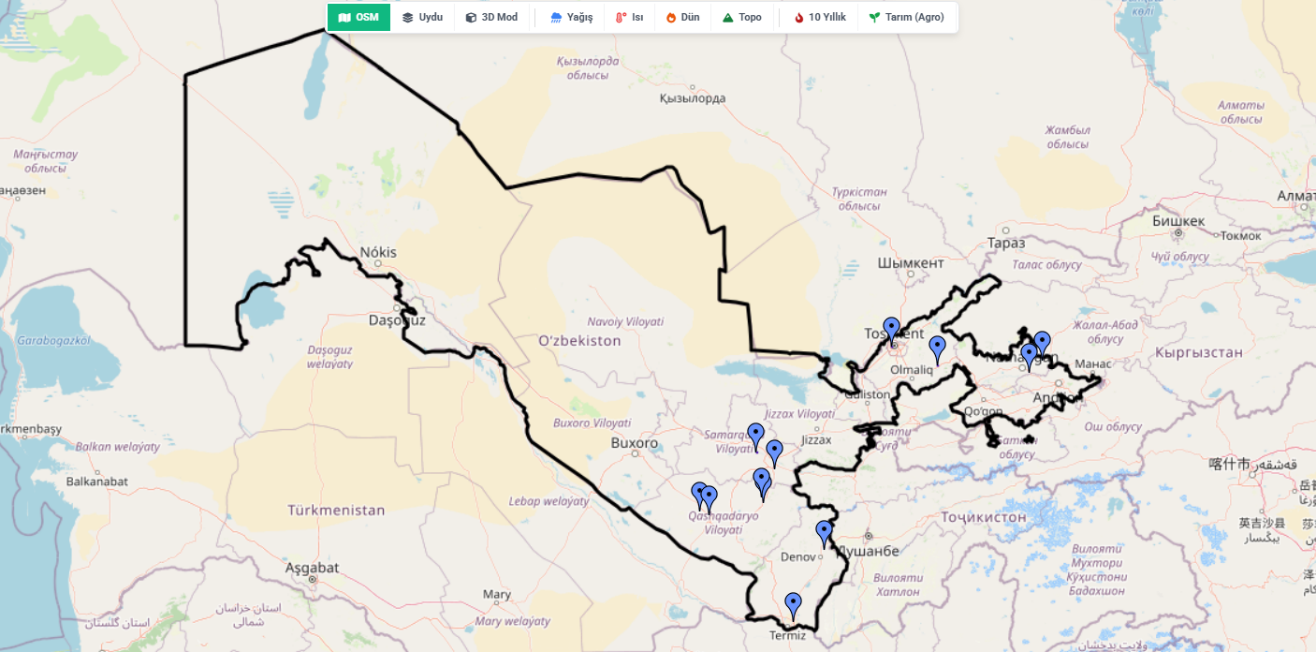
1.2 Alignment with the Uzbekistan–2030 Strategy and National Environmental Priorities
The Uzbekistan–2030 Strategy (Presidential Decree No. UP-158, 11 September 2023) establishes binding national targets under Articles 67–71 related to afforestation, erosion control, biodiversity conservation, climate adaptation, and restoration of degraded landscapes, including the Aral Sea region.
Key quantified national commitments include:
• Planting 200 million seedlings annually;
• Increasing green area coverage to 30%;
• Expanding forest area to 6.1 million hectares;
• Establishing 600,000 hectares of climate-protective green areas;
• Restoring 2.6 million hectares in the Aral Sea region;
• Increasing tree and shrub seed harvesting by 840 tonnes.
The achievement of these targets requires not only political commitment but a permanent, technically robust, and regionally distributed nursery system capable of producing large volumes of diverse, climate-adapted, and quality-certified planting material.
Within this national framework, the Dargham / Dargom Nursery — represents a strategically positioned operational asset in the Samarkand Region. As an existing production enterprise with established plantation areas and structured management, Dargham contributes directly to scaling up seedling output, diversifying species composition, and improving production reliability.
Strengthening the Dargham / Dargom Nursery under RESILAND CA+ therefore supports the Uzbekistan–2030 Strategy by:
• Enhancing regional seedling production capacity aligned with the 200 million annual planting target;
• Expanding the supply of climate-resilient species suitable for erosion control and climate-protective green belts;
• Supporting forest area expansion and degraded land rehabilitation through consistent planting stock availability;
• Contributing to increased seed collection and propagation through improved nursery systems and quality control.
In this context, Dargham functions not merely as a local production site, but as a policy-aligned operational component of Uzbekistan’s national afforestation and climate resilience architecture.
1.3 District Context: District Context: Dargʻom (Dargham), Samarkand Region
The operational production site of the Dargham / Dargom Nursery is located at:
39°32’37.7″N, 67°02’48.8″E
(Decimal: 39.543806, 67.046889)
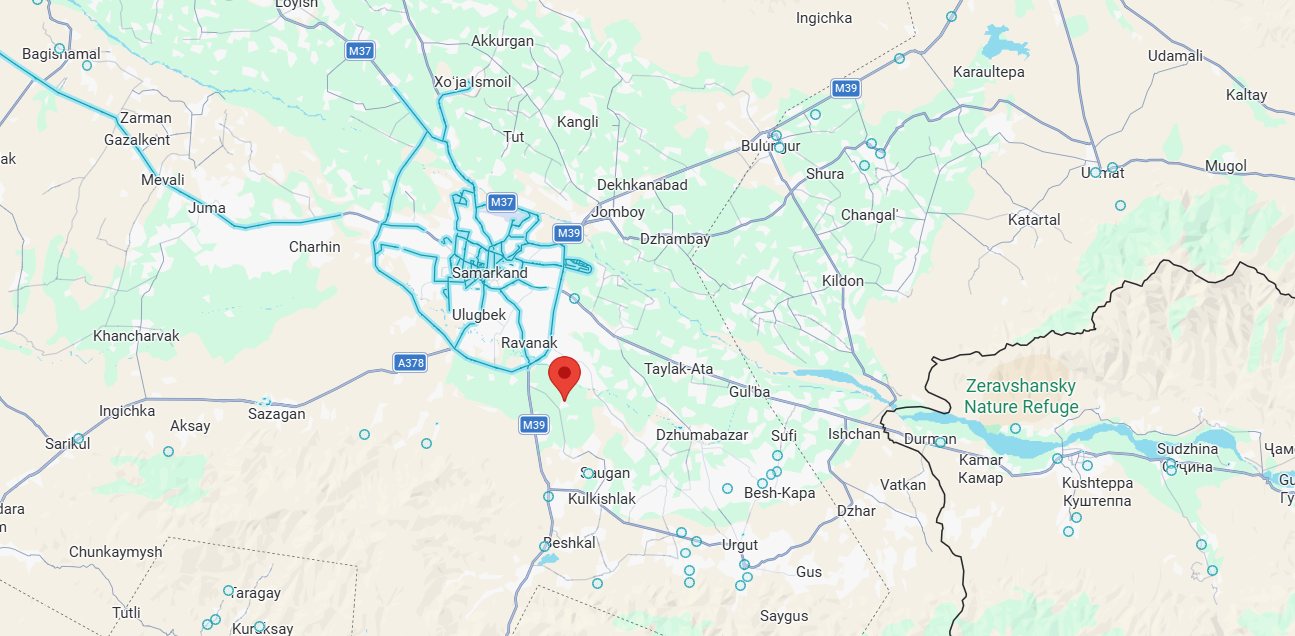
The site lies within the Samarkand Region (Samarqand viloyati) of the Republic of Uzbekistan, in the irrigated agricultural corridor of the Zarafshan River basin.
1.3.1. Administrative Position
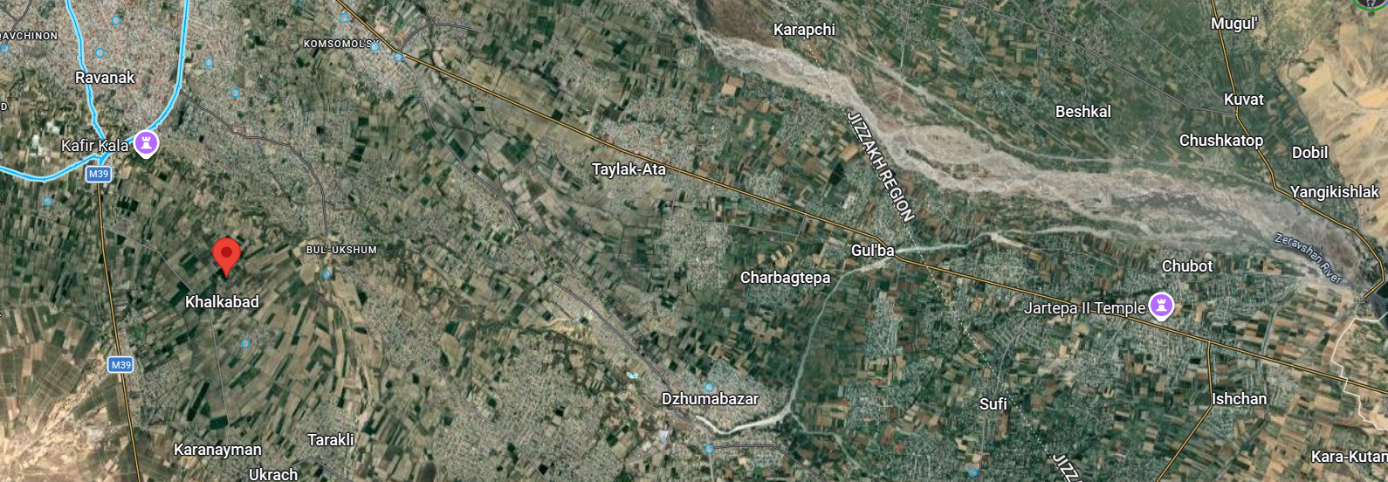
Based on the official administrative dataset corresponding to the provided coordinates and cross-verification with regional boundary layers, the operational site is administratively positioned as follows:
- Country: Republic of Uzbekistan (Oʻzbekiston Respublikasi)
- Region (Viloyat): Samarkand Region (Samarqand viloyati) – Administrative Code: UZ18
- District (Tumani): Tayloq District (Tayloq tumani)
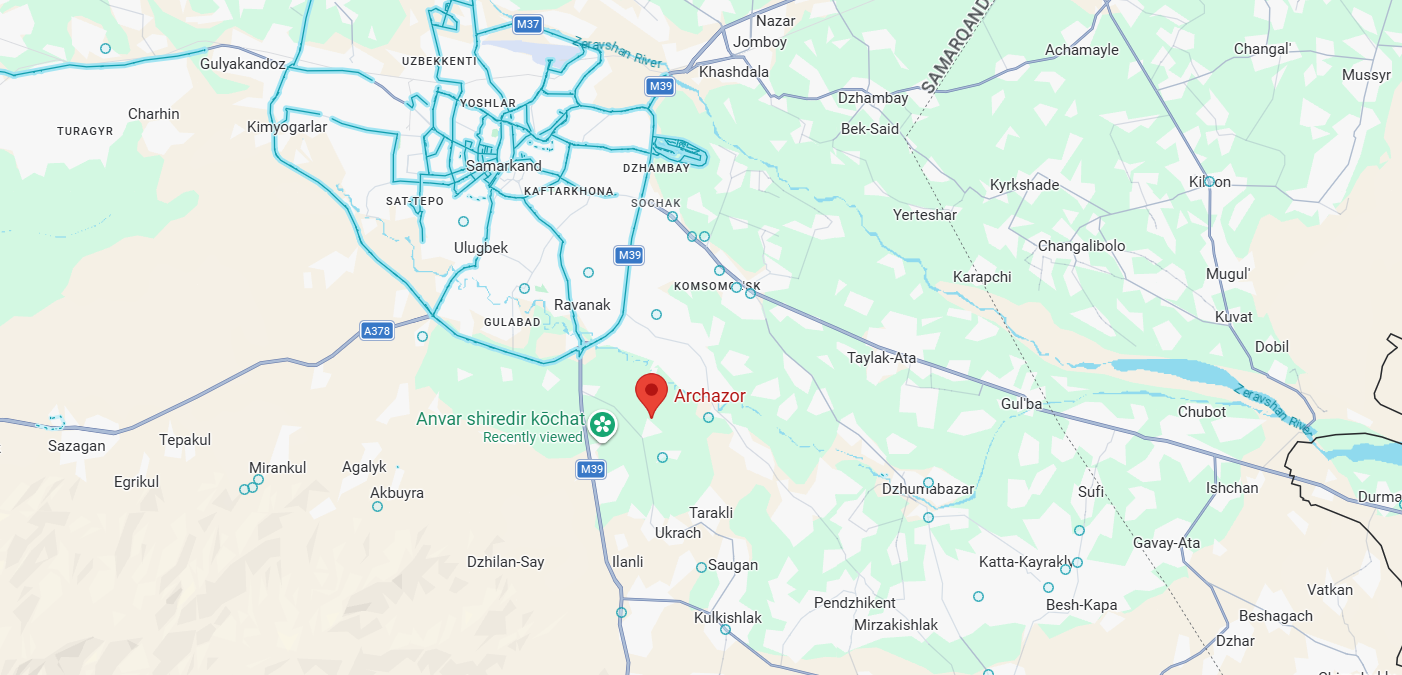
Spatial Context
- The site is situated southeast of Samarkand city center, within the peri-urban agricultural landscape that forms the rural belt surrounding the metropolitan core.
- It lies outside the administrative boundary of Samarkand city (Samarkand sh.), within a rural district jurisdiction (tumani level).
- The surrounding land use pattern is predominantly agricultural, consistent with Tayloq District’s irrigated farming structure.

Geographically, Tayloq District is situated southeast of Samarkand city and lies within the irrigated plains of the Zarafshan River basin. The terrain is predominantly flat to gently undulating, facilitating agricultural production and infrastructure development. The district is fully integrated into the regional irrigation network fed by the Zarafshan River system, which constitutes the backbone of agricultural productivity in the area.
Land use in Tayloq District is dominated by irrigated agriculture. Cotton and wheat remain structurally important crops, complemented by horticulture (vegetables, orchards, vineyards) and small-scale livestock production. The agricultural character of the district implies the presence of established canal systems, groundwater abstraction infrastructure, and agricultural service roads. These factors are operationally relevant for nursery production activities, particularly in terms of water availability, soil suitability, labor access, and logistics.
Climatically, the district falls within a semi-arid continental zone characterized by hot summers, cold winters, and high evapotranspiration rates. Agricultural productivity is therefore irrigation-dependent. Soils are largely alluvial and fertile under controlled irrigation regimes; however, long-term sustainability requires careful management of salinity and drainage.
Any nursery operation located within Tayloq District must incorporate water quality monitoring, soil salinity control measures, and climate-resilient production planning.
From an accessibility perspective, Tayloq District benefits from direct road connections to Samarkand city and integration into the regional transport network. The short transport distance to the regional administrative center enhances institutional coordination, reduces seedling transport time and handling stress, and lowers distribution costs during planting campaigns. Proximity to Samarkand city also provides access to labor markets, technical services, and input suppliers.
Administratively, land allocation and operational oversight fall under the jurisdiction of the Tayloq District hokimiyat (district administration), while sectoral coordination—particularly concerning forestry, water abstraction, and environmental compliance—requires alignment with regional (viloyat-level) authorities and national legislation.
In summary, Tayloq District represents a peri-urban irrigated agricultural district with strong logistical connectivity and established infrastructure. Its geographic and institutional characteristics make it suitable for nursery-based production systems, provided that long-term water governance, soil management, and land-use planning considerations are adequately addressed.
1.3.2. Distance to Major Centers
Approximate distances:
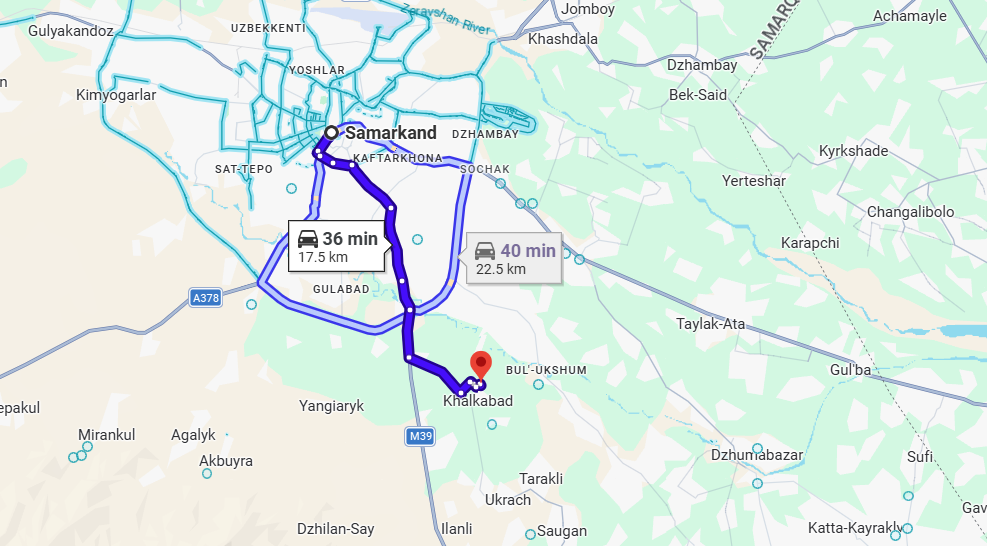
- Samarkand city center: 20–25 km northwest
- Toyloq district center: approximately 7–10 km northeast
- M39 regional highway corridor: within short driving distance
- Zarafshan River corridor: several kilometers to the north
This positioning provides:
- Logistical access to regional markets and administrative services;
- Efficient transportation routes for seedling distribution;
- Proximity to irrigation infrastructure.
1.3.3. Surrounding Settlements
Based on satellite and regional mapping, the nursery site is surrounded by dispersed rural settlements, including:
- Xalqobod (Khalqabad) – located within a few kilometers
- Bulukshum / Bul-Uksum – nearby rural settlement
- Tarakli – southeast direction
- Ukrach – within local transport radius
- Ilanli – agricultural settlement cluster
These settlements form part of a dense irrigated agricultural matrix typical of the Zarafshan lowland plain.
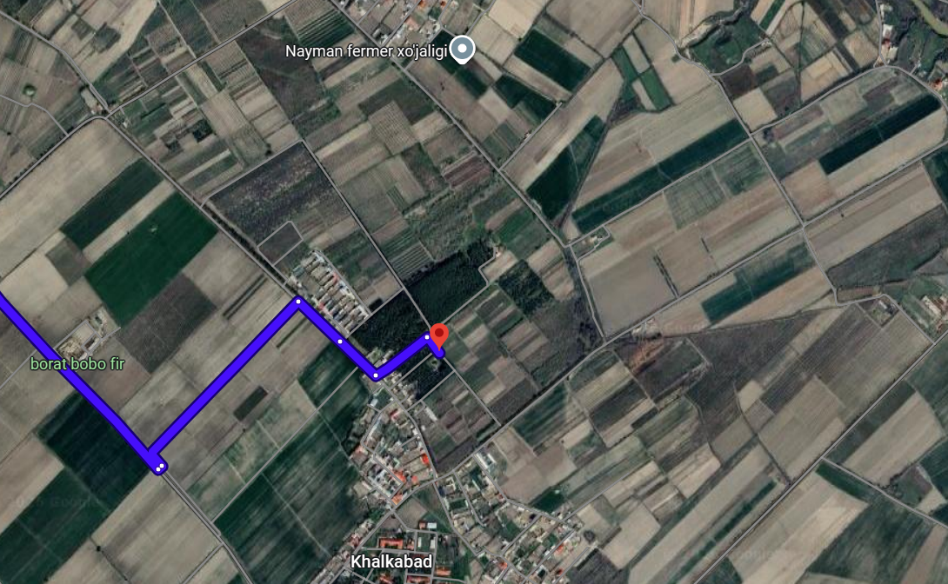
The presence of multiple rural settlements within a short radius indicates:
- Availability of seasonal and permanent labor;
- Integration within active agricultural production systems;
- Potential demand for windbreaks, shelterbelts, and agroforestry seedlings.
1.3.4 Landscape and Agro-Ecological Context
The nursery site is located in:
- A semi-arid continental climate zone;
- An intensively irrigated agricultural landscape;
- A flat alluvial plain typical of the Zarafshan basin.
Key environmental characteristics include:
- High summer temperatures;
- Strong evapotranspiration rates;
- Irrigation-dependent farming systems;
- Exposure to wind erosion in open fields;
- Risk of soil salinization in low-lying areas.
These conditions generate structural demand for:
- Climate-resilient planting material;
- Shelterbelt systems;
- Canal-side stabilization plantings;
- Drought- and salt-tolerant species.
1.3.5 Strategic Position within the Regional Ecological Framework
The broader region includes protected areas such as the Zarafshan National Nature Park, whose territorial scope has recently been expanded within the Samarkand Region.
Although portions of land associated with the Dargʻom enterprise have been referenced in territorial expansion decisions, the specific nursery production site at the above coordinates does not appear to fall within the currently internationally mapped protected area boundary.
The nursery therefore operates:
- In proximity to ecologically sensitive riverine landscapes;
- Within a high-pressure agricultural production zone;
- In a transition area between protected ecosystems and irrigated farmland.
1.3.6 Functional Implications for Nursery Development
The geographic positioning of the Dargham / Dargom Nursery offers:
- Strategic proximity to Samarkand’s institutional and logistical hub;
- Access to rural labor markets;
- Direct relevance to irrigated landscape stabilization needs;
- Operational viability for scaling container-based seedling production.
In spatial terms, the nursery is located in a zone where ecological restoration, agricultural protection, and climate adaptation objectives converge, reinforcing its role as a regional forestry infrastructure node.
1.4 Field Mission and Site Assessment Findings – Dargʻom (Dargham) Nursery
1.4.1 Visit to the Dargʻom (Dargham)Nursery
As part of the field mission in the Samarkand Region (Samarqand viloyati), the delegation visited the Dargham Forest Nursery (Darg‘om o‘rmon ko‘chatchiligi), which operates under the Dargham State Forestry (Darg‘om davlat o‘rmon xo‘jaligi).
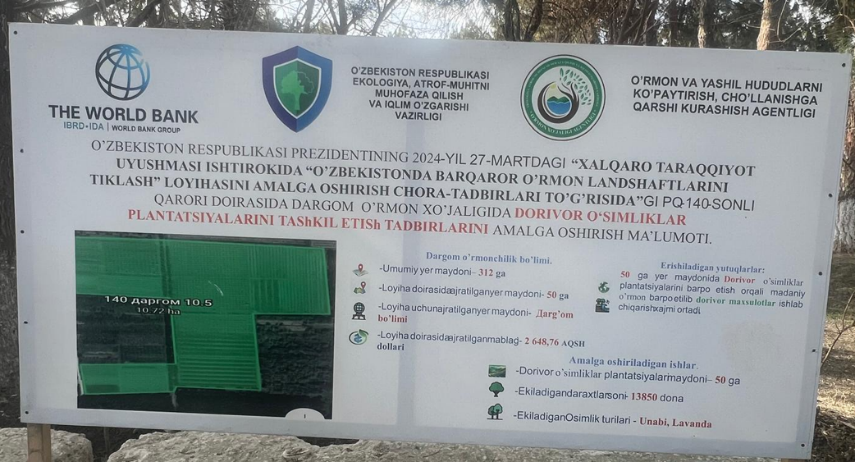
According to the on-site project information, the Dargham Forest Nursery is implementing the establishment of medicinal plant plantations covering a total area of 50 hectares. The plantations focus on selected medicinal and aromatic species that are ecologically suitable for the climatic and soil conditions of the Samarkand Region and that also have high economic potential.
The main species cultivated under the project include:
- Unabi (Ziziphus jujuba – Uzbek: Unabi)
- Lavender (Lavandula angustifolia – Uzbek: Lavanda)
These species were selected due to their drought tolerance, adaptability to local environmental conditions, contribution to biodiversity enhancement, and potential to support sustainable forest-based livelihoods for local communities in Samarkand Region.
During the visit, the Director of the Forestry, Mr. Orbek Bayanovich, provided a comprehensive briefing on the nursery’s operational practices, seedling production capacity, and medium-term development objectives.
Particular emphasis was placed on improving the quality and quantity of planting material, strengthening climate-resilient forestry practices, and expanding medicinal plant production as a strategic component of sustainable landscape restoration.
The photographs taken during the visit document both the strong institutional visibility of the project—through official signboards, donor logos, and regulatory notices—and the active engagement between project representatives and local forestry authorities.
Overall, the visit confirmed that the Dargham Forest Nursery plays a strategic role in translating national forestry and landscape restoration policies into concrete, field-level results in the Samarkand Region (Samarqand viloyati), while contributing to environmental sustainability and local economic development in Uzbekistan.

1.4.2. Observation and Strategic Assessment
Field observation confirms that the Dargʻom Nursery is not only operational but situated within an established artificial forest stand composed predominantly of Crimean Pine – Pinus nigra subsp. pallasiana (English: Crimean Pine).

The visible stand age is estimated between 50–70 years. The uniform alignment, spacing geometry, and homogenous species structure clearly indicate plantation origin rather than natural regeneration. The trees demonstrate:
- Strong vertical growth,
- Healthy canopy formation,
- Acceptable trunk form,
- Long-term site adaptation success.
This confirms that afforestation efforts carried out in the past have been biologically successful. The site has proven ecological compatibility for coniferous forestry.
However, the observed excessive stand density indicates insufficient silvicultural thinning operations. The high stem competition suggests that:
- Systematic thinning regimes were not regularly implemented,
- Stand quality optimization interventions have been limited,
- Silvicultural maintenance capacity requires strengthening.
This condition does not indicate ecological failure but rather institutional capacity gaps in forest management practices. Consequently, it strongly justifies the inclusion of intensive forestry training and silvicultural capacity development under Phase 7 – Validation & Training, with specific focus on:
- Thinning regimes,
- Stand density regulation,
- Forest health monitoring,
- Long-term productivity planning.
According to local authorities, the total site area is approximately 294 hectares, which significantly expands the strategic scope beyond a standard nursery operation.
Given:
- Its proximity to settlements,
- Long-standing public recognition,
- Established forest cover,
- Active nursery operations,
the site holds strong potential to evolve into a multifunctional regional forestry hub.
Strategically, the site may be developed to include:
- Forestry and Forest Nursery Training Center
- Medicinal and Aromatic Plants Training Facility
- Seed Stands and Seed Orchards serving surrounding regions
- In vitro Laboratory for tissue culture-based seedling production (medium–long term)
- Recreational Forest (Mesire Area)
- Beekeeping and Pollination Development Center
- Regional Seed and Seedling Export & Sales Hub (leveraging Samarkand’s location)
- Allocation of approximately 100 hectares (within the 294 ha total) for internationally-investable private nursery development under controlled framework.
The existing biological success of Crimean Pine plantations confirms ecological suitability. The identified silvicultural management gap confirms the necessity of structured capacity strengthening.
1.4.3 Water Resources and Hydrogeological Feasibility
The nursery lies within the irrigated agricultural belt of the Zarafshan Basin, characterized by developed irrigation systems and historically managed groundwater use.
Current production of:
- Forest seedlings,
- Medicinal plants (Lavender, Unabi),
- Young conifer plantations,
demonstrates that water supply is functionally sufficient under present operational scale.
Topographic conditions are:
- Flat,
- Suitable for gravity-fed irrigation,
- Mechanization-friendly,
- Free of visible large-scale waterlogging.
No immediate large-scale salinity crusts were observed in production blocks; however, preventive monitoring is recommended due to regional salinization risks common in irrigated Central Asian plains.
For the planned expansion (training center, seed orchards, potential in vitro facilities, private nursery allocation), the following are recommended:
- Installation of drip irrigation systems for medicinal plantations,
- Water quality analysis (EC, pH, mineral load),
- Groundwater level monitoring if boreholes are utilized,
- Drainage improvement where necessary,
- Water-saving irrigation technologies.
Hydrogeologically, the area is feasible for scaling nursery and forestry functions provided modernization measures are incorporated.
1.4.4 Energy Infrastructure and Accessibility
The Dargʻom Nursery benefits from a strategically advantageous location in relation to regional infrastructure networks. The site is situated approximately 20–25 km from Samarkand city and is connected to district-level road systems with functional access to the M39 transport corridor, one of the primary regional transport routes.
Field observations confirm that:
- Internal access roads are operational and passable in all-weather conditions.
- The nursery can accommodate transport vehicles for seedling distribution and material delivery.
- The proximity to nearby settlements ensures availability of labor resources.
- Travel time to administrative centers and supply markets is relatively short.
Given Samarkand’s international airport and established trade routes, the nursery holds strong potential to function as:
- A regional seed and seedling distribution hub,
- A future export-oriented production center serving broader Central Asian markets.
The site’s logistical position significantly reduces transportation risks and supports scaling scenarios.
Existing electricity access appears available and sufficient for current operational needs (basic administration, irrigation support, and production activities). However, expansion scenarios — including cold storage units, greenhouse modernization, irrigation automation systems, and potential in vitro tissue culture laboratories — will require:
- Stabilized three-phase power supply,
- Load capacity assessment for expanded production systems,
- Backup energy systems to ensure continuity of laboratory and controlled-environment facilities.
Considering the total land area of approximately 294 hectares, the site offers substantial spatial flexibility for the installation of renewable energy systems. The flat terrain and availability of non-productive peripheral zones make it technically suitable for:
- Ground-mounted photovoltaic (PV) solar arrays,
- Solar-powered irrigation pumping systems,
- Hybrid energy systems combining grid electricity and renewable sources.
It is therefore foreseen that solar energy infrastructure could be integrated to:
- Reduce operational costs,
- Increase energy resilience,
- Support irrigation systems sustainably,
- Power administrative, training, and laboratory facilities.
In long-term development planning, partial energy self-sufficiency is technically feasible and aligned with climate-resilient nursery modernization principles.
Energy and accessibility conditions are rated high for both current operations and future expansion. The combination of road connectivity, regional trade access, available electricity infrastructure, and renewable energy potential supports the nursery’s transformation into a multifunctional forestry and nursery development center.
1.4.5 Integrated Strategic Conclusion of the Field Assessment
The integrated field assessment confirms that the Dargʻom Nursery represents an operational, ecologically proven, and strategically expandable forestry production platform within the Samarkand Region.
The presence of 50–70-year-old Crimean Pine (Pinus nigra subsp. pallasiana) stands clearly demonstrates that afforestation activities conducted in the past were biologically successful and site-adapted. The uniform plantation structure and long-term survival of these stands confirm ecological suitability for coniferous forestry under local climatic and soil conditions.
At the same time, the observed high stand density indicates limited silvicultural thinning and maintenance interventions over time. This does not reflect ecological failure, but rather highlights a structural need for:
- Strengthened forest management planning,
- Systematic thinning regimes,
- Capacity development in silviculture,
- Institutional upgrading in technical forestry operations.
This finding directly supports the prioritization of structured training and validation activities under Phase 7 – Validation & Training, with particular emphasis on silvicultural practices and modern nursery management systems.
From an operational perspective, the nursery is already active in seedling production and medicinal plant cultivation. The existence of ongoing production activities significantly reduces project risk compared to greenfield development scenarios.
The site’s total area of approximately 294 hectares provides substantial spatial flexibility for long-term strategic development. Based on field observations and contextual analysis, the area holds strong potential to evolve beyond a conventional nursery into a multifunctional forestry campus, including:
- Forestry and Forest Nursery Training Center,
- Medicinal and Aromatic Plants Training and Production Facility,
- Seed stands and seed orchards serving surrounding districts,
- In vitro laboratory for tissue culture-based seedling production (medium- to long-term scenario),
- Recreational forest and controlled public-use areas,
- Beekeeping and pollination development center,
- Regional seed and seedling export hub leveraging Samarkand’s logistical advantages,
- Potential allocation of up to 100 hectares for internationally investable private nursery operations under regulated framework.
Hydrologically, the site is feasible for current and scalable operations. Logistically, it benefits from strong road access and proximity to Samarkand. From an energy perspective, the availability of grid electricity combined with the spatial feasibility for solar installations enhances long-term resilience and modernization potential.
In conclusion, the Dargʻom Nursery is assessed as:
- Ecologically validated,
- Operationally active,
- Strategically positioned,
- Expansion-capable,
- Suitable for institutional and technical upgrading.
The field assessment confirms that the site possesses both immediate functionality and long-term development potential, positioning it as a candidate for transformation into a regional forestry innovation, training, and production center under the RESILAND CA+ framework.
1.5. Conclusion of First Assessment &Feasibility Report
The First Assessment & Feasibility Report concludes that the Dargʻom Nursery is technically feasible, operationally sound, ecologically validated, and strategically suitable for structured modernization and expansion under the RESILAND CA+ framework.
The assessment confirms that:
- The site is already operational and legally established.
- Approximately 294 hectares of land are available under defined institutional management.
- Existing 50–70-year-old Crimean Pine (Pinus nigra subsp. pallasiana) plantations demonstrate long-term ecological compatibility and afforestation success.
- Active nursery and medicinal plant production activities are ongoing.
- Water availability is functionally adequate for current and scalable production.
- Road connectivity and proximity to Samarkand provide strong logistical advantages.
- Electricity infrastructure exists, with clear potential for integration of solar-based renewable systems.
- Expansion scenarios (training center, seed orchards, export hub, in vitro laboratory, private nursery allocation) are spatially and technically viable.
While silvicultural thinning and technical forestry management practices require strengthening, this represents a capacity development opportunity rather than a structural limitation. The identified gaps can be effectively addressed during subsequent project phases, particularly under Phase 7 – Validation & Training.
From a feasibility perspective, the site presents:
- Low implementation risk due to existing operations,
- Reduced establishment cost compared to greenfield development,
- High scalability potential,
- Strong alignment with national forestry objectives and regional restoration strategies.
The Dargʻom Nursery is therefore positively assessed as a high-potential forestry development platform capable of evolving into:
- A regional forestry and nursery training center,
- A medicinal and aromatic plants excellence hub,
- A seed and seedling production and export center,
- A future innovation site integrating renewable energy and advanced propagation technologies.
With this conclusion, Phase 4 – First Assessment & Feasibility for the Dargʻom Nursery is hereby completed with a positive recommendation to proceed.
Subject to approval by the relevant authorities and the RESILAND CA+ PIU, the project shall advance to:
- Phase 5 – Detailed Design and Master Planning
- Phase 6 – Technical Specifications & Bill of Quantities
- Phase 7 – Validation & Training
Overall, the Dargʻom Nursery is assessed as feasible, expandable, investment-compatible, and strategically important for long-term regional forestry development.
