Revised Activity Report- Phase 3: Field Assessment
Reporting Date: 15 February 2026
Reporting Period: 1-14 February 2026
İsmail Belen
Contents
Related to Draft Forest Code 3
Related to Partnership with international forestry organisations and Turkish forestry authorities 3
2 February 2026 Monday-Coordination Meetings with Relevant Forestry Authorities 3
14 February 2026, Saturday, Returning to Türkiye 37
List of Outputs Produced (Phase 3 – Field Asssessment) 38
Phase 3 Completion Statement 38
Activities Required
Based on the Contract signed at 15 June 2025, the Official Invitation letter by Mr. Erkin Mukhitdinov signed at 18 December 2025 and further the latest letter of Mr. Erkin Mukhitdinov dated 30 December 2025, the Consultant was required for the following works during Phase 3.
- Conduct a comprehensive review of the current draft Forestry Code, and prepare a detailed implementation roadmap,
- Establish collaborative partnerships with Turkish forestry authorities and international forestry organizations,
- Phase 3: Field Assessment
- Conduct coordination meetings with relevant forestry authorities in Tashkent and regional offices
- Perform comprehensive on-site technical assessments of all nine nursery locations
- Document site conditions including soil characteristics, water access, existing infrastructure, and environmental constraints
- Prepare consolidated field assessment records and preliminary findings against RNF criteria
Activities Performed
Related to Draft Forest Code
İsmail Belen submitted his report titled “Legal, Technical and Environmental Review of the Draft Forest Code of the Republic of Uzbekistan” on 12 January 2026.
Related to Partnership with international forestry organisations and Turkish forestry authorities
İsmail Belen submitted two reports under this item:
- Information Note on the International Day of Forests (IDF) – 6 January 2026, prepared pursuant to Item 46 of the Presidential Decree of the Republic of Uzbekistan dated 30 May 2025, which stipulates that “an international forum dedicated to the International Day of Forests shall be organized.” (Source: https://lex.uz/en/docs/-7552003#)
- Information note for a technical study visit to Türkiye between 12-19 April 2026 send to Mr. Erkin Mukhitdinov with an email dated 12 February 2026.
Related to Field Assessment
2 February 2026 Monday-Coordination Meetings with Relevant Forestry Authorities
On Monday, 2 February 2026, İsmail Belen visited the premises of the Agency for Expanding Forests and Green Areas and Combating Desertification (hereinafter referred to as the Forestry Agency). As previously agreed with the Director General, Mr. Erkin Mukhitdinov, a coordination meeting was held with Mr. Golibjon Karimovich Kurbanov, Deputy Director of the Forestry Agency; Mr. Shukhrat Tojiboev, Director of the RESILAND CA+ Project; the Coordinators, Mr. Abdulvohid Ergashev and Mr. Muzaffar Salamov; as well as other members of the project team.
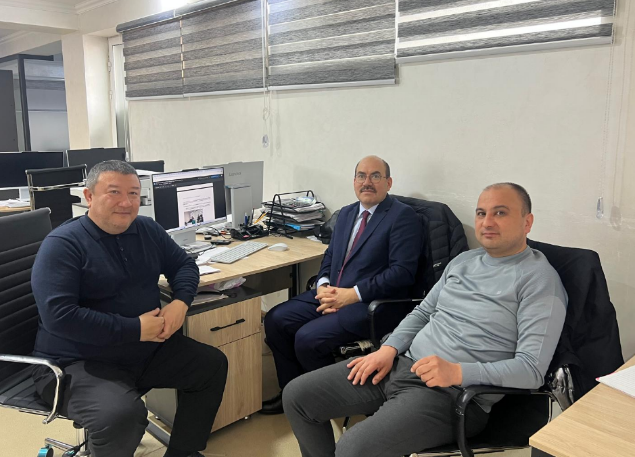
On the same day in the afternoon, a meeting was held with Zafar Nabikulovich Eshankulov, Head of the Department for Combating Desertification and Restoration of Degraded Lands of the Forestry Agency, and Shahbaz Ruzmetov, Senior Specialist of the Forestry Development Department of the Forestry Agency. Muzaffar Salamov also participated in the meeting.
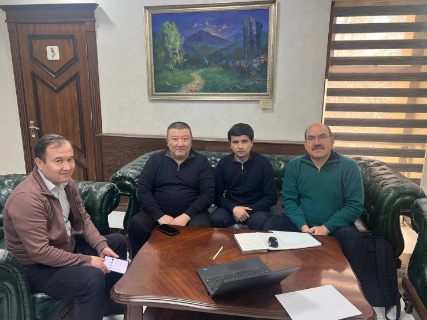
Following this meeting, a separate meeting was held with Shukhrat Tojiboev, during which the field programme was clarified and finalized.
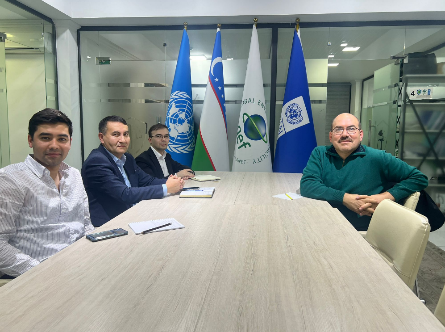
Following this meeting, further consultations were held on the same day regarding the International Day of Forests with relevant representatives of the Forestry Agency, and the report submitted to the Director General, Mr. Erkin Mukhitdinov, on 6 January 2026 was reviewed.
The meeting was held with Ismat Dostmurodov, Press Secretary of the Forestry Agency; Ahmed Ashirov, Chief Specialist of the Department for Foreign Financial Institutions and Investments; and Aziz Rahimov, Chief Specialist of the same department.
3 February 2026-Tuesday
Following consultations with Shukhrat Tojiboev, İsmail Belen travelled to Samarkand together with Ergashev Vohid Sobirovich and arrived there late in the evening.
4 February 2026-Wednesday
Visiting to Samarkand Specialized State Forestry Enterprise
Today’s program started with a visit to the Samarkand Specialized State Forestry Enterprise. Within the framework of the visit, a meeting was held with the Director of the Forestry, Mr. Ilxom (Ilhan) Yetkirov.
The meeting was attended on behalf of the RESILAND Project by the following representatives:
- Mr. Normamat Isakovich Kuziev – Regional Office Coordinator, Samarkand Region
- Mr. Shuhrat Maxmudovich Egamberdiev – Technical Specialist, Samarkand Region
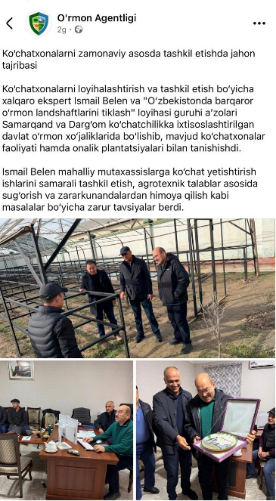
https://www.facebook.com/share/p/1CGfwF5Dtk/?mibextid=wwXIfr
Dargham State Forestry – Dargham Forest Nursery Visit
Location: Samarkand Region (Uzbek: Samarqand viloyati),
Dargham District (Uzbek: Darg‘om tumani), Uzbekistan (Uzbek: O‘zbekiston Respublikasi)
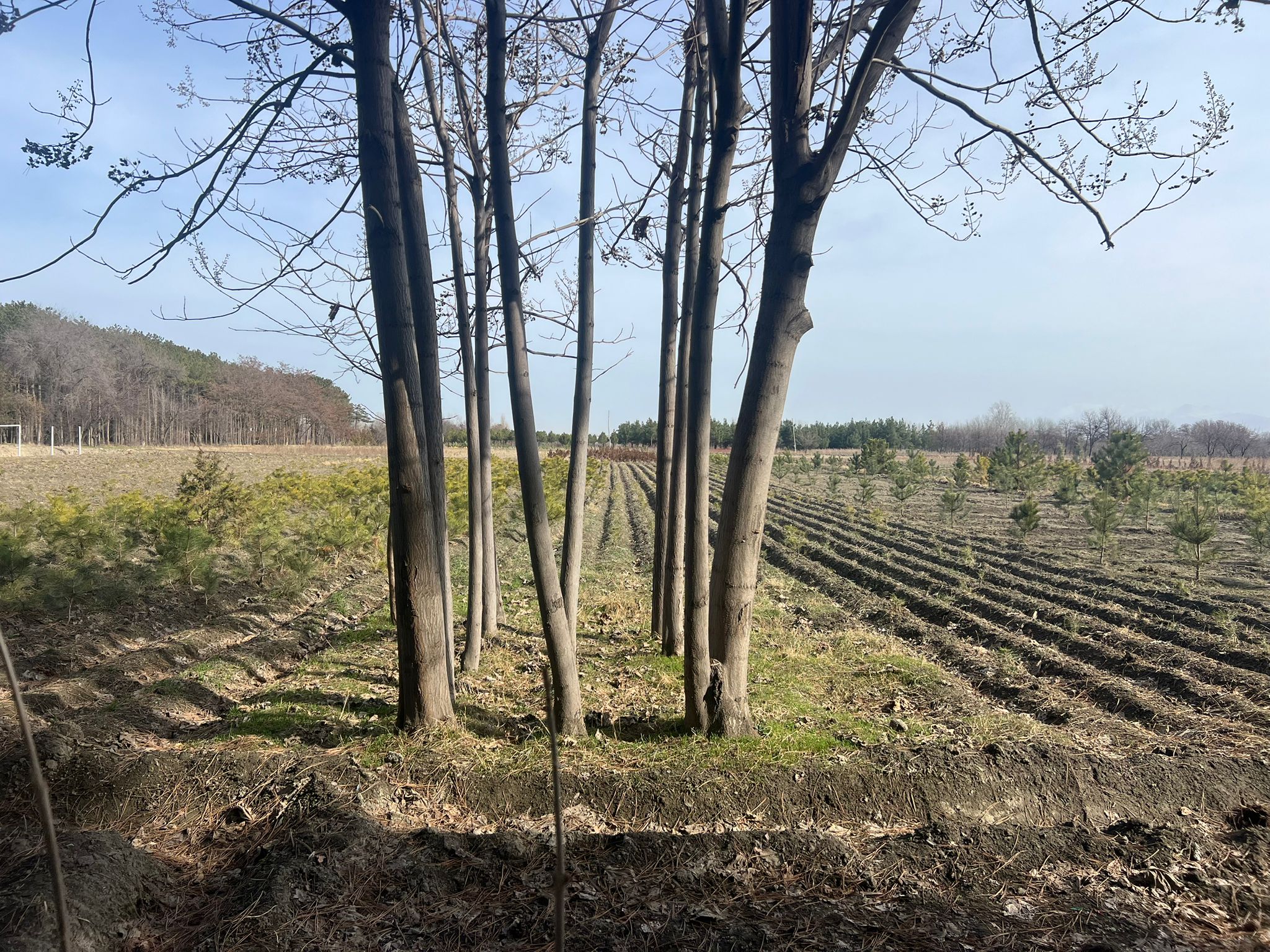
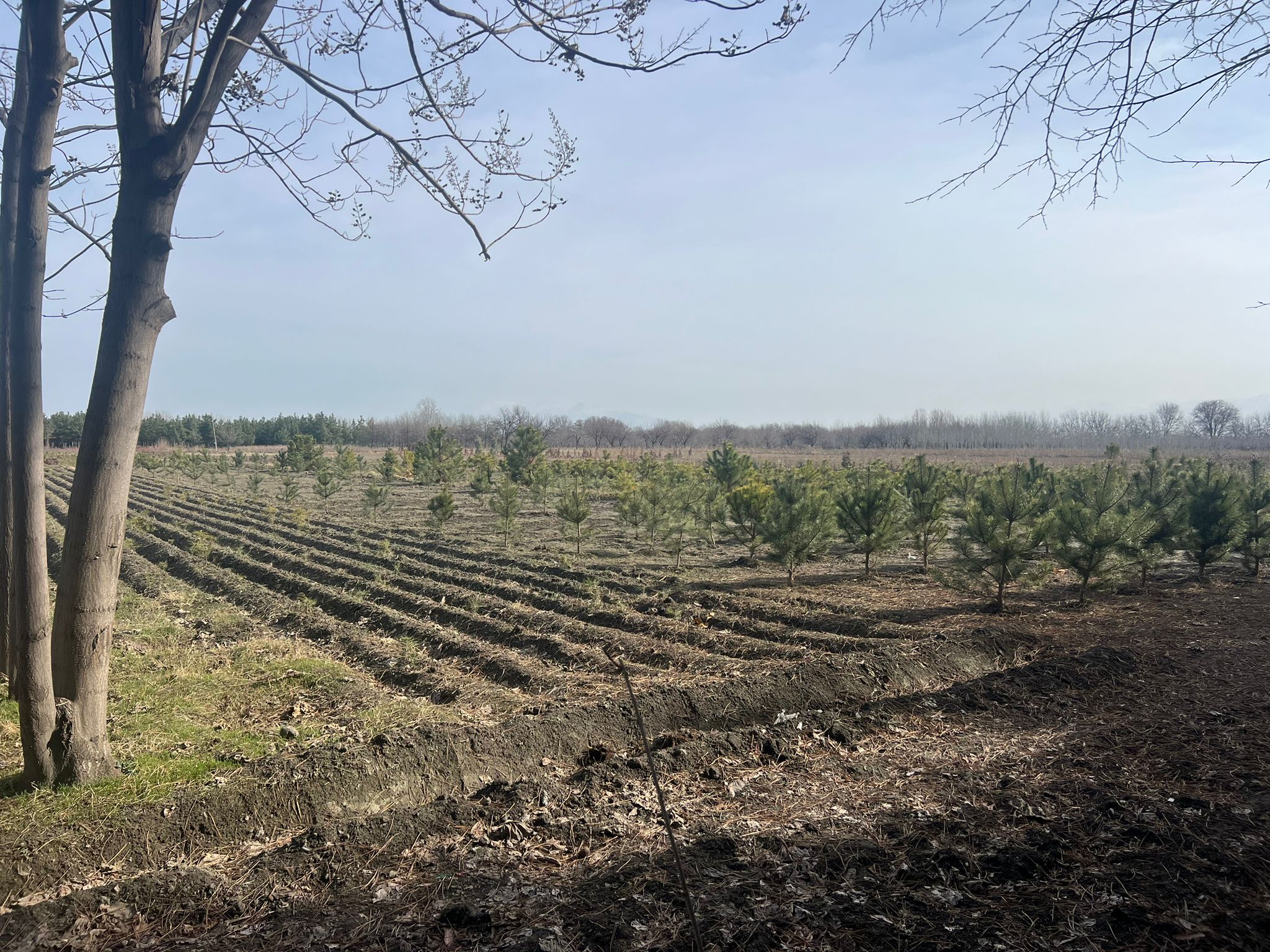
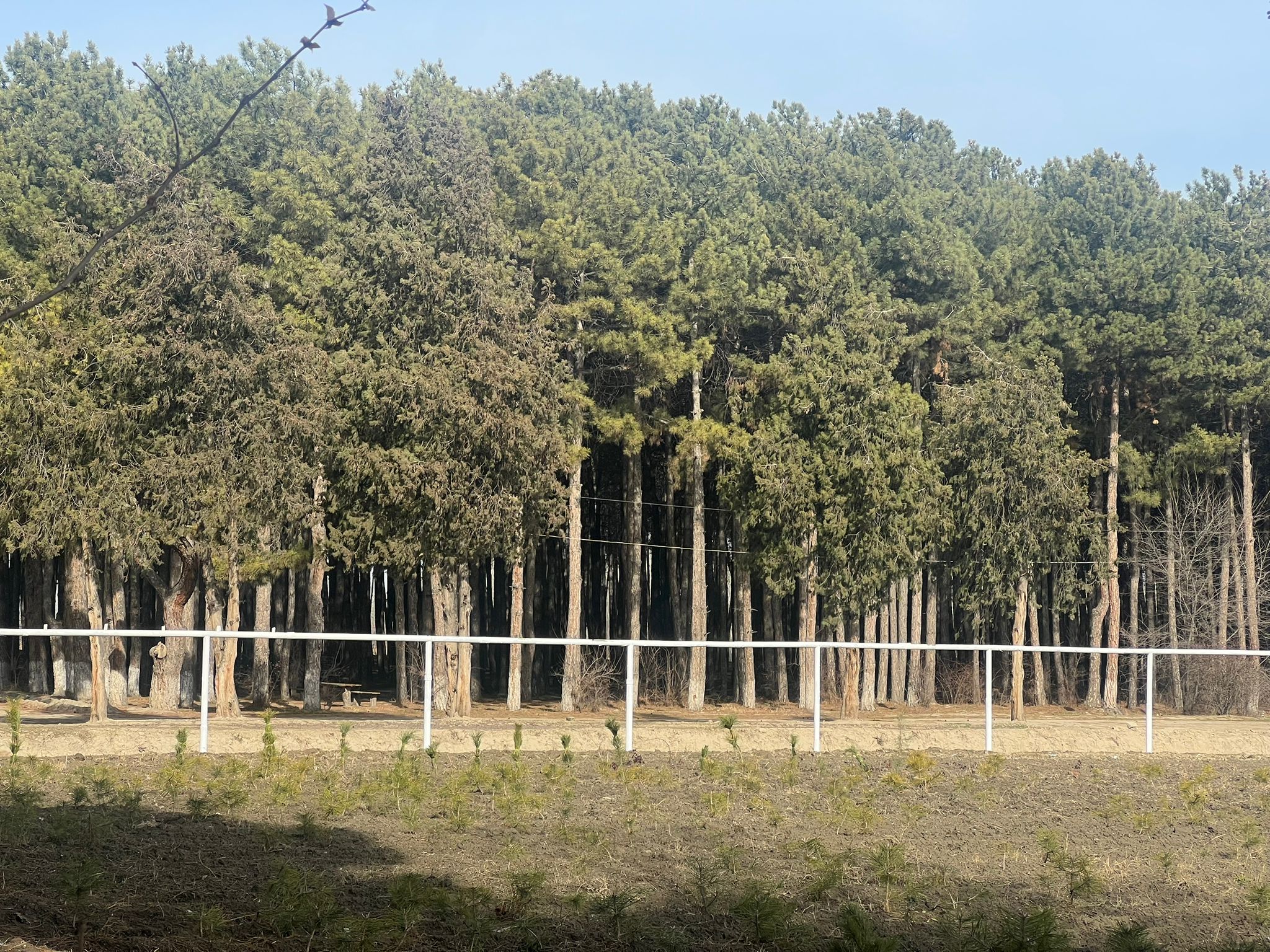
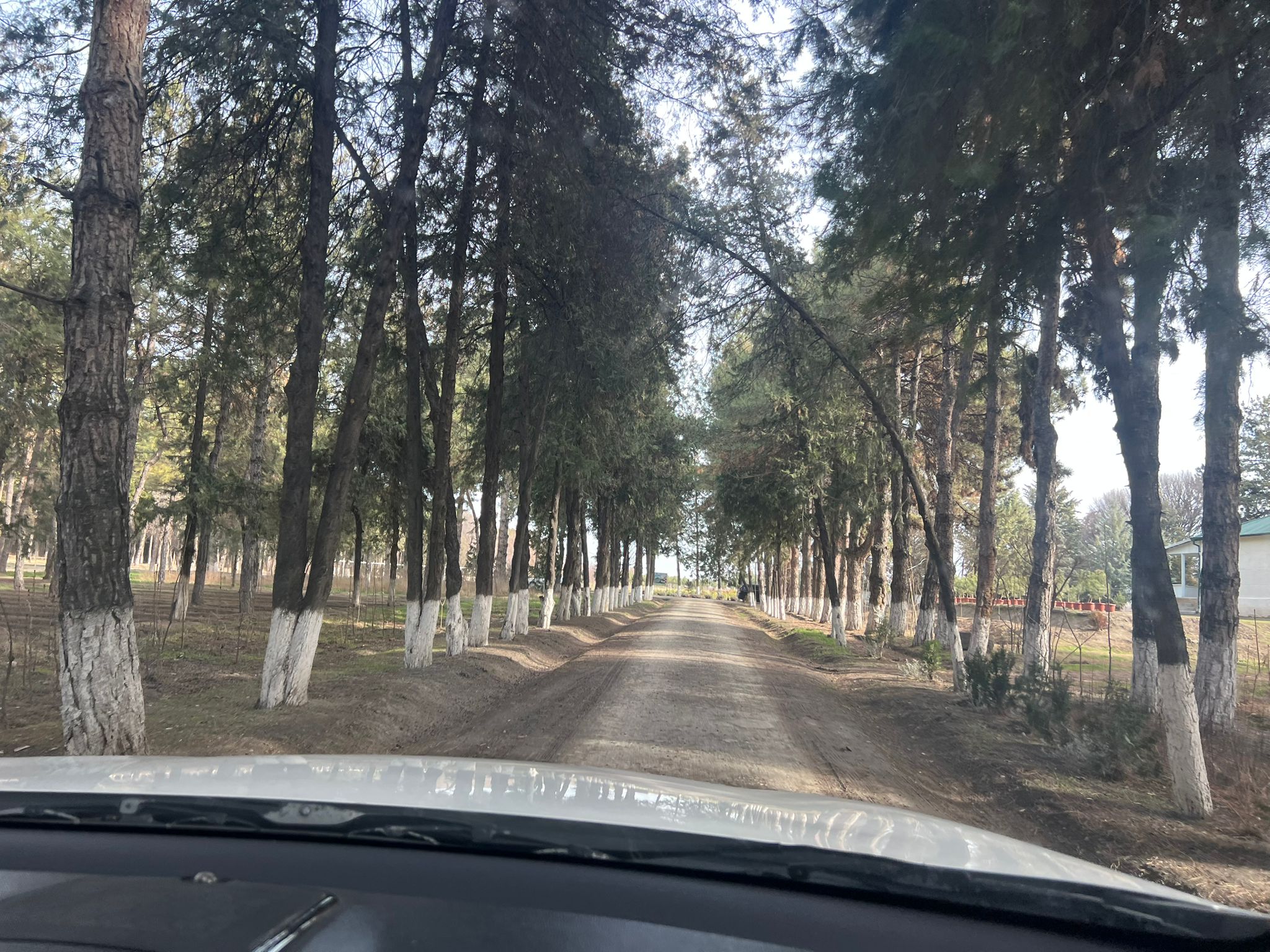
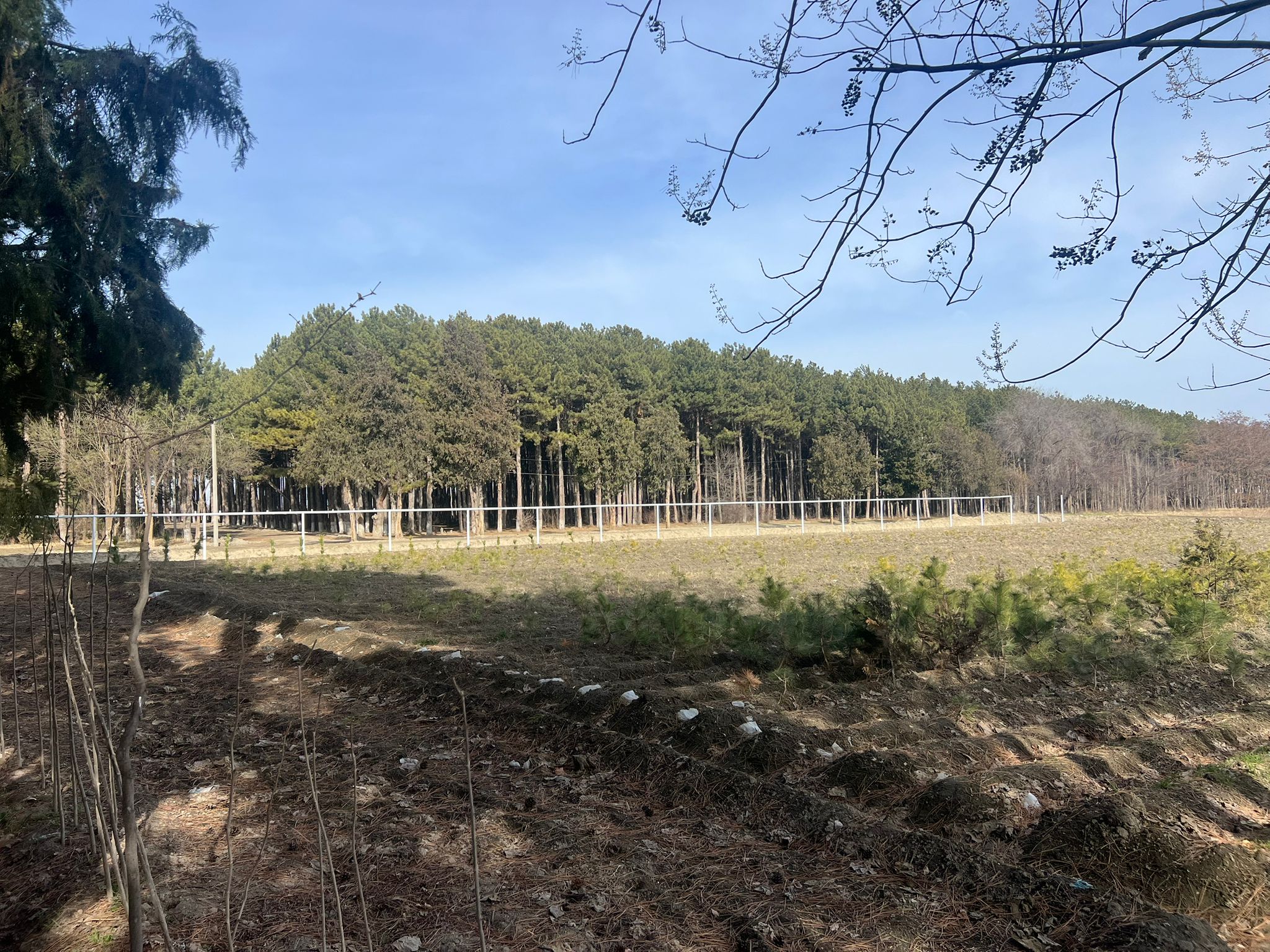
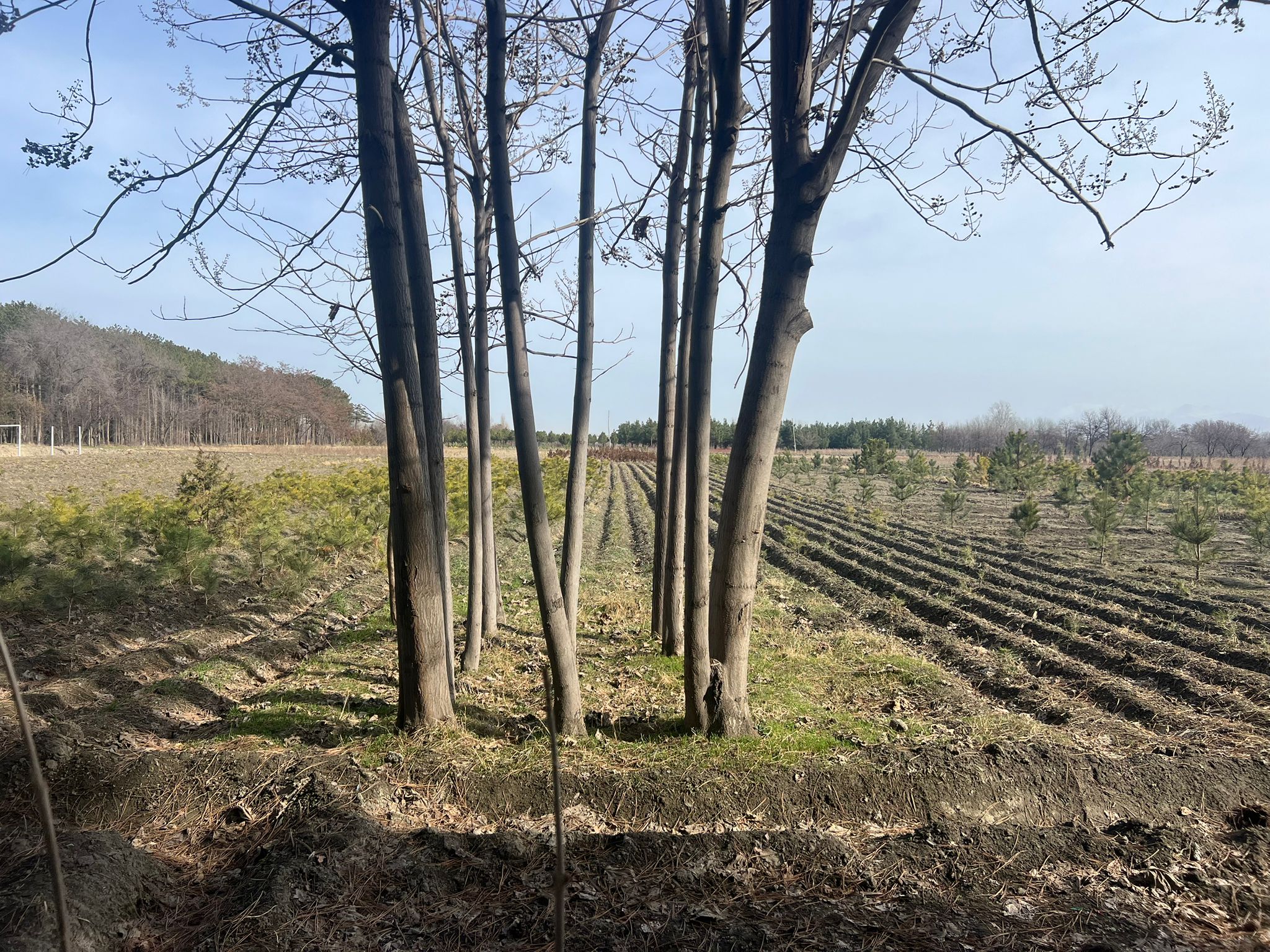
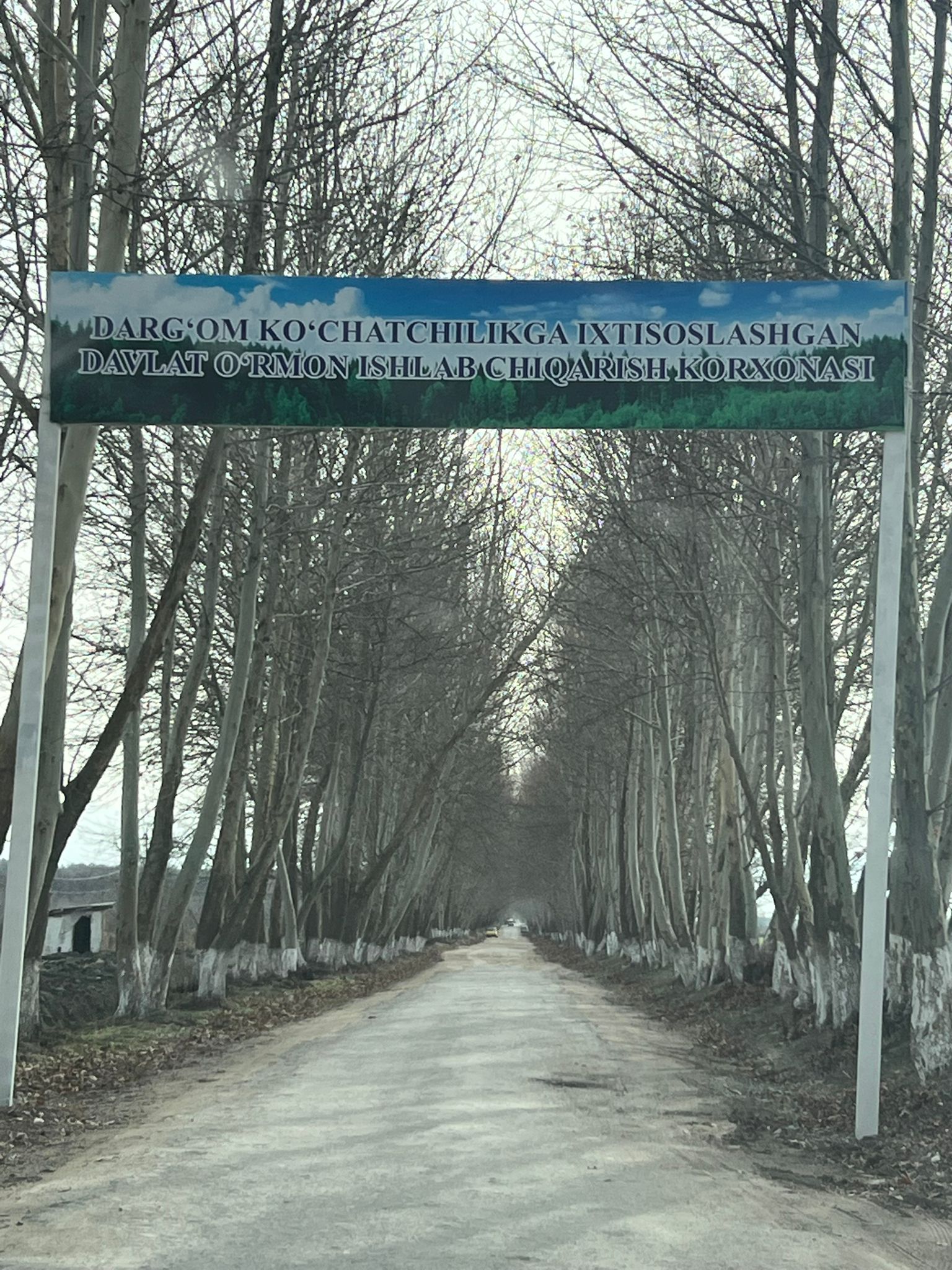
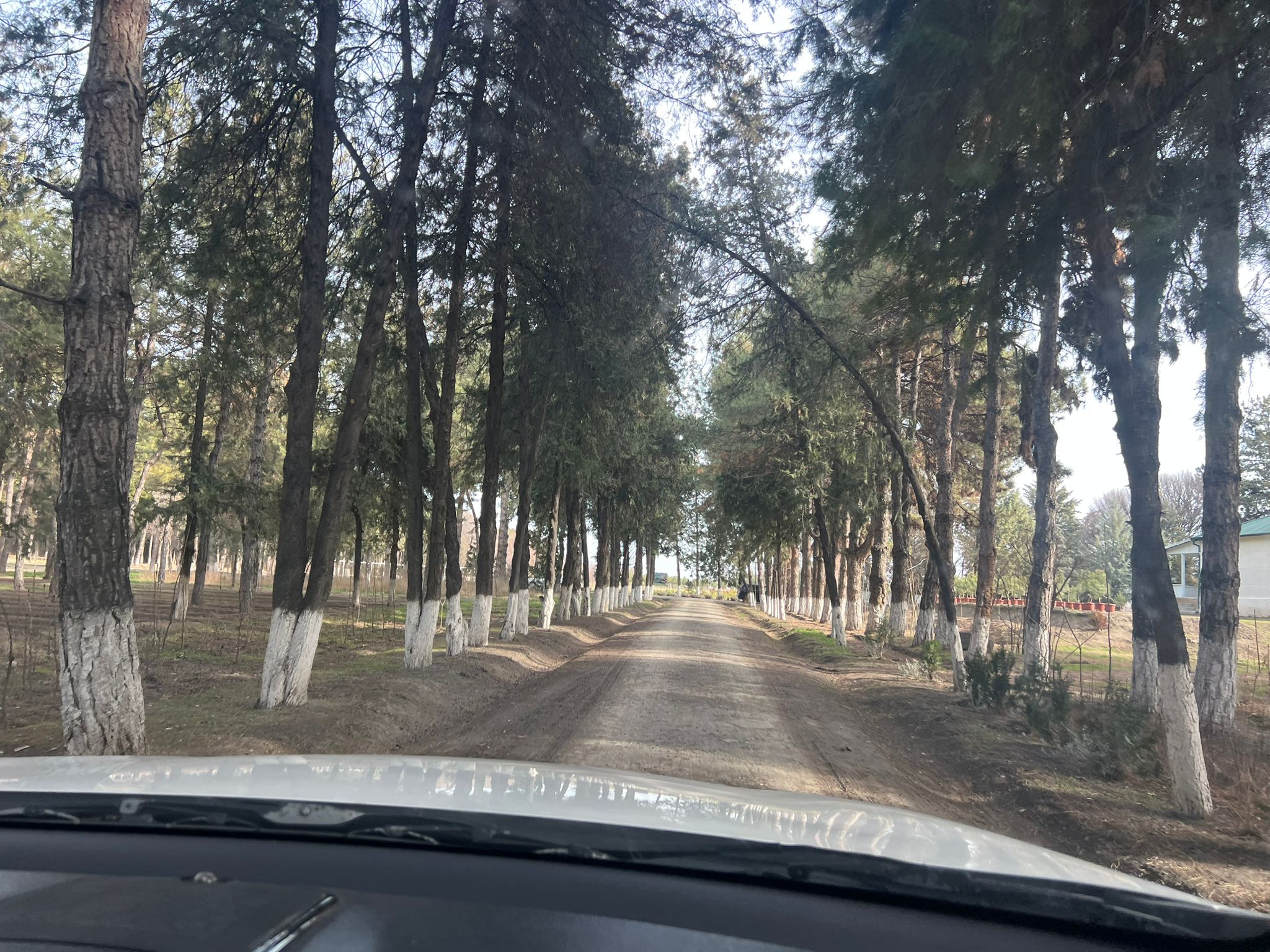
As part of the field mission in the Samarkand Region (Samarqand viloyati), the delegation visited the Dargham Forest Nursery (Darg‘om o‘rmon ko‘chatchiligi), which operates under the Dargham State Forestry (Darg‘om davlat o‘rmon xo‘jaligi). The site is located in the Dargham District (Darg‘om tumani) of Samarkand Region, Uzbekistan.
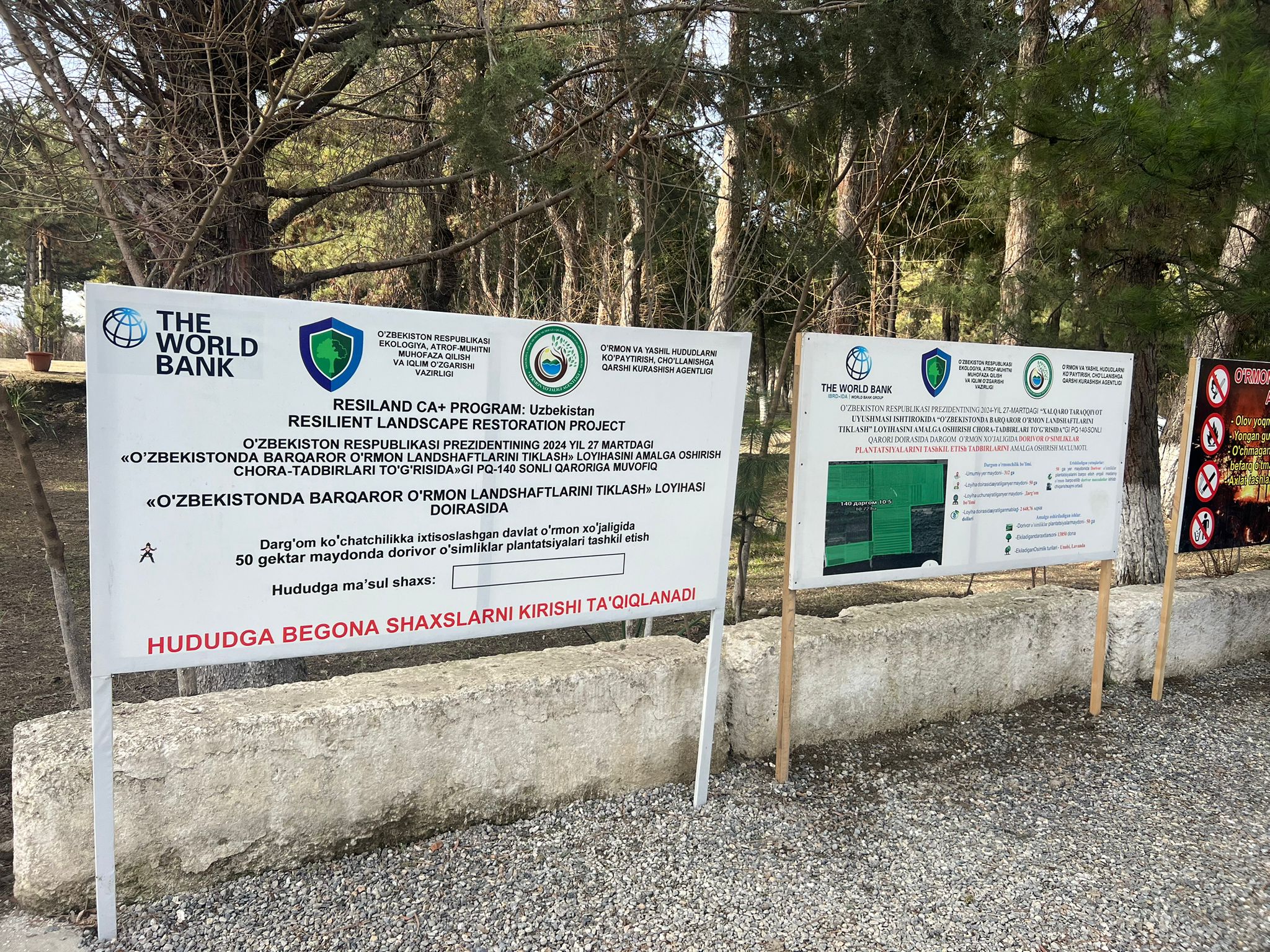
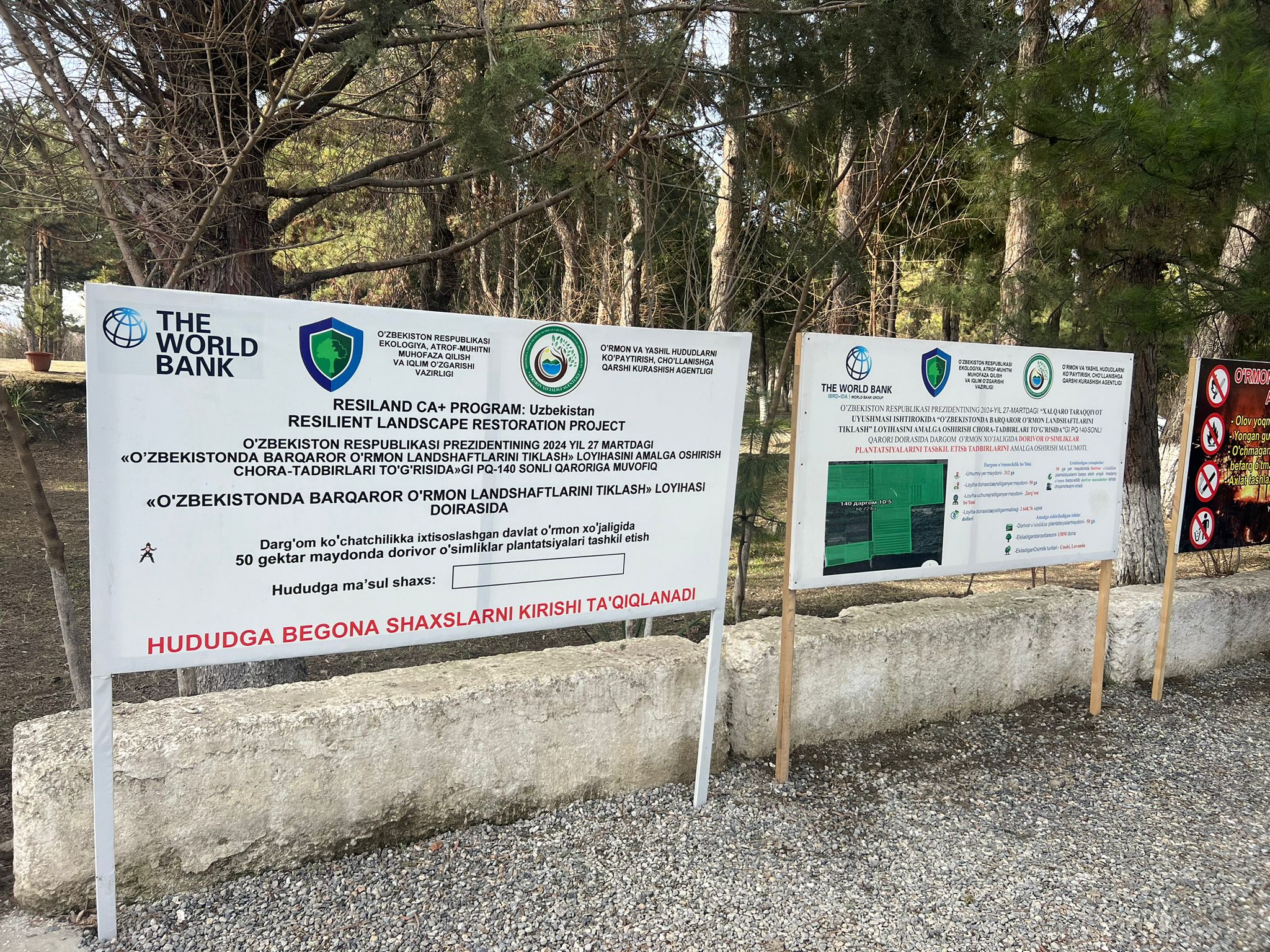
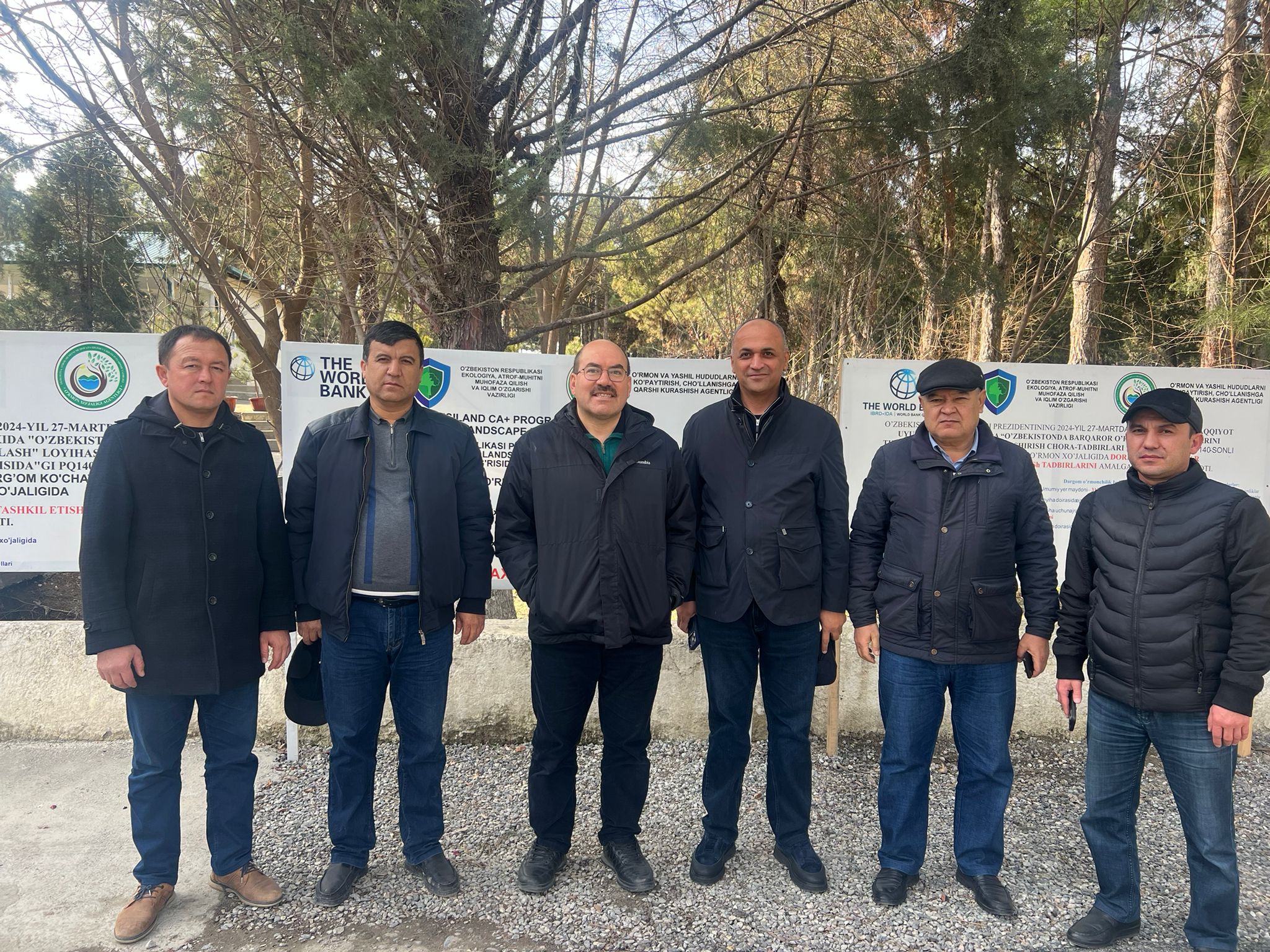
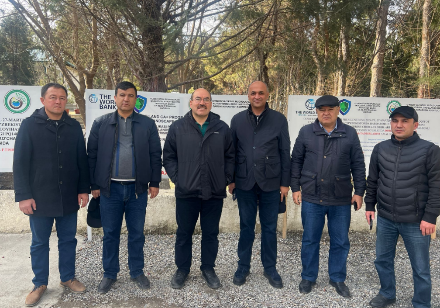
The visit followed the earlier meeting at the Samarkand State Forestry and was conducted with the same project team. It provided direct field-level insight into the implementation of activities under the RESILAND CA+ Program – Uzbekistan Resilient Landscape Restoration Project, implemented with the support of the The World Bank.
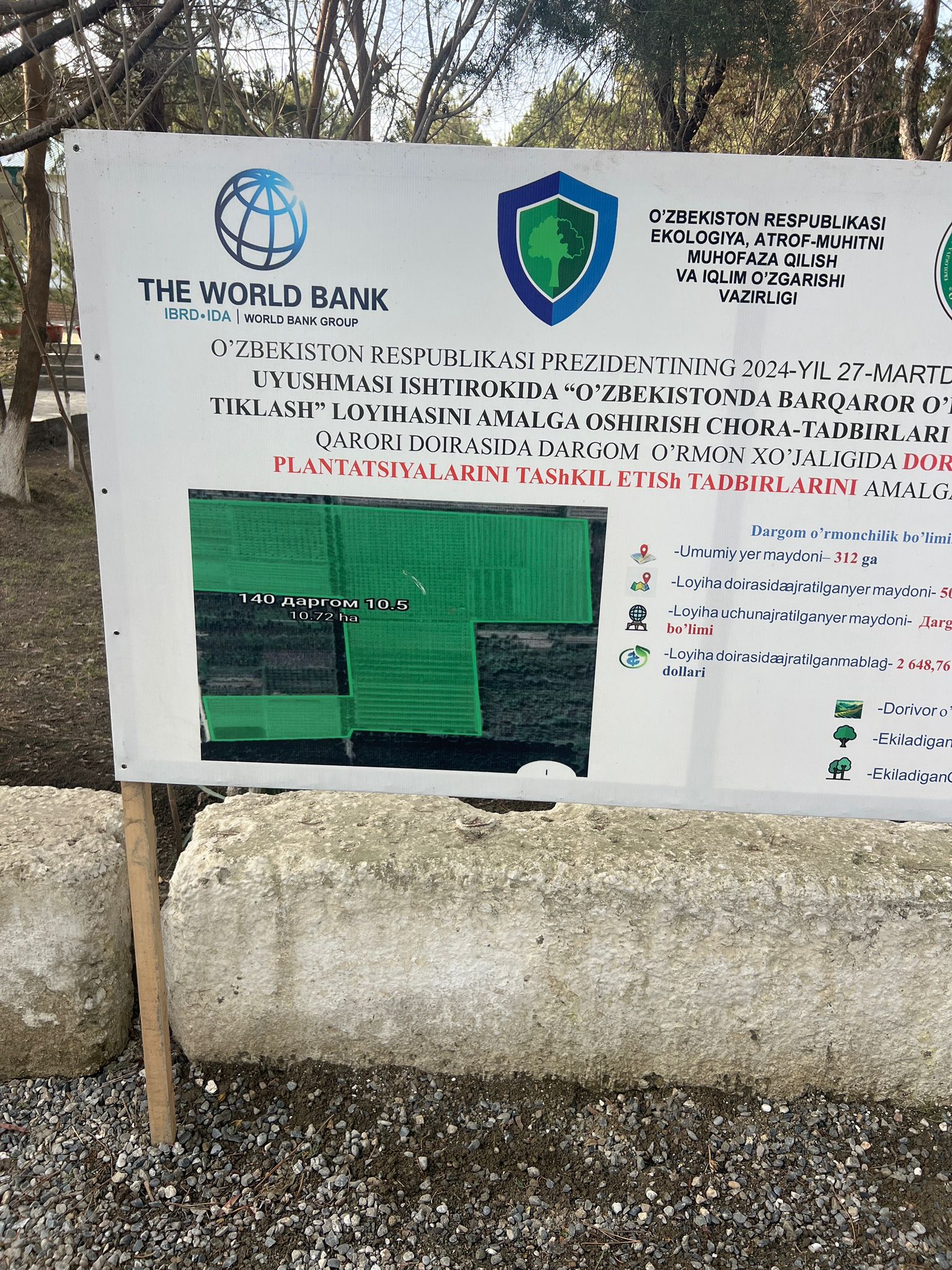
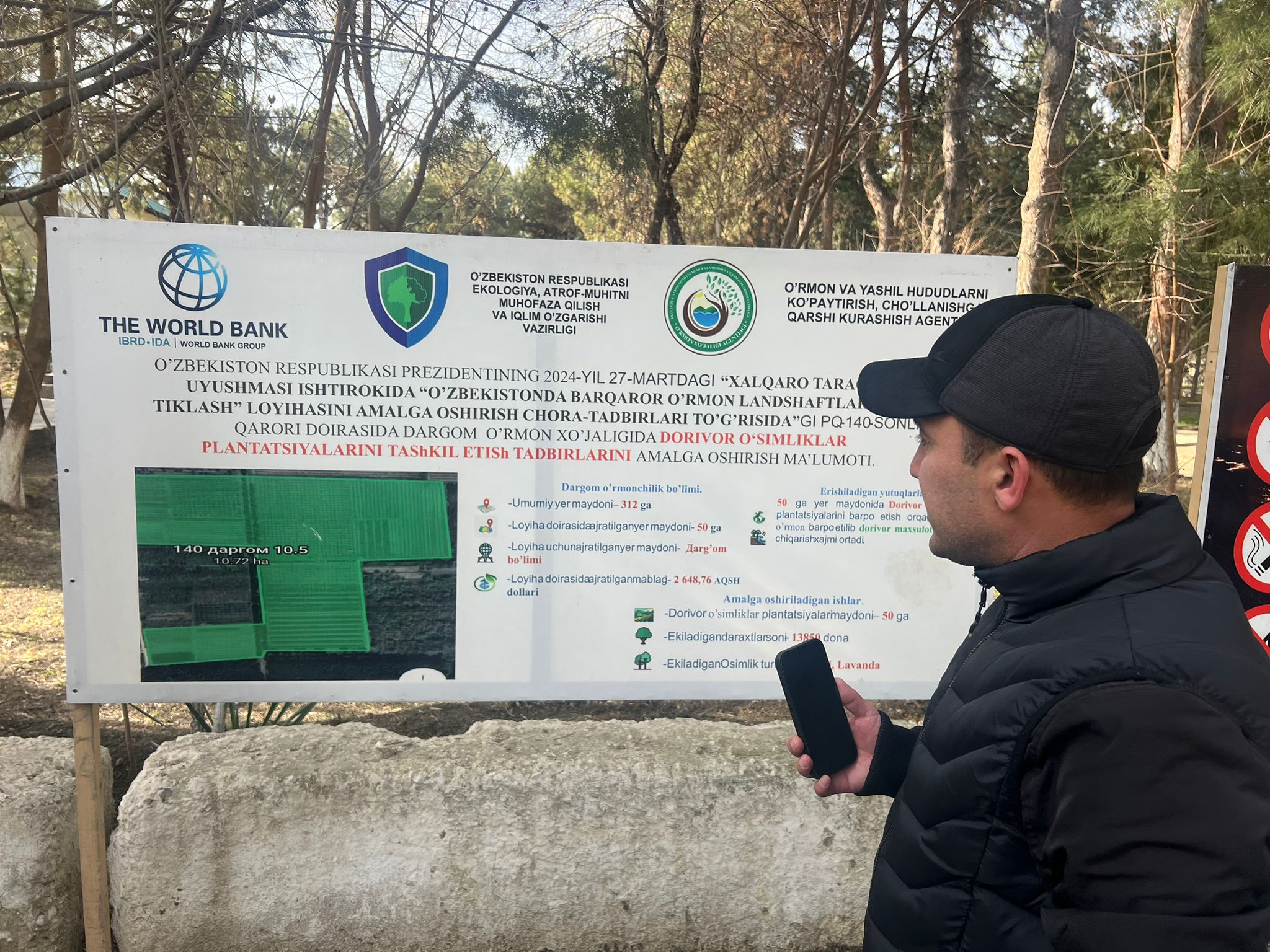
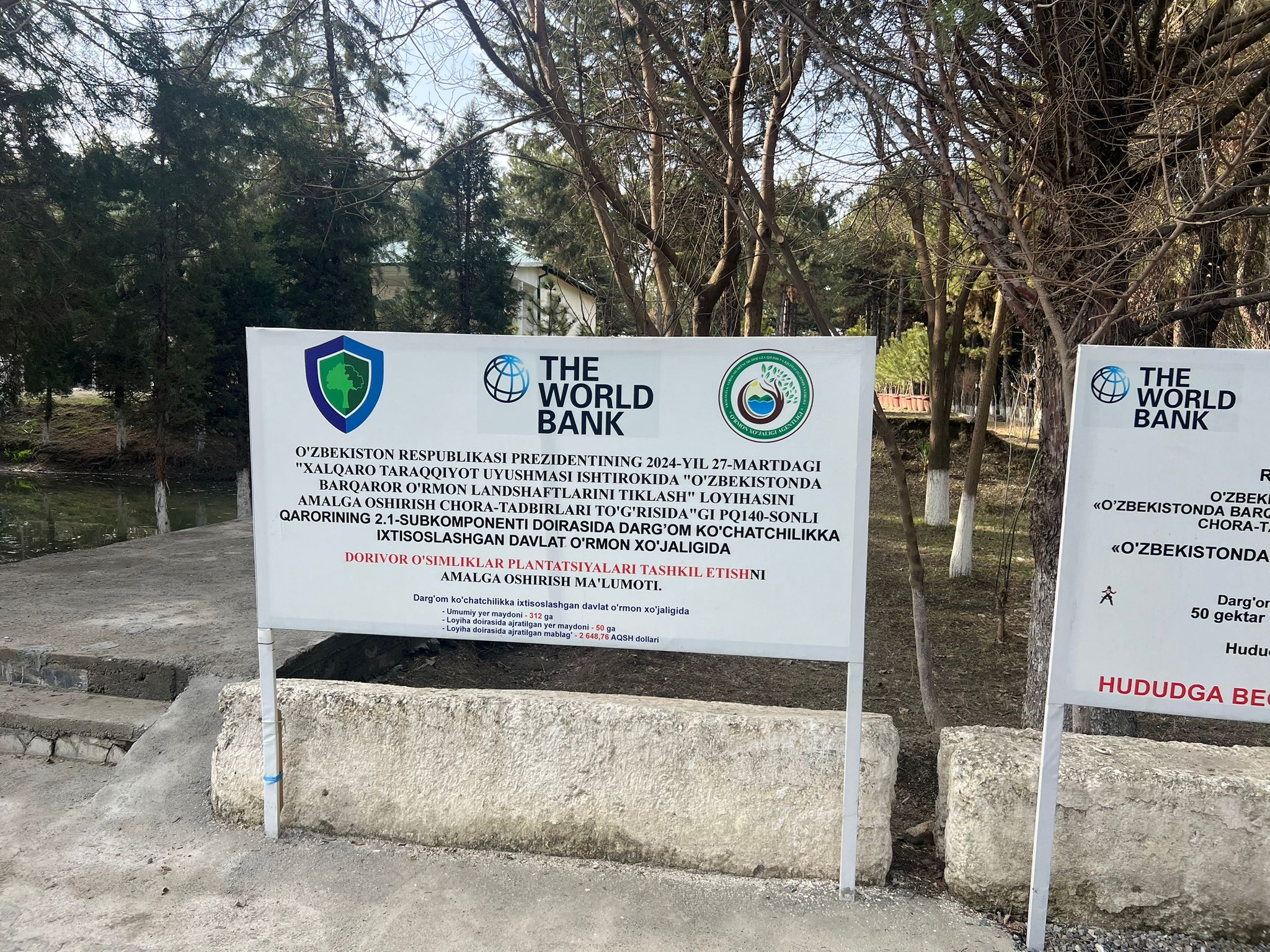
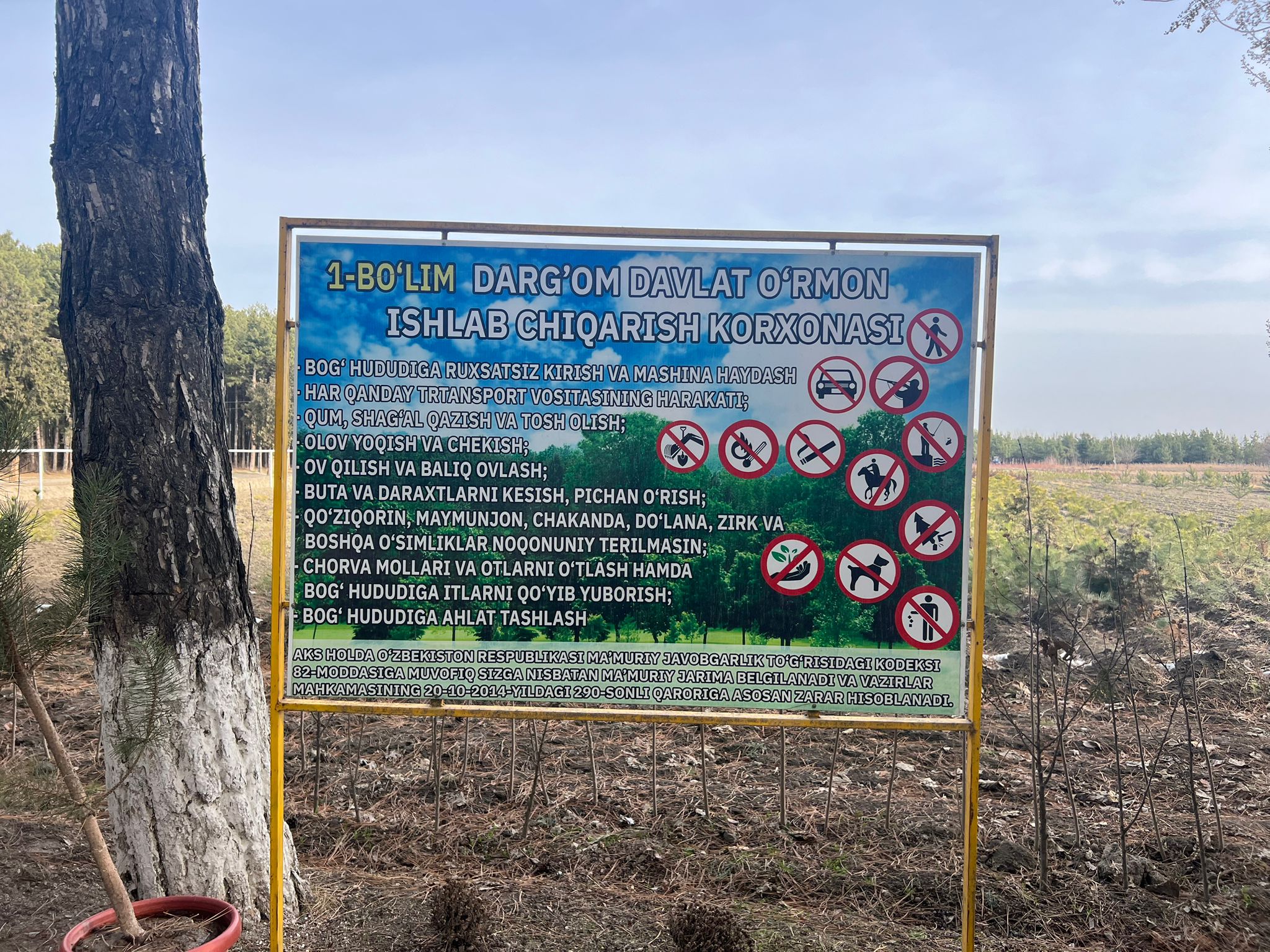
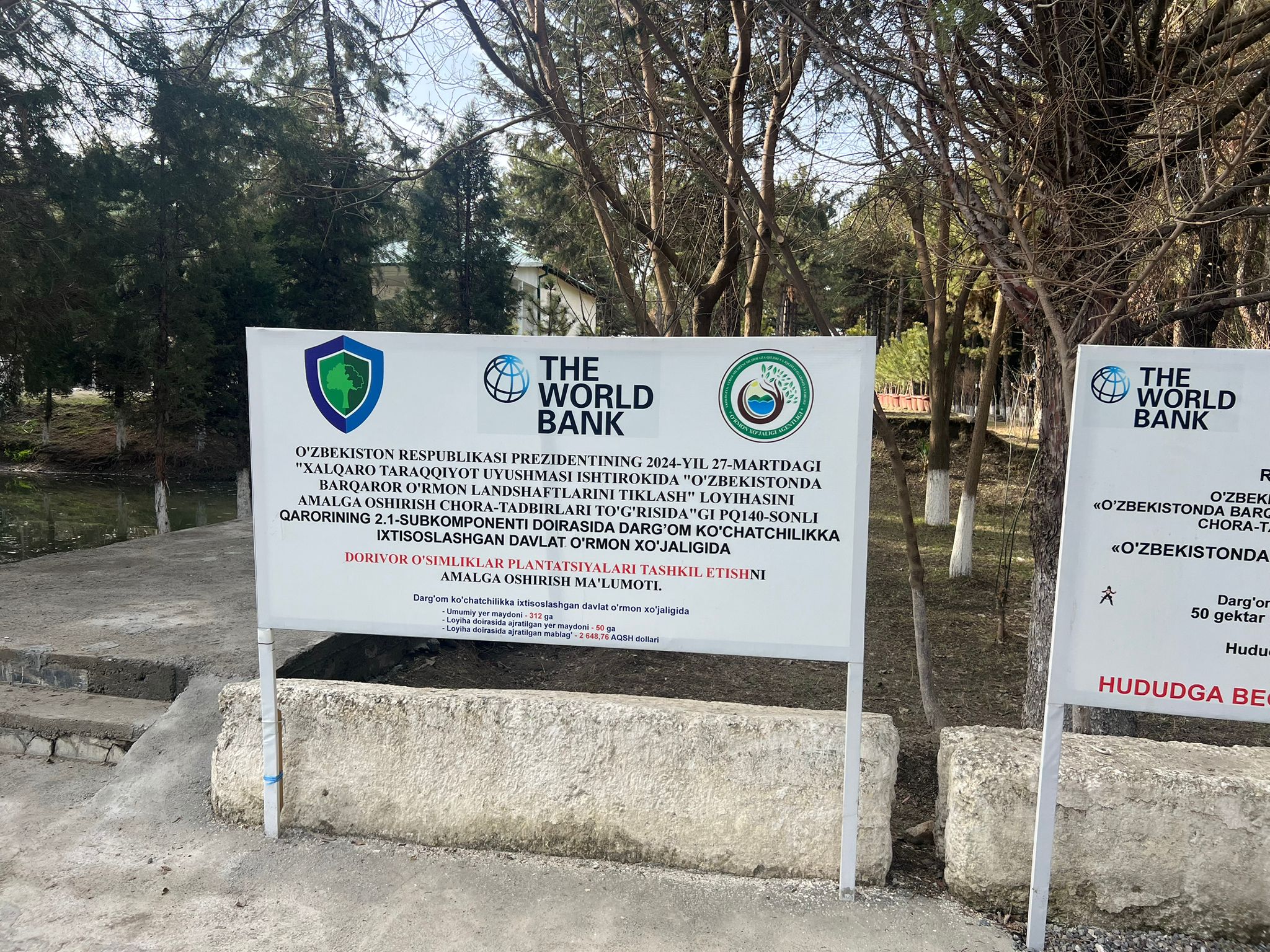
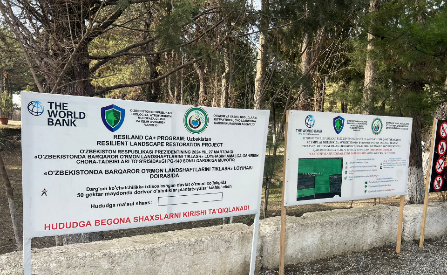
Information boards displayed at the site clearly present the project’s institutional and legal framework, including alignment with the Presidential Decree dated 27 March 2024, and highlight national priorities related to restoring resilient forest landscapes, increasing green cover, and combating land degradation and desertification across Uzbekistan (Uzbek: O‘zbekiston).
According to the on-site project information, the Dargham Forest Nursery is implementing the establishment of medicinal plant plantations covering a total area of 50 hectares within the Dargham District. The plantations focus on selected medicinal and aromatic species that are ecologically suitable for the climatic and soil conditions of the Samarkand Region and that also have high economic potential.
The main species cultivated under the project include:
- Unabi (Ziziphus jujuba – Uzbek: Unabi)
- Lavender (Lavandula angustifolia – Uzbek: Lavanda)
These species were selected due to their drought tolerance, adaptability to local environmental conditions, contribution to biodiversity enhancement, and potential to support sustainable forest-based livelihoods for local communities in Samarkand Region.
During the visit, the Director of the Forestry, Mr. Orbek Bayanovich, provided a comprehensive briefing on the nursery’s operational practices, seedling production capacity, and medium-term development objectives. Particular emphasis was placed on improving the quality and quantity of planting material, strengthening climate-resilient forestry practices, and expanding medicinal plant production as a strategic component of sustainable landscape restoration in Dargham District.
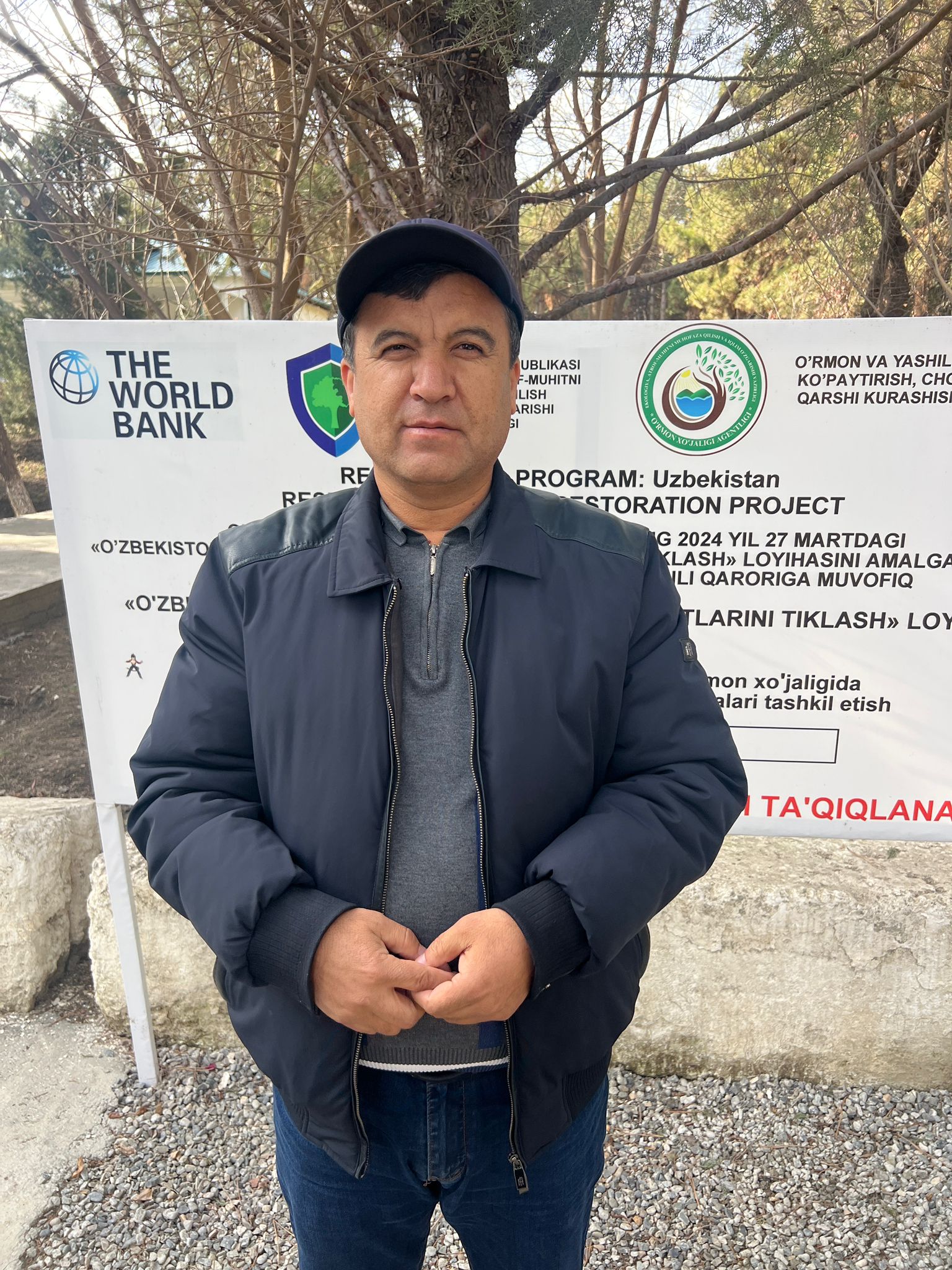
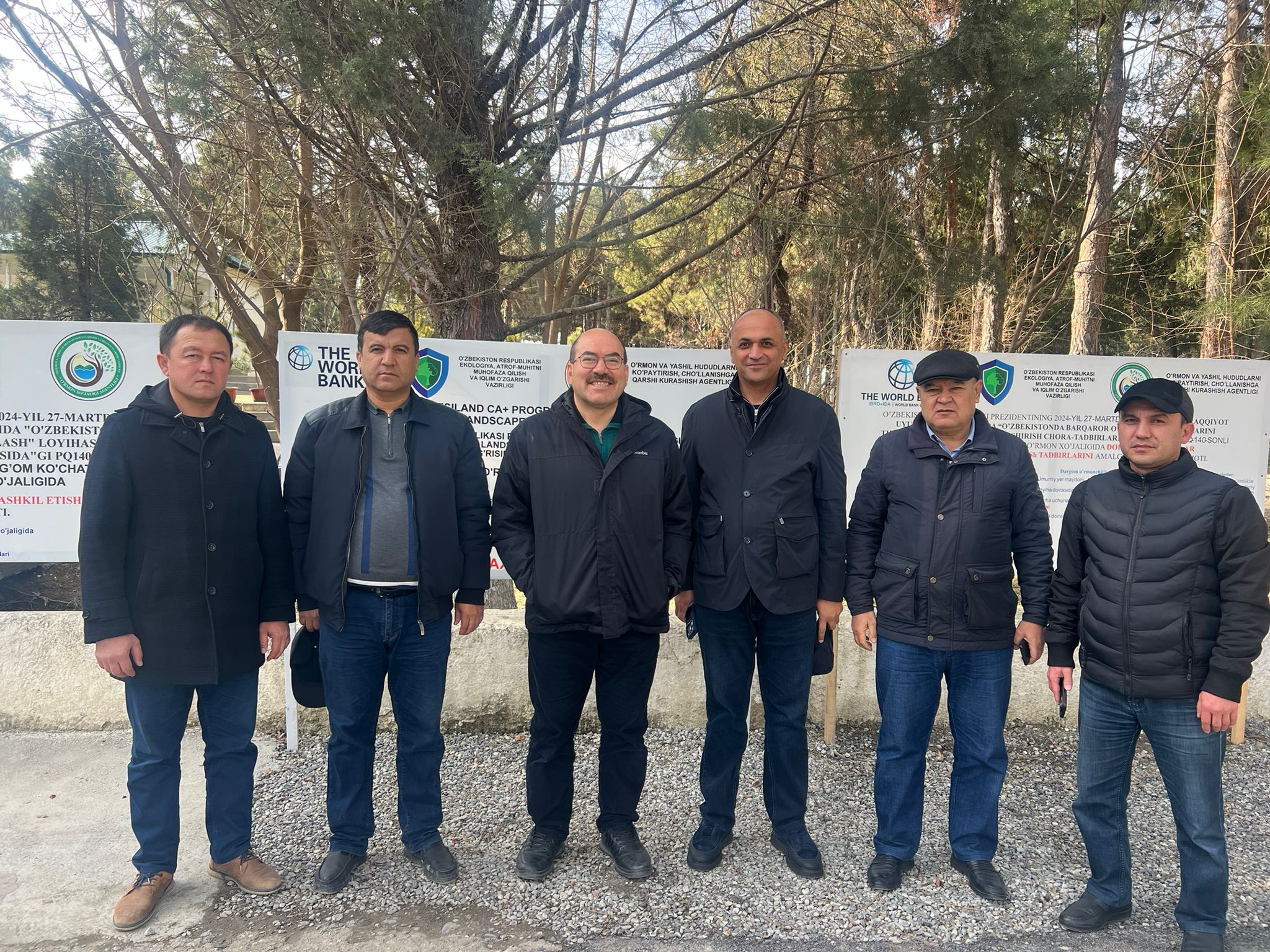
The photographs taken during the visit document both the strong institutional visibility of the project—through official signboards, donor logos, and regulatory notices—and the active engagement between project representatives and local forestry authorities. Overall, the visit confirmed that the Dargham Forest Nursery plays a strategic role in translating national forestry and landscape restoration policies into concrete, field-level results in the Samarkand Region (Samarqand viloyati), while contributing to environmental sustainability and local economic development in Uzbekistan.
Visit to the Pastdargʻom Forest Section Nursery of the Samarkand State Forestry
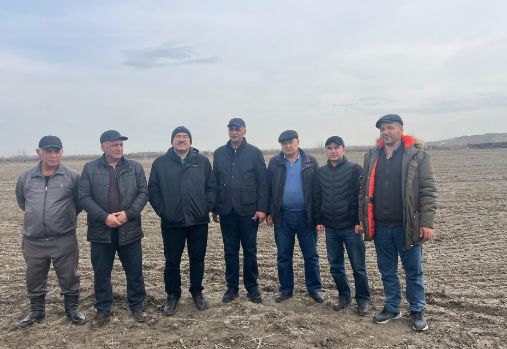
As part of the field mission conducted in the Samarkand Region (Uzbek: Samarqand viloyati), the delegation carried out a sequence of site visits aimed at assessing existing forestry infrastructure and identifying opportunities for future nursery development under the RESILAND framework. The visit program began with the Dargham State Forestry – Dargham Forest Nursery and subsequently continued to the Pastdargʻom Forest Section Nursery, both operating under the authority of the Samarkand State Forestry.
The visit to the Dargham Forest Nursery provided an overview of an established and operational facility that is currently supporting afforestation, reforestation, and forest landscape restoration activities in the region. Dargham represents a functioning nursery with existing infrastructure and ongoing production, offering practical insight into current operational capacities and constraints within the regional forestry system.
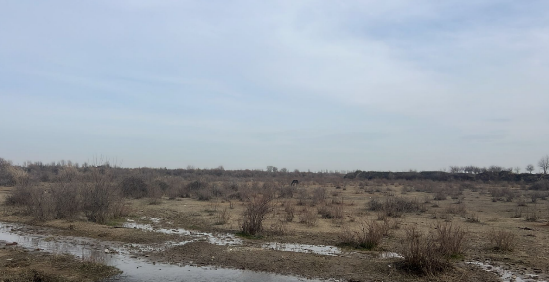
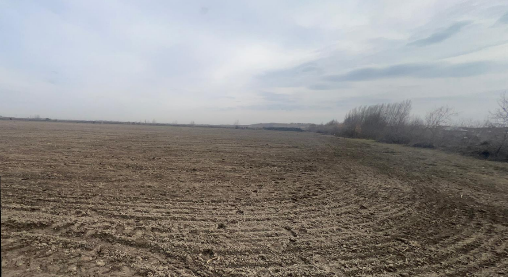
Following the Dargham visit, the delegation proceeded to the Pastdargʻom Forest Section Nursery, located in the Pastdargʻom District (Uzbek: Pastdarg‘om tumani) of the Samarkand Region. The site is geographically positioned at approximately 39°47′19″ N latitude and 66°41′54″ E longitude, at an elevation of around 580 meters above sea level. The area lies within the Zarafshan River basin, one of the most important hydrological systems supporting agriculture and forestry activities across the Samarkand plain.
In contrast to the Dargham nursery, the Pastdargʻom site was observed to be largely vacant and undeveloped at the time of the visit. This vacant condition was identified as a key distinguishing characteristic between the two sites and was assessed as a significant strategic advantage. The absence of permanent structures and legacy infrastructure provides a high degree of flexibility, allowing the site to be planned and developed entirely from scratch in line with modern nursery design principles and RESILAND technical standards.
During the site inspection, the presence of electricity transmission lines within and adjacent to the site was clearly observed, indicating the availability of basic energy infrastructure necessary for future operations. Additionally, the surrounding presence of water resources was highlighted as a major advantage. The area benefits from proximity to surface irrigation systems historically fed by the Zarafshan River, as well as from confirmed groundwater availability.
A hydrogeological assessment conducted for the site, located within the MFY “Oshik ota” area of Pastdargʻom District, confirms the technical feasibility of using groundwater for nursery irrigation. According to the assessment, the planned use of groundwater for agricultural purposes is sustainable, with an estimated daily water requirement of approximately 10 cubic meters. The report recommends the drilling of a deep groundwater well with an approximate depth of 250 meters, with an expected discharge of 4–5 liters per second and a mineralization level of around 0.27–0.3 g/l, which is suitable for irrigation. These findings confirm that reliable and environmentally sound water supply can be ensured for long-term nursery operations.
The site’s location also offers logistical and administrative advantages. It is situated near rural settlements within Pastdargʻom District, with Juma, the administrative center of the district, located within close proximity. The city of Samarkand (Semerkand), which serves as the primary urban, logistical, and institutional hub of the region, is located approximately 25–30 kilometers from the site. This proximity is considered beneficial in terms of labor availability, transportation, supervision, and access to services and markets.
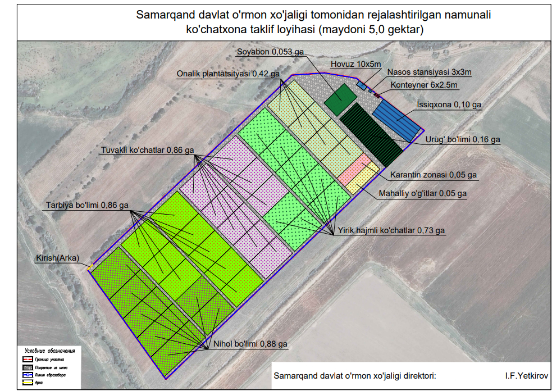
In parallel with the site visit, the delegation reviewed technical planning documentation prepared by the Samarkand State Forestry for the development of a 5.0-hectare model forest nursery at the Pastdargʻom site. The proposed layout reflects a comprehensive and modern nursery concept designed to cover the entire seedling production cycle. The plan includes clearly defined functional zones such as seedling propagation areas, training and hardening sections, potted seedling blocks, large-sized planting material areas, a mother plantation, a seed processing section, greenhouse facilities, shading structures, quarantine zones, composting and local fertilizer preparation areas, as well as supporting infrastructure including irrigation ponds, pumping stations, container units, and access points.
The fact that the Pastdargʻom site is currently empty was explicitly evaluated by the delegation as a major planning advantage, as it allows for optimized spatial organization, efficient production zoning, improved water and energy management, and the integration of climate-resilient and resource-efficient technologies from the outset. Unlike established nurseries with structural constraints, the Pastdargʻom site offers the opportunity to develop a new-generation, purpose-built nursery fully aligned with RESILAND objectives.
Overall, the combined findings from the field observations, spatial planning documents, hydrogeological assessments, and proximity analyses underscore the strategic importance of the Pastdargʻom Forest Section Nursery within the regional forestry framework. When considered alongside the existing Dargham nursery, Pastdargʻom presents a complementary and forward-looking investment opportunity. Its favorable site conditions, confirmed water availability, access to infrastructure, and proximity to key settlements position it as a highly suitable location for establishing a model forest nursery that can significantly strengthen forest landscape restoration efforts, enhance climate resilience, and support sustainable land management objectives across the Samarkand Region under the RESILAND program.
5 February 2026- Thursday
Visiting to Kitob State Forestry
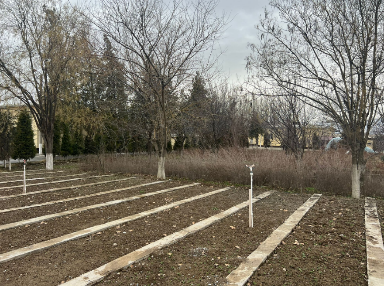
On Thursday, 5 February 2026, at approximately 09:00 a.m., the delegation visited the Kitob Forestry Bureau, including the small forest nursery located within the forestry compound.
Mr. Xaydarov Faxriddin Asqarovich, RESILAND Project Coordinator for the Qashqadaryo Region, was a member of the delegation during the visit.
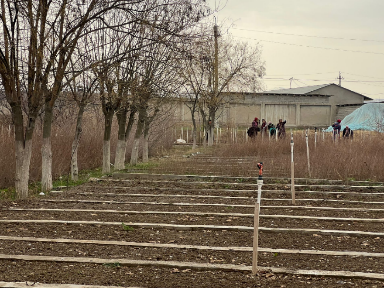
Visiting to Kitob Nursery
The proposed nursery site in Kitob is geographically well-positioned within an active agricultural landscape of the Qashqadaryo Region, at an elevation of approximately 620 meters above sea level. The site is located approximately 6–7 km from the Kitob district center, providing efficient logistical access while remaining sufficiently distant from dense residential areas, thereby allowing operational flexibility and future expansion.
The site lies within an intensively cultivated agricultural zone where surface irrigation systems are actively used. Field observations and surrounding land-use patterns indicate the presence of irrigation canals and secondary distribution networks supplying agricultural parcels in the area. In addition, long-established agricultural practices strongly suggest the availability of groundwater resources, commonly accessed through wells in the Kitob area. These conditions indicate that water availability is not expected to be a limiting factor for nursery establishment, subject to appropriate irrigation planning during the design phase.
The terrain is predominantly flat to gently sloping, which supports efficient nursery layout planning, irrigation infrastructure installation, and phased development. Existing tree belts surrounding the site function as natural windbreaks, contributing positively to microclimatic regulation and improved water-use efficiency for seedling production.
During the site visit, detailed information regarding the proposed nursery area, land characteristics, water use practices, and development potential was provided by local and regional stakeholders. These included:
• Faxriddin Xaydarov – RESILAND Project Coordinator for the Qashqadaryo Region, mobile: +998 88 586 09 76
• Miraziz Turopov – Representative of the Kitob Forest Nursery, mobile: +998 88 002 13 552
• Adilov Sherzod Burxonovich – Regional Director, Kitob/Samarkand Forestry (Leshoz), mobile: +998 77 005 72 71
Subsequently, a meeting was also held with the director of the neighboring Shahrisabz forestry administration, in order to exchange information on cross-boundary forestry practices and to discuss potential coordination related to nursery development and planting material supply.
• Aliser Shahrisabz – Director of Shahrisabz Forestry, mobile: +998 70 133 70 77
The discussions confirmed a shared interest in coordination between Kitob and Shahrisabz districts, particularly with regard to nursery planning, seedling distribution, and alignment of afforestation activities across adjacent administrative areas.
Overall, the site’s elevation, proximity to the district center, access to surface and groundwater resources, suitable terrain conditions, and strong local and inter-district institutional engagement collectively indicate that the proposed Kitob site is technically and strategically well suited for the establishment of a new RESILAND forest nursery.
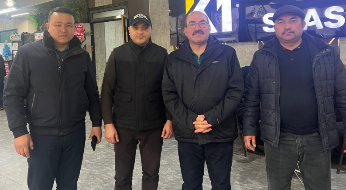
Visit to Sho’rtan State Forestry Directorate and Proposed Nursery Area
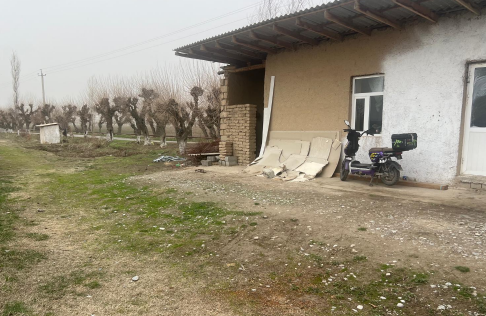
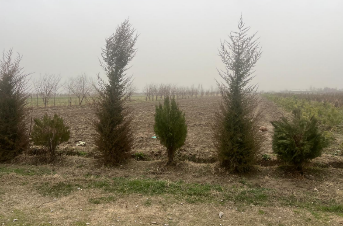
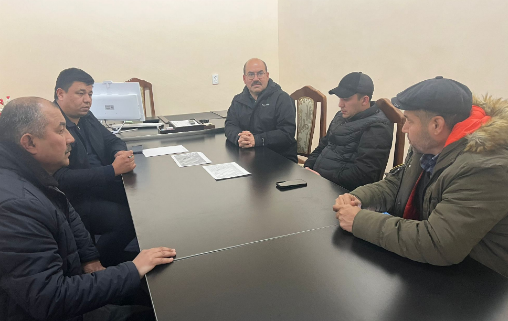
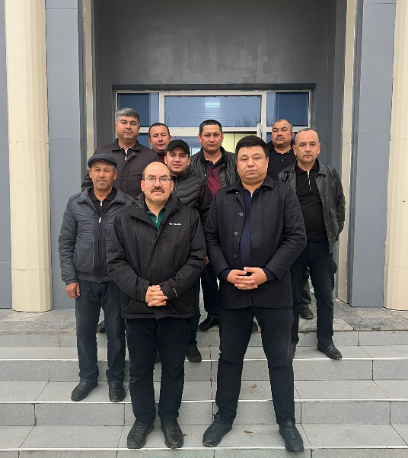
On Thursday, 5 February 2026, in the afternoon, the delegation visited the Sho’rtan State Forestry Directorate in the Qashqadaryo Region within the scope of the RESILAND field mission. The visit aimed to assess the planned establishment and improvement of a forest nursery and to review the technical documentation prepared by the Directorate.
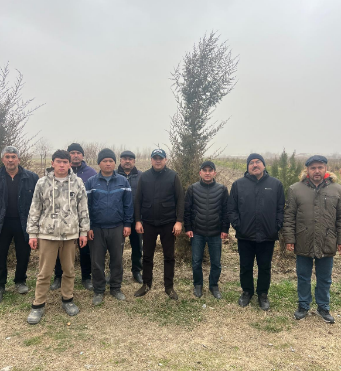
The delegation met with Maqsud Axmedov, Director of Sho’rtan State Forestry. During the meeting, Mr. Axmedov provided detailed information on the planned nursery, including its location, size, functional design, species composition, and implementation approach.
Mr. Maqsud Axmedov – Director, Sho’rtan State Forestry
📞 Mobile: +998 91 321 10 50
The discussion was supported by officially prepared and signed documents, including a detailed nursery layout plan (DUX 5.0) and species lists.
According to the spatial data and layout documents presented during the meeting, the proposed nursery site is located at approximately:
- Latitude: 38.9366° N
- Longitude: 65.6418° E
The site lies in the rural agricultural zone between Sho’rtan settlements and the city of Karshi, at an approximate distance of 10–12 km from the Karshi city center. This distance provides a good balance between accessibility and separation from dense urban areas.
Using georeferenced measurements and digital mapping tools, the nursery area has been calculated as:
- Total area: approximately 96,385 m² (≈ 9.6 hectares)
- Average elevation: approximately 358 m above sea level
- Terrain: flat to very gently sloping
These characteristics are favorable for nursery operations, mechanized work, and irrigation system installation.
The proposed nursery area is situated within an active agricultural landscape, surrounded by cultivated fields and rural settlements. The flat topography reduces earthwork requirements and supports efficient land subdivision.
A key geographical advantage of the site is its proximity to surface water resources, including the G‘ishmon River (G‘ishmon daryosi) located nearby. This significantly strengthens the feasibility of irrigation, which is critical for nursery operations, especially during the dry season.
Additional geographical considerations include:
- Existing rural road access, enabling easy transport of materials and seedlings.
- Absence of steep slopes or erosion-prone terrain.
- Adequate space for phased development and future expansion.
Overall, the site is geographically well suited for a medium- to large-scale forest nursery.
Nursery design and area distribution
Based on the officially approved nursery layout plan (DUX 5.0), the nursery is designed as an integrated facility with the following functional components:
- Seedling beds (Nihol bo‘limi): 0.40 ha
- Containerized seedlings area (Tuvakli ko‘chatlar): 1.00 ha
- Training and hardening blocks (Tarbiya bo‘limi): 1.03 ha
- Large-sized planting material blocks (Yirik hajmli ko‘chatlar): 1.03 ha
- Mother plantation (Onalik plantatsiyasi): 0.34 ha
- Seed section (Urug‘ bo‘limi): 0.16 ha
Supporting infrastructure includes:
- Greenhouse (Issiqxona): 0.10 ha
- Shading structures (Soyabon): 0.053 ha
- Quarantine zone (Karantin zonasi): 0.04 ha
- Compost and local fertilizer preparation (Mahalliy o‘g‘itlar): 0.04 ha
- Water reservoir: 10 × 5 m
- Pumping station: 3 × 3 m
- Service container: 6 × 2.5 m
This layout allows efficient workflow, biosecurity control, and staged production.
Tree and shrub species planned for production
The Directorate presented signed and stamped official species lists, confirming the species planned for nursery production. These include:
Coniferous and evergreen species
- Pinus eldarica
- Thuja orientalis
- Thuja occidentalis
- Juniperus virginiana
Broadleaved forest species
- Fraxinus sogdiana
- Fraxinus ornus
- Acer campestre
- Quercus spp.
- Platanus
- Ulmus parvifolia
- Ulmus densa
- Ailanthus altissima
- Paulownia spp.
Ornamental and landscape species
- Albizia julibrissin
- Catalpa speciosa
- Chilopsis linearis
- Sophora japonica
Shrubs
- Forsythia
- Berberis
- Mahonia
- Hibiscus
- Lavandula
- Lycium barbarum
The selected species support afforestation, urban landscaping, erosion control, and climate adaptation goals in the Qashqadaryo Region.
6 February 2026 Friday
Visiting to Uzun State Forestry and the Nursery
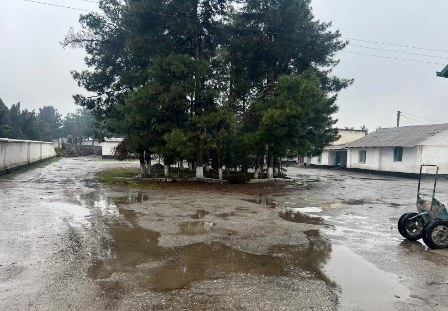
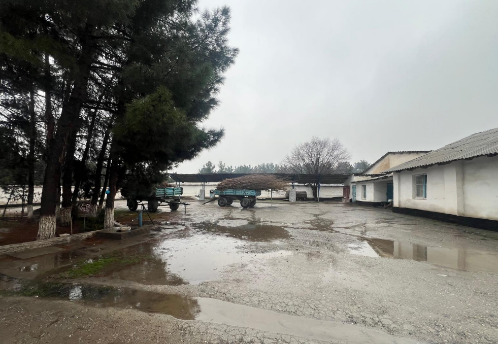
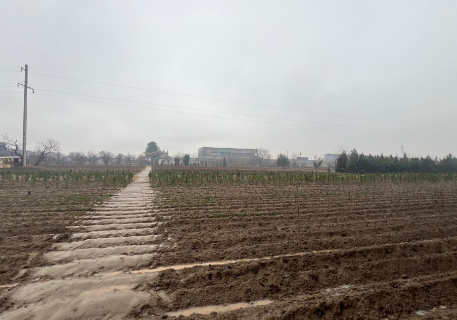
The Uzun nursery area is located within the administrative boundaries of Uzun District, Surxondaryo Region, in the south-eastern part of Uzbekistan.
- Coordinates: 38.3823166° N – 67.9731369° E
- Elevation: approximately 550–560 m above sea level
- Nearest settlement: Uzun town
Surxondaryo Region is Uzbekistan’s southernmost region and borders Afghanistan to the south and Tajikistan to the east. The location of the Uzun nursery is therefore strategically important for regional afforestation and restoration activities in border-adjacent areas.
Geographical and Environmental Description
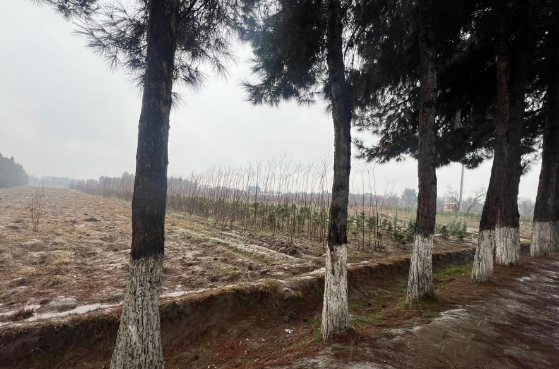
The nursery area is situated in a rural agricultural landscape, surrounded by cultivated fields and shelterbelt plantings. The terrain is flat to gently sloping, which is well suited for nursery operations, movement of machinery, and installation of irrigation systems.
The climate is continental, with hot and dry summers and relatively mild winters. These conditions make efficient water management essential and favor the production of drought-tolerant and regionally adapted tree species.
Soils in the area are predominantly alluvial and agricultural, indicating long-term cultivation suitability and good potential for open-field seedling production (ochiq maydon ko‘chat yetishtirish).
Water Resources
The Uzun nursery area lies within the Surxondaryo river basin (Surxondaryo havzasi). Although no major river flows directly through the site, the area is supported by irrigation canals (sug‘orish kanallari) commonly used for agricultural production.
Planned and existing nursery infrastructure includes:
- a water reservoir (hovuz) – approximately 10 × 5 m,
- a pumping station (nasos stansiyasi) – approximately 3 × 3 m.
Overall, water availability is considered adequate, provided that seasonal demand is carefully managed.
Nursery Area and Size
Based on GIS-based measurements carried out using Google Earth and a georeferenced polygon boundary:
- Total nursery area: 96,384.76 m²
- Equivalent to: approximately 9.64 hectares
- Perimeter: approximately 1,274 m
This area is sufficient for the establishment of a medium-scale forest nursery (o‘rmon ko‘chatxonasi) with potential for phased development and future expansion.
Nursery Facilities and Functional Units
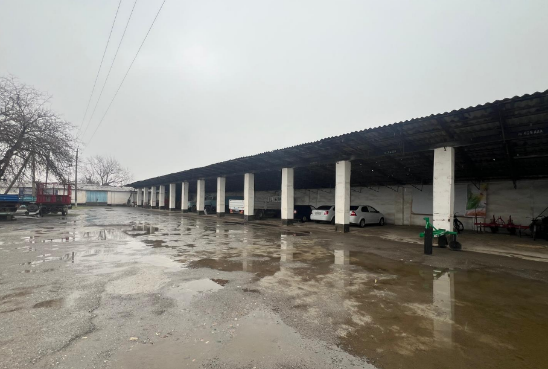
The Uzun nursery is planned and/or currently organized to include the following functional components:
- Open-field seedling beds (ochiq maydon ko‘chat yotoqlari)
- Containerized seedling areas (tuvakli ko‘chatlar)
- Training and hardening areas (tarbiya va chiniqtirish maydonlari)
- Large-sized planting material blocks (yirik hajmli ko‘chatlar)
- Mother plantation (onalik plantatsiyasi)
- Greenhouse facilities (issiqxona)
- Shading structures (soyabonlar)
- Quarantine zone (karantin zonasi)
- Compost and local fertilizer preparation area (mahalliy o‘g‘it va kompost tayyorlash maydoni)
- Service and storage containers (xizmat va saqlash konteynerlari)
This functional layout allows for a complete nursery production cycle, from seedling propagation to hardened planting material ready for field planting.
Tree and Plant Species Observed and Planned
Based on field observations, photographs, and documentation reviewed during the visit, the following tree species are present or planned for production:
Coniferous / evergreen species (ignabargli daraxtlar):
- Pinus spp. – pine (qarag‘ay)
- Thuja spp. – thuja (tuya daraxti)
- Cupressus spp. – cypress (sarv)
Broadleaved species (keng bargli daraxtlar):
- Juglans regia – walnut (yong‘oq)
- Populus spp. – poplar (terak)
- Morus spp. – mulberry (tut)
Ornamental and landscape species (manzarali daraxtlar va butalar):
- various decorative trees and shrubs used for shelterbelts (himoya polosalari) and landscaping.
These species are well adapted to the local climate, soils, and water availability of the Uzun area.
Meetings and Institutional Contacts
During the visit, meetings and consultations were held or attempted with the following individuals:
- Ramziddin Nizameddinov
Director, Uzun State Forestry (Uzun Davlat O‘rmon Xo‘jaligi direktori)
📞 Phone: (+99 899 671 71 07) - Azamat Mahmudov
Head of Uzun Forest Nursery (Uzun o‘rmon ko‘chatxonasi rahbari)
📞 Phone: (+998 912 304 14 62) - Goyipov Isomiddin
Deputy Director, Uzun State Forestry (direktor o‘rinbosari)
📞 Phone: (+998 888 845 66 07) - Bekmuradov Gulbay Xaliyarovich
Technical Specialist, Surxondaryo Region (Surxondaryo viloyati texnik mutaxassisi)
📞 +998 99 674 01 69 - Mirzayev Toshbalta
- Director, Xisar State Forestry (Xisar Davlat O‘rmon Xo‘jaligi direktori)
📞 Phone: (+998 91 002 05 78)
Overall Assessment
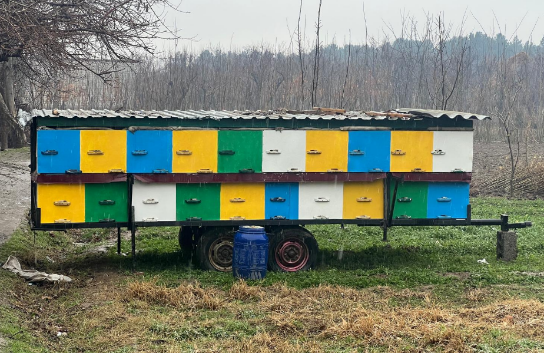
The Uzun nursery area is geographically, environmentally, and administratively suitable for development under the RESILAND framework. The combination of adequate land size, favorable terrain, existing irrigation infrastructure, and experienced local staff indicates strong potential for upgrading the site into a regional forest nursery (hududiy o‘rmon ko‘chatxonasi).
A future on-site technical verification is recommended prior to implementation to confirm soil properties, water access points, and infrastructure readiness.
Visiting to Surkhandarya State Forestry
Visit to Surxondaryo – Termez (Tirmiz) State Forestry Nursery
Date: Friday, 6 February 2026 (afternoon)
Location and Coordinates
The delegation visited the Surxondaryo (Termez/Tirmiz) State Forestry Nursery, located at the following coordinates:
- Coordinates: 37°18’41.8″N – 67°23’10.6″E
- Decimal format: 37.3116035 N, 67.3862762 E
The nursery is situated within the administrative boundaries of Termez district, Surxondaryo Region, southern Uzbekistan.
Geographic and Administrative Assessment
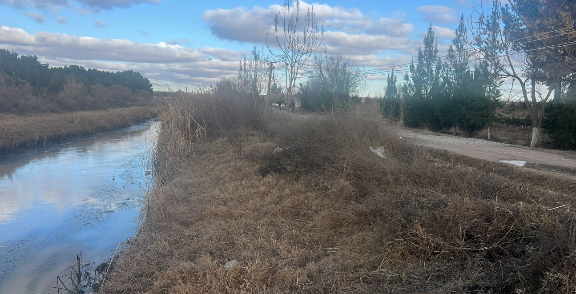
The nursery is located on a flat alluvial plain typical of the lower Amu Darya (Amudaryo) basin. The surrounding landscape consists mainly of agricultural land, shelterbelt tree lines, and experimental forestry plots.
- Administrative affiliation: Surxondaryo Region – Termez district
- Topography: flat terrain, suitable for nursery and experimental forestry use
- Regional context: southernmost part of Uzbekistan
Water Resources
The nursery lies within the regional irrigation network connected to the Amu Darya system. Although the site is not directly adjacent to the river, water availability is ensured through irrigation canals (sug‘orish kanallari) that support agricultural and forestry activities in the Termez area.
Nursery Characteristics and Observations
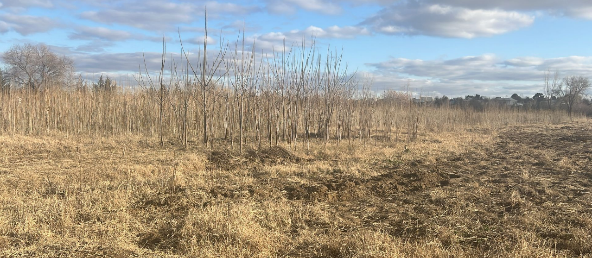
Based on direct field observation and photographic documentation, the following characteristics were recorded:
- Open nursery areas (ochiq ko‘chat maydonlari)
- Experimental and research plots (tajriba uchastkalari)
- Clearly labeled planting points, indicating monitored trials
- Internal dirt roads and access paths
- Shelterbelt-style tree rows along nursery boundaries
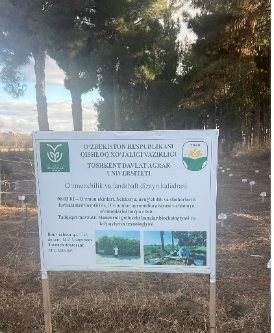
Informational boards on site indicate that the area is used for experimental forestry and applied research, rather than only for commercial seedling production.
Academic Research Plot and Altitudinal Context
Within the Termez (Surkhandarya) nursery area, a designated academic research plot has been established and is operated under the authority of Tashkent State Agrarian University, Department of Forestry and Landscape Design. This plot is used for applied research focusing on the propagation, adaptation, and ecological performance of forest and ornamental plant species under local climatic and soil conditions. The site is located at an elevation of approximately 310 meters above sea level, which places it within the lowland continental zone of southern Uzbekistan, characterized by hot summers, mild winters, and significant seasonal temperature variation. The recorded orientation of the plot is approximately 76° east (east–northeast exposure), indicating a dominant eastern aspect that allows early solar radiation during morning hours while limiting excessive afternoon heat stress. This combination of low elevation, eastern exposure, and controlled experimental layout provides favorable conditions for testing species resilience, growth dynamics, and survival rates under arid and semi-arid environmental pressures typical of the Surkhandarya region.
Information Provided By
- Sancar Boranov
Surxondaryo Regional Forestry Director
📞 +998 97 350 08 12 - Bekmuradov Gulbay Xaliyarovich
Surxondaryo Region – Technical Specialist
📞 +998 99 674 01 69
These individuals provided information regarding the Termez State Forestry Nursery, its function, and ongoing activities.
Overall Assessment
The Termez (Tirmiz) State Forestry Nursery functions as an active experimental forestry site within Surxondaryo Region. Its flat terrain, access to irrigation infrastructure, and proximity to Termez city support its continued use for research-based planting trials and nursery development.
Based strictly on observed and documented information, the nursery plays a role in regional forestry experimentation and applied field testing, with potential relevance for future rehabilitation or improvement initiatives.
7 February 2026 Saturday
Return to Tashkent via Shahrisabz and Attempted Visit to Jizzakh Forestry
On Saturday, 7 February 2026, the delegation returned to Tashkent via Shahrisabz. During the return journey, an attempt was made to visit the Jizzakh Regional Forestry Directorate and its associated nursery in order to gain an overview of local forestry and nursery practices. However, it was determined on site that no active nursery planning, development, or designated nursery area was currently in place. As a result, no technical meeting or field assessment could be conducted, and the visit remained limited to a preliminary inquiry without further engagement.
8 February 2026 Sunday
Visit to Namangan Forestry Nursery
On Sunday, 8 February 2026, the delegation visited the Namangan Forestry Nursery, located in Namangan Region, eastern Uzbekistan. The purpose of the visit was to observe the existing nursery area, understand its geographical setting, and exchange information with regional forestry representatives regarding current nursery activities.
Location and Coordinates
The Namangan Forestry Nursery is located at the following coordinates:
- Latitude: 41.095428° N
- Longitude: 72.053322° E
The nursery lies within the administrative boundaries of Namangan Region, on the eastern side of the Fergana Valley.
The site is situated on lowland terrain at an approximate elevation of 480 meters above sea level, typical of the central Fergana Valley plain.
Geographical and Administrative Context
The nursery is located close to Namangan, which serves as the main administrative, economic, and logistical center of the region. The surrounding area consists predominantly of agricultural land, interspersed with shelterbelt plantings and rural infrastructure.
From a regional perspective, Namangan Region:
- borders Fergana Region to the west,
- borders Andijan Region to the south, and
- lies in close proximity to the international border with Kyrgyzstan to the northeast.
This position gives the nursery strategic relevance for forestry and greening activities within the eastern part of the Fergana Valley.
Hydrology and Environmental Setting
The Namangan Forestry Nursery is located within the broader Syr Darya river basin. While the river itself does not pass directly through the nursery, the area is supported by a network of irrigation canals (sug‘orish kanallari) that supply water to agricultural and forestry lands across the valley.
The climate is continental, with:
- hot summers,
- cold winters, and
- limited natural precipitation,
making irrigation a critical factor for nursery operations. The flat terrain and established irrigation infrastructure are suitable for open-field nursery production.
Nursery Characteristics and Observations
During the visit, the nursery was observed to be an actively used forestry planting area. The following elements were documented on site:
- Open planting areas with tree rows arranged in a systematic pattern
- Shelterbelt-style plantings along plot boundaries
- Internal dirt roads and access paths used for maintenance
- Basic irrigation arrangements serving planting blocks
No advanced greenhouse complexes or containerized production systems were observed during this visit; nursery activities appear to rely mainly on open-field planting techniques.
Meetings and Contacts
During the visit, information regarding the nursery and regional forestry activities was provided by the following verified individuals:
- Nazim Uzakov
Namangan Forestry / Uzbekistan Resiland
📞 +998 97 374 11 83 - Ja’farov Maxamadxon Axmadxonovich
Namangan Regional Office Coordinator
📞 +998 98 771 24 77 - Voxobov Azizbek A’zamjonovich
Technical Specialist, Namangan Region
📞 +998 50 252 65 64
All roles and contact details are recorded exactly as provided, without additional interpretation or reassignment.
General Assessment
The Namangan Forestry Nursery is well positioned geographically within the Fergana Valley and benefits from proximity to Namangan city, established irrigation systems, and an intensively managed agricultural landscape. Although nursery infrastructure is relatively basic, the site functions as a regional planting and support facility for forestry and greening activities.
The visit provided a clear understanding of the nursery’s current condition, spatial context, and institutional setting, forming a sound basis for any future technical assessment or development planning.
Visiting to O’rta Orol State Forestry
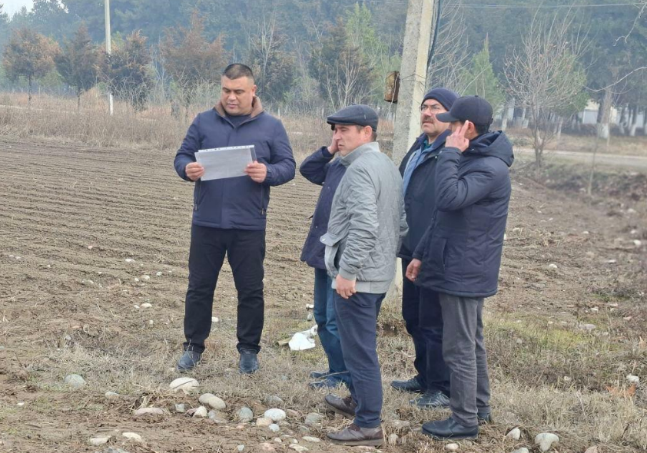
Visiting to O‘rta Orol State Forestry
Date: 8 February 2026, Sunday
Location: O‘rta Orol State Forestry
Coordinates: 40.9304080 N, 71.8134080 E
Visit Overview
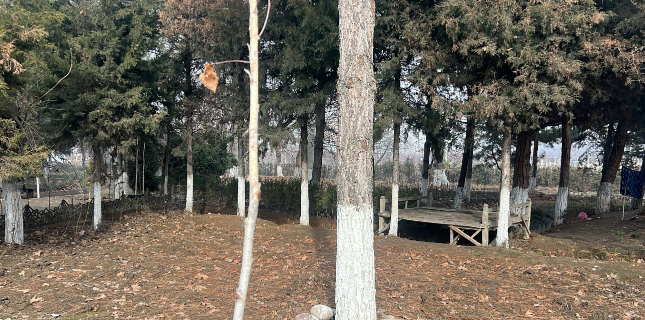
On 8 February 2026, a field visit was conducted to O‘rta Orol State Forestry, located in the Namangan region. The visit focused on observing ongoing forestry activities, nursery-related planting areas, and general site conditions. The site is positioned within a lowland-foothill transition zone typical of eastern Namangan, characterized by flat to gently undulating terrain and seasonal continental climate conditions.
Geographic and Environmental Context
The forestry area is situated within the broader Namangan Valley, surrounded by agricultural lands, shelterbelts, and mixed tree stands. The elevation in this zone supports deciduous and coniferous species commonly used for afforestation, wind protection, and soil stabilization.
The site benefits from relatively accessible terrain and proximity to irrigation channels used in surrounding agricultural areas, although visible reliance on manual and seasonal water management was noted. Winter conditions during the visit indicated dormant vegetation and exposed soil surfaces, allowing clear observation of planting structure and spacing.
Observations from the Field
Based on visual assessment of the planted plots:
- Rows of young seedlings are planted in regular linear patterns, indicating mechanized or semi-mechanized planting methods.
- Seedling density appears moderate, allowing sufficient spacing for root development and future canopy growth.
- Some plots show early-stage conifer seedlings, while adjacent areas contain deciduous saplings at different growth stages.
- Ground cover is limited during winter, which may increase erosion risk but also facilitates maintenance and inspection activities.
- Established mature trees around resting and operational areas provide wind protection and microclimatic buffering.
Infrastructure observed on-site includes basic forestry service facilities and resting structures integrated within mature tree stands. These areas appear to serve both operational and staff-related functions.
Site Condition Assessment
Overall, the forestry area reflects active land use with structured planting practices. The condition of the seedlings suggests ongoing management and monitoring, though long-term success will depend on sustained irrigation, weed control, and protection from grazing or mechanical damage.
The diversity of planting zones indicates a multipurpose approach, likely combining reforestation, protective forestry, and nursery-supported plantation development.
Meetings and Contacts
During the visit, coordination and technical discussions related to Namangan regional forestry activities were associated with the following officials (as provided):
- Ja’farov Maxamadxon Axmadxonovich
Namangan Viloyati Hududiy Ofis Koordinatori
📞 +998 98 771 24 77 - Voxobov Azizbek A’zamjonovich
Namangan Viloyati Texnik Mutaxassis
📞 +998 50 252 65 64
In addition, visual documentation includes reference to:
- Emin Can Mirzabayev
O‘rta Orol (Narin) Forestry – Deputy Director
📞 +998 97 270 26 72
General Evaluation
The O‘rta Orol State Forestry site demonstrates organized forestry land management with clear planting schemes and maintained access routes. While winter conditions limit biological assessment, structural indicators suggest an operational forestry unit aligned with regional afforestation and land rehabilitation objectives.
Continued monitoring during the growing season would allow more detailed evaluation of survival rates, growth performance, and species adaptation under local environmental conditions.
9 February 2026 Monday
Activities on this day focused on the systematic evaluation of field assessment findings collected during recent site visits. Detailed review and verification of field notes, photographic records, spatial observations, and technical measurements were conducted to ensure consistency, accuracy, and completeness of the assessment data.
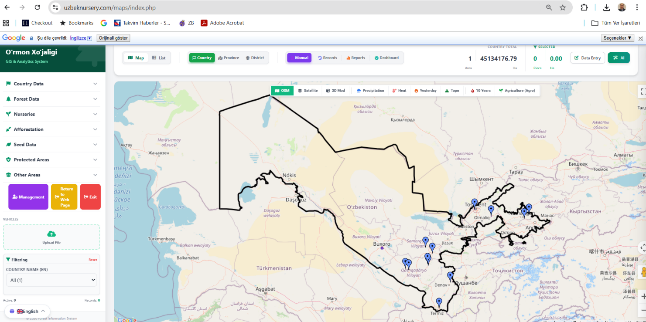
In parallel, data processing and content structuring tasks were carried out for integration into the web platform developed by the Consultant within the scope of the contract (https://www.uzbeknursery.com/). This work included organizing verified field information, preparing standardized entries, and aligning uploaded materials with project reporting formats and technical documentation requirements.
These analytical and data-management activities contributed to consolidating field results and enhancing the accessibility, traceability, and usability of validated information for project coordination, monitoring, and reporting purposes.
10 February 2026 Tuesday
Activities on this day continued with the evaluation and consolidation of findings obtained from recent field assessments. Analytical review of site observations, technical notes, and supporting documentation was carried out in order to finalize key conclusions and ensure internal consistency of the assessment results.
In addition, the compiled findings and preliminary conclusions were presented to the Project Team. Consultations and technical discussions were held with project representatives, including the Director General, Mr. Erkin Mukhitdinov, to review observations, clarify site-specific issues, and exchange professional views regarding potential development approaches and implementation considerations.
These meetings supported mutual understanding of field conditions and contributed to aligning technical perspectives between the Consultant and project stakeholders regarding next steps and planning priorities.
11 February 2026 Wednesday
On this day, a series of institutional meetings were held with officials of the Forestry Agency of Uzbekistan. The meetings focused on technical coordination, exchange of information, and discussions regarding digitalization, forestry data systems, and institutional cooperation related to project activities.
Consultations were conducted with the following officials:
- Mr. Yoldoshkhonov Odilkhon Tursunkhoja ugli — Director, Center of the Digitalization of Forestry
- Mr. Turdiyev Akbarali Usmon o‘g‘li — Chief Specialist, Department of Implementation of Information and Communication Technologies and Digitalization
- Mr. Eshankulov Zafar Nabikulovich — Head of Department, Main Department for Combating Desertification and Restoring Degraded Lands
During the meetings, detailed discussions were held on institutional data infrastructure, digital monitoring systems, integration of forestry-related spatial information, and opportunities for technical cooperation within the framework of ongoing forestry development and restoration initiatives. The consultations contributed to strengthening professional coordination and clarifying potential areas for collaboration in digital forestry applications.

. 
12 February 2026 Thursday
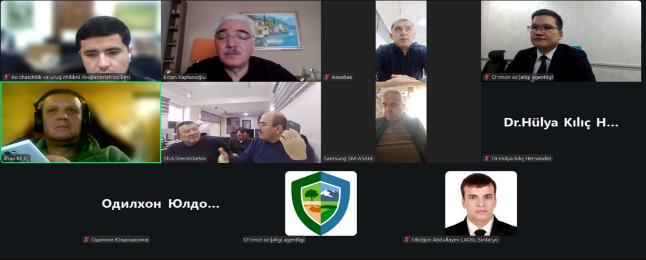
Zoom Meeting for Assessing the field observations
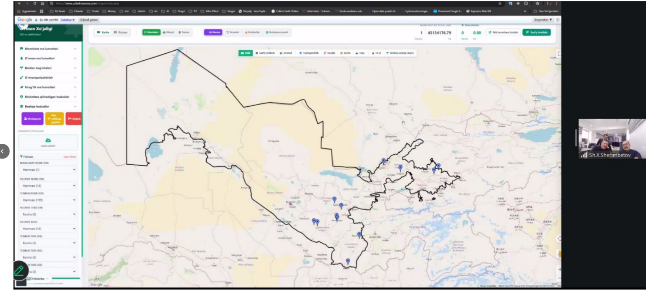
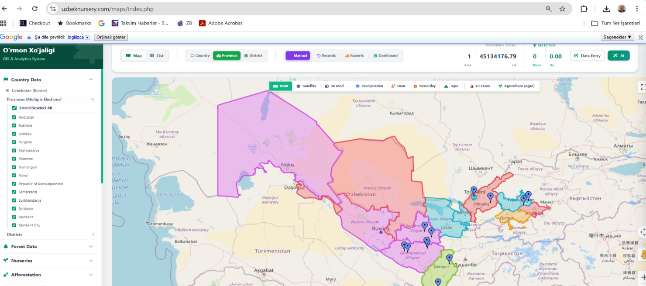
Between 11:00 and 12:30 (Tashkent time), an online coordination meeting was held via Zoom, hosted by the Forestry Agency of Uzbekistan, to introduce and review the web platform developed under the consultancy contract (https://www.uzbeknursery.com/).
The session started with an opening and brief orientation on the purpose of the meeting, followed by an overview presentation delivered by İsmail Belen (International Consultant). In his intervention, the Consultant explained the strategic rationale of the platform and its intended institutional value, emphasizing the role of digital tools in improving transparency, standardization of information, and accessibility of verified field and nursery data. The presentation also clarified how the platform is structured to support evidence-based planning, monitoring, and coordination in the context of forestry nursery development activities.
Following the introductory remarks, the meeting continued with a detailed technical presentation and live demonstration conducted by İlhan Kılıç (Web platform responsible / Software Developer).
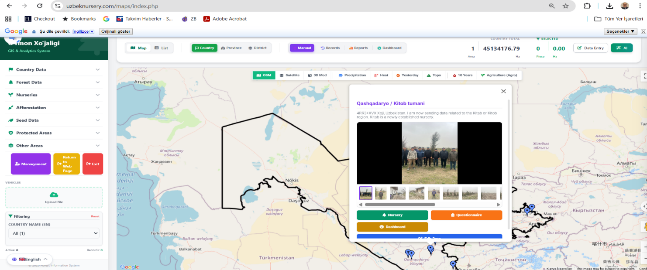
During the live walkthrough, key functional components were introduced step-by-step, including:
- the general site structure and navigation,
- the main information sections (institutional pages and content modules),
- the map-based/GIS visualization environment used to display locations and spatial information,
- the logic of data entry, organization, and retrieval,
- the way field findings and standardized records can be integrated into the platform,
- user-oriented features supporting filtering, viewing, and structured presentation of nursery-related information.
An interactive Q&A segment followed the demonstration. Participants raised questions on practical use, access and administration, data integration procedures, and how the platform can be expanded or updated over time. İlhan Kılıç responded to questions with technical clarifications, and additional explanations were provided where needed to ensure shared understanding of workflows and operational logic.
After the presentation and technical clarifications, representatives from the Uzbekistan side took the floor and provided comments and feedback. Their interventions focused on institutional expectations, usability considerations, and potential applications of the platform for coordination across forestry units. The discussion supported alignment on how the platform could be utilized as a shared reference tool for nursery planning, monitoring, and reporting.
Overall, the Zoom meeting functioned as a structured demonstration and coordination session that (i) introduced the platform to key institutional stakeholders, (ii) provided a clear explanation of its modules and operational logic through live presentation, and (iii) facilitated constructive feedback and technical discussion to support future use and further development priorities.
Informing the Director General About the Resulst
After the Zoom Meeting, İsmail Belen send a message to Erkin Mukhitdinov on 12th of February as follows:
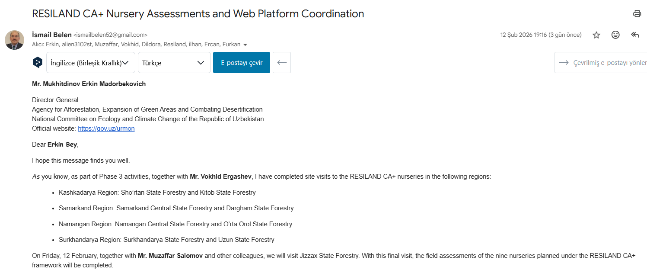
| Mr. Mukhitdinov Erkin Madorbekovich
Director General Dear Erkin Bey, I hope this message finds you well. As you know, as part of Phase 3 activities, together with Mr. Vokhid Ergashev, I have completed site visits to the RESILAND CA+ nurseries in the following regions:
On Friday, 12 February, together with Mr. Muzaffar Salomov and other colleagues, we will visit Jizzax State Forestry. With this final visit, the field assessments of the nine nurseries planned under the RESILAND CA+ framework will be completed. First and foremost, I would like to express my sincere and heartfelt appreciation for the outstanding hospitality and cooperation extended to me during my field visits. I am deeply grateful to Your Excellency personally, as well as to RESILAND CA+ Director Mr. Shuhratjon Tojiboev, and to the dedicated staff of RESILAND CA+ and the Forestry Agency for their warm welcome, professionalism, and constructive collaboration throughout the process. As I previously had the pleasure of sharing with you, it is of great importance that the planning process be carried out in full alignment with national policies and the existing practices of the Forestry Agency. I strongly believe that ensuring transparency and close cooperation among all relevant stakeholders is essential to achieving this objective. In this regard, a dedicated web platform represents an effective and practical tool to support coordination and data management. Accordingly, I have been working with a highly experienced team. In collaboration with LODEN Consultancy and IT specialists Mr. İlhan Kılıç, Mr. Ercan Kaptanoğlu, and Mr. Furkan Belen, we have developed the website: On 12 February 2026, we organized a meeting to introduce the platform, with the participation of representatives from RESILAND CA+ and the Forestry Agency. In addition to the field assessments already completed, it is now critically important that designated representatives of RESILAND CA+ and the Forestry Agency access the website and enter the requested data for each nursery. This step is essential to ensure a sound data foundation and to support effective and evidence-based planning. Given the sensitive nature of the information and the substantial effort and resources invested, the website is not publicly accessible at this stage. Data entry requires password-protected access. In this context, I kindly request:
I would be most grateful for your guidance and support in this matter. Please accept, Mr. Mukhitdinov, the assurances of my highest consideration. Sincerely, |
13 February 2026, Friday,
Office Works
14 February 2026, Saturday, Returning to Türkiye
On Saturday, 14 February 2026, the Consultant, Mr. İsmail Belen, returned to Türkiye..
List of Outputs Produced (Phase 3 – Field Asssessment)
Field Assessment Report
Phase 3 Completion Statement
All activities and outputs under Phase 3 – Field Assessment have been successfully completed in accordance with Contract No. LRP/IC/08.
Additional Notes:
All activities were carried out in accordance with the terms and scope of the signed contract.
Submitted by: İsmail Belen (International Consultant)
Signature:

Date: 15.02.2026 (Revised)