Phase 4: First Assessment &Feasibility Report
Design, Upgrading, and Preparation of Nine (9) Forestry Nurseries
Uzbekistan Resilient Landscapes Restoration Project (RESILAND CA)
Report Title:
Kitab Forest Nursery
First Assessment &Feasibility Report
Prepared by:
İsmail Belen
International Consultant – Forestry Nursery Design and Preparation
Date: 6 March 2026
1. Introduction, Context and Policy Framework 4
1.1 Strategic Positioning of the Kitab/Kitob Nursery within RESILAND CA+ 4
1.2 Alignment with the Uzbekistan–2030 Strategy and National Environmental Priorities 5
1.3 District Context: Kitob, Qashqadaryo Region 5
1.3.1 Geographic Location and Elevation Profile 6
1.3.2 Climate and Temperature Regime 9
1.3.4 Landform and Terrain Conditions 10
1.3.5 Water Availability and Hydrological Context 11
1.3.6 Environmental Risks and Climate Stressors 11
1.3.7 Implications for Species Selection and Nursery Typology 12
1.3.8. Integrated Technical Conclusion 12
1.4 Field Mission and Site Assessment Findings 12
1.4.1. Visiting to Kitob Forestry Bureau 13
1.4.2. Visiting to Kitob Nursery 20
1.4.3 Observation and Strategic Assessment 22
1.4.4 Water Resources and Hydrogeological Feasibility 24
1.4.5 Energy Infrastructure and Accessibility 25
1.4.6 Review of Technical Planning Documentation 26
1.4.7 Integrated Strategic Conclusion of the Field Assessment 28
1.5 Conclusion of First Assessment & Feasibility Report 28
Introduction
This First Assessment & Feasibility Report is prepared for the Kitob Forest Nursery in line with the Technical Disposition for the Design, Upgrading, and Preparation of Forest Nurseries in Uzbekistan (RESILAND CA Nursery Framework – RNF) and has been developed as an integral component of the consultancy services under Contract No. LRP/IC/08, titled “International Consultant to Provide Technical Expertise for the Design, Upgrading, and Preparation of Nine (9) Forestry Nurseries.”
To this end, Mr. İsmail Belen, International Consultant, conducted a field mission to the Kitob Forest Nursery on 5 February 2026 and finalized the present First Assessment & Feasibility Report in full compliance with contractual obligations and in close coordination with the Agency for Forest and Green Area Expansion and Combating Desertification and the Qashqadaryo Regional Forestry Administration.
With the completion of this report, Phase 4 – Assessment & Feasibility for the Kitob Forest Nursery has been formally concluded. Subject to the approval of the RESILAND CA+ Project Implementation Unit (PIU), the project will proceed to the following implementation stages:
- Phase 5 – Nursery Design: Preparation of Detailed Nursery Designs
- Phase 6 – Technical Specifications & BoQ: Development of Technical Specifications and Bills of Quantities
- Phase 7 – Validation & Training: Second Field Mission for Validation and Capacity Building
1. Introduction, Context and Policy Framework
1.1 Strategic Positioning of the Kitab/Kitob Nursery within RESILAND CA+
The Kitab/Kitob Forest Nursery is one of the nine (9) priority state forestry nurseries selected under the Uzbekistan Resilient Landscapes Restoration Project (RESILAND CA+).
The inclusion of Kitob among the nine target nurseries reflects its strategic importance in addressing a fundamental structural constraint in Uzbekistan’s restoration agenda: the insufficient and inconsistent supply of high-quality, climate-resilient planting material adapted to semi-arid and mountainous transition zones of the Qashqadaryo Region.
Under RESILAND CA+, nurseries are not treated as auxiliary facilities supporting isolated planting campaigns. They are conceived as core public production infrastructure, forming the biological and operational backbone of large-scale landscape restoration. In this context, the Kitob Forest Nursery contributes directly to the Project Development Objective (PDO) of bringing 280,000 hectares under sustainable landscape management.
The nursery’s strategic role aligns with two core project components:
• Sub-component 1.1 – Strengthen Institutions and Policies
Supporting legal and regulatory reforms, including the Draft Forest Code, standardization of nursery operations, seed certification systems, and science-based ecological planning frameworks.
• Sub-component 2.1 – Enhance Tree-based Landscape Restoration and Management
Ensuring the production and supply of site-matched, climate-resilient planting material required for agroforestry systems, reforestation, farmer-managed natural regeneration (FNR), protective forest belts, watershed stabilization, and ecosystem service-oriented interventions.
Within the RESILAND CA+ results chain, the Kitob Forest Nursery functions as:
- An enabling infrastructure linking national policy reform to field-level implementation;
- A risk-reduction mechanism, minimizing plantation failure rates through improved species-site matching and seedling quality control;
- A scalable production platform, supporting corridor-based and regionally differentiated restoration strategies across Qashqadaryo and adjacent ecological zones.
1.2 Alignment with the Uzbekistan–2030 Strategy and National Environmental Priorities
The Uzbekistan–2030 Strategy (Presidential Decree No. UP-158, 11 September 2023) establishes binding national targets under Articles 67–71 related to afforestation, erosion control, biodiversity conservation, climate adaptation, and Aral Sea region restoration.
Key quantified national commitments include:
- Planting 200 million seedlings annually;
- Increasing green area coverage to 30%;
- Expanding forest area to 6.1 million hectares;
- Establishing 600,000 hectares of climate-protective green areas;
- Restoring 2.6 million hectares in the Aral Sea region;
- Increasing tree and shrub seed harvesting by 840 tonnes.
These targets require a permanent, technically robust nursery system capable of producing large volumes of diverse, climate-adapted planting material.
The Kitab Nursery directly supports:
- Article 67 – “Yashil Makon” National Project expansion;
- Article 68 – Forest area expansion and protective forest establishment;
- Article 70 – Climate change adaptation and desertification control;
- Article 71 – Biodiversity conservation and medicinal plant cultivation.
The nursery therefore operationalizes national commitments by translating quantified afforestation targets into biologically viable seedling supply systems.
1.3 District Context: Kitob, Qashqadaryo Region
(Official district data accessed February 2026 – Government of the Republic of Uzbekistan Portal)
Kitob District Administration: https://gov.uz/oz/kitobt
Qashqadaryo Regional Administration: https://gov.uz/oz/qashqadaryo
1.3.1 Geographic Location and Elevation Profile
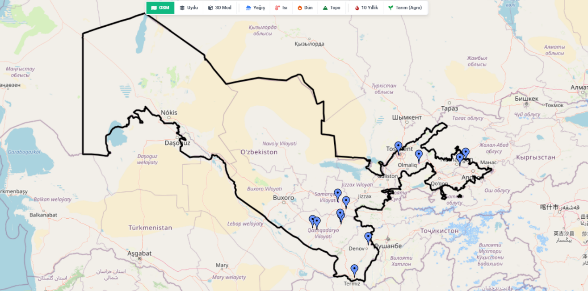
Kitob District is located in the north-eastern part of Qashqadaryo Region, forming part of the foothill and lower mountain belt of the Pamir-Alay system. The district represents a transitional ecological zone between mountainous terrain and irrigated valley systems.
Kitob District is one of the administrative districts located in the north-eastern part of Qashqadaryo Region of the Republic of Uzbekistan. The district is recognized for its historical background, favorable natural landscape, and agriculturally productive lands. Its geographical position within the foothill belt contributes both to its environmental diversity and to its economic structure.
From an administrative-territorial perspective, Kitob District comprises 59 mahallas (mahalla – local community self-governance units), 13 urban-type settlements (shaharcha), 148 rural villages (qishloq), and 485 officially registered streets. These figures indicate a relatively dense and spatially distributed settlement structure, reflecting an extensive local governance network and a broad social infrastructure base. Each mahalla and village possesses distinct historical, cultural, and economic characteristics, contributing to the district’s social diversity and institutional depth.
Climatically, Kitob District is situated within a foothill ecological zone characterized by a relatively humid microclimate compared to downstream lowland areas. The climate is generally temperate, with particularly favorable conditions during spring and early summer. These seasonal patterns create suitable agro-climatic conditions for agricultural production and related land-based activities. The natural environment includes irrigated agricultural fields, shelterbelts, and foothill landscapes that support both crop cultivation and tree-based systems.
The district economy is primarily based on agriculture and land-related production systems. The main economic sectors include:
- Agriculture (qishloq xo‘jaligi) – particularly wheat production (g‘alla), potato cultivation (kartoshka), and fruit and vegetable farming (meva-sabzavotchilik);
- Livestock breeding (chorvachilik);
- Handicrafts and small-scale entrepreneurship (hunarmandchilik va kichik biznes);
- Mining industry (tog‘-kon sanoati).
A significant proportion of the district population is engaged in these sectors, indicating that rural livelihoods and land productivity remain central to the local economic structure. The presence of fruit production and diversified agriculture is particularly relevant for forestry-nursery integration, agroforestry systems, and income-generating plantation models.
In terms of social infrastructure, Kitob District hosts numerous educational institutions, libraries, sports facilities, and cultural centers. Educational participation rates are reportedly increasing, and there is a growing interest among youth in higher education enrollment. This indicates the availability of a potentially trainable workforce and institutional environment supportive of technical capacity development.
From a strategic planning perspective, the administrative scale, agricultural orientation, favorable climatic conditions, and strong rural settlement structure collectively support the long-term feasibility of forestry nursery development and landscape restoration interventions within the district.
Kitob District’s population size is an important planning parameter for nursery development, labor availability, and long-term landscape restoration scaling.
According to official regional statistical data (latest available administrative statistics, 2024–early 2025 period), Kitob District has an estimated population of approximately 280,000–300,000 inhabitants. Population density is moderate to high compared to purely mountainous districts, due to the concentration of settlements in irrigated foothill and valley zones.
Demographic structure characteristics relevant for planning include:
- A relatively young population profile, consistent with national demographic trends in Uzbekistan;
- A high proportion of residents engaged in agriculture, livestock breeding, and small-scale entrepreneurship;
- A distributed rural settlement pattern across 59 mahallas, 148 villages, and 13 urban-type settlements, indicating a broad labor catchment area.
From a strategic perspective, this population scale implies:
- Adequate labor supply potential for nursery operations (both permanent and seasonal workforce);
- Strong local demand for income-generating tree species (fruit, nut, poplar, agroforestry species);
- Social feasibility for community-based forestry integration;
- Institutional capacity for extension, training, and demonstration activities.
Given the FAO–GEF positioning of Kitob as a potential Mountain Forestry Demonstration Hub, the district’s population size and settlement network further strengthen its suitability to function not only as a production site but also as a regional training and extension center serving surrounding districts.
Elevation range across the district:
- Lower foothill zones: approximately 600–800 meters above sea level (a.s.l.)
- Mid-elevation slopes: 800–1,500 m a.s.l.
- Upper mountainous areas: exceeding 2,000 m a.s.l.
This elevation gradient creates distinct agro-ecological belts influencing:
- Temperature regimes
- Precipitation patterns
- Vegetation composition
- Soil depth and structure
- Water retention capacity
For nursery planning, the location within a foothill belt (approximately 600–650 m a.s.l. at the proposed site) provides favorable conditions for producing seedlings adaptable to both lowland and mid-elevation restoration sites.
1.3.2 Climate and Temperature Regime
Kitob District is characterized by a moderately continental semi-arid climate, influenced by mountain proximity.
Average climatic parameters (regional norms):
- Mean annual temperature: 13–15°C
- Average July temperature: 26–30°C
- Peak summer temperatures: may exceed 38–40°C
- Average January temperature: –1°C to +2°C (colder at higher elevations)
- Absolute winter minima: occasionally below –15°C
Annual precipitation:
- Lower foothill zones: approximately 350–450 mm/year
- Higher elevations: up to 500–600 mm/year
Precipitation is concentrated in:
- Late autumn
- Winter
- Early spring
Summer months are typically dry, with high evapotranspiration rates.
Implications for nursery development:
- Irrigation is required during peak summer production cycles;
- Shade management is necessary during extreme heat periods;
- Frost-tolerant species selection is required for early spring planting;
- Containerized production systems can mitigate climate variability risks.
1.3.3 Soil Characteristics
Soil conditions in Kitob District are shaped by elevation gradients, geomorphological variation, and long-term agricultural land use patterns. As the district spans foothill and transitional mountain landscapes, soil characteristics differ between valley floors, gently sloping foothill areas, and upland terrain.
The dominant soil groups include light to medium-textured sierozem soils (grey desert–steppe soils), which are typical of semi-arid foothill environments and form the primary agricultural base of the district. In lower foothill and valley transition zones, alluvial soils derived from seasonal runoff and fluvial deposition are common. Upland and sloping areas are characterized by colluvial and slope-derived soils, often shallower and more structurally variable. Along localized watercourses and irrigation channels, meadow-alluvial soils may occur, typically with higher moisture retention capacity.
In general terms, cultivated soils in Kitob District exhibit moderate organic matter content, reflecting agricultural use and partial incorporation of crop residues. Calcareous subsoil layers are frequently present, which may influence nutrient availability and root penetration. Soil depth varies depending on slope position, with deeper profiles in lower foothill areas and shallower layers on sloping terrain. Drainage conditions are generally moderate to good in foothill soils, reducing the risk of prolonged waterlogging under properly managed irrigation. Compared to downstream irrigated plains in Qashqadaryo Region, salinity risk is comparatively lower; however, localized accumulation cannot be excluded without laboratory analysis.
Despite these favorable characteristics, several risks must be acknowledged. Sloping lands remain susceptible to soil erosion, particularly where vegetation cover is insufficient. Under intensive irrigation practices, especially traditional flood irrigation systems, surface crusting may develop, reducing infiltration and seedling establishment success. Continuous cultivation without systematic nutrient management may also result in progressive nutrient depletion, particularly of nitrogen and micronutrients.
For nursery development and modernization, soil management strategies must be integrated at the planning stage. Recommended measures include systematic organic matter enrichment through composting systems, structured substrate preparation for container production blocks to ensure uniform growth conditions, and appropriate drainage design to prevent localized waterlogging. Comprehensive soil testing and water quality analysis should be conducted prior to final layout implementation to determine pH, salinity (EC), nutrient status, texture, and infiltration capacity. These measures will ensure that nursery production systems are aligned with local edaphic conditions and that long-term soil productivity is maintained under intensified use.
1.3.4 Landform and Terrain Conditions
The terrain of Kitob District is defined by:
- Rolling foothill landscapes;
- Gentle to moderate slopes;
- Seasonal drainage channels;
- Agricultural terraces in certain zones.
Slope gradients vary:
- 0–3% in valley and lower foothill plains;
- 3–8% in transitional agricultural slopes;
- Higher gradients in mountainous sections.
The proposed nursery location within lower foothill terrain provides:
- Suitable slope conditions for irrigation infrastructure installation;
- Adequate natural drainage;
- Reduced risk of large-scale flooding;
- Operational feasibility for phased expansion.
Wind exposure is moderate, though localized windbreak establishment may enhance microclimatic stability within nursery compartments.
1.3.5 Water Availability and Hydrological Context
The hydrological regime of Kitob District is primarily shaped by its foothill and lower mountain setting within the upper and middle sections of the Qashqadaryo (Kashkadarya) basin. Water availability is influenced by mountain-fed seasonal runoff originating from the Pamir–Alay system, tributaries feeding the Kashkadarya River, localized irrigation channel networks serving agricultural land, and groundwater resources stored within foothill aquifers.
Seasonal snowmelt and precipitation in higher elevations contribute to downstream flow, creating a hydrological system that is more dynamic than in lowland districts. As a result of its upstream position and reduced exposure to intensive downstream irrigation return flows, salinity levels are generally lower compared to heavily irrigated plains further south and west. Water quality is typically suitable for irrigation purposes; however, seasonal variability in flow and groundwater recharge requires careful management to ensure reliability during peak summer demand.
For nursery development, hydrological planning must therefore move beyond basic water availability considerations and integrate resilience measures. This includes verification of borehole feasibility and yield capacity to ensure sustainable groundwater abstraction rates; construction of an irrigation pond or water storage reservoir to buffer seasonal fluctuations; adoption of water-use efficiency technologies such as drip or micro-sprinkler systems to reduce losses and improve uniformity; and implementation of systematic water quality monitoring protocols to track salinity, pH, and mineral content over time.
Such integrated hydrological planning is essential to support climate-resilient nursery production, particularly under projected increases in temperature and evapotranspiration across semi-arid foothill environments.
1.3.6 Environmental Risks and Climate Stressors
Key environmental pressures in Kitob District include:
- Soil erosion on sloped agricultural land;
- Vegetation degradation in marginal grazing areas;
- Increasing drought frequency;
- Heat stress during summer months;
- Localized over-extraction of water resources.
These factors generate structural demand for:
- Slope-stabilizing tree species;
- Agroforestry integration in orchard systems;
- Shelterbelt establishment;
- Watershed restoration planting.
1.3.7 Implications for Species Selection and Nursery Typology
Given the biophysical conditions, nursery production in Kitob should prioritize:
- Drought-tolerant species;
- Deep-rooted stabilization species;
- Frost-resilient seedlings;
- Species adaptable across elevation gradients;
- Multipurpose agroforestry-compatible stock.
Production typology should integrate:
- Open-field seedbeds for hardy species;
- Containerized blocks for high-survival planting;
- Hardening zones to acclimatize seedlings to semi-arid conditions;
- Composting and substrate preparation units.
1.3.8. Integrated Technical Conclusion
Kitob District presents a biophysically suitable environment for forest nursery establishment, characterized by:
- Favorable foothill elevation (~600 m a.s.l. at site level);
- Moderate precipitation relative to downstream plains;
- Manageable summer heat with irrigation support;
- Soils suitable for structured nursery substrate management;
- Terrain compatible with infrastructure development;
- Reduced salinity risk compared to lowland irrigated basins.
From a technical and environmental standpoint, the district provides adequate climatic resilience potential, provided that nursery design incorporates:
- Efficient irrigation systems;
- Soil management and organic matter enhancement;
- Microclimate control measures;
- Species-site matching protocols.
Accordingly, the biophysical conditions of Kitob District are assessed as conducive to the establishment of a climate-smart, technically viable forest nursery aligned with international best practice and RESILAND CA+ objectives.
1.4 Field Mission and Site Assessment Findings
1.4.1. Visiting to Kitob Forestry Bureau
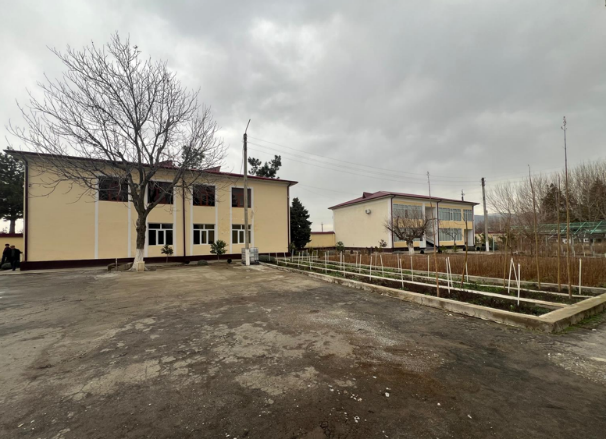
On 5 February 2026, during the visit to the Kitob Forestry Bureau (Kitab FO), it was confirmed that the district is engaged not only under the RESILAND CA+ framework, but also serves as one of the official demonstration sites under the FAO–GEF funded project “Sustainable Management of Forests in Mountain and Valley Areas in Uzbekistan (GCP/UZB/004/GFF)”.
Official FAO Project Page:
https://www.fao.org/sharp/countries-partners/projects/detail/sustainable-management-of-forests-in-mountain-and-valley-areas-in-uzbekistan-(fsp)/en
According to the FAO–GEF project documentation, the Kitob Forestry Organization manages 54,000 hectares of Forest Fund land, of which 12,000 hectares are forest-covered, and generates approximately one-third of its annual revenues from nursery operations.
This clearly shows that the nursery is not an auxiliary unit, but a core revenue-generating and operational structure within the Forestry Organization.
The existing nursery primarily supplies:
• Seedlings for urban greening programs
• Planting and tending services
• Fruit and nut tree seedlings
• Materials for afforestation and restoration works
Under the FAO–GEF project, Kitob FO is designated as a mountain forestry demonstration site with two primary outputs:
• Sustainable management of mountain forests on 16,200 hectares
• Improvement of livelihoods of at least 200 farmers/households
This confirms that Kitob is positioned as a national pilot for mountain forest management.
Project interventions in Kitob include the development of structured, science-based forest management plans for mountain forest ecosystems. Forest restoration activities are implemented using a watershed management approach, focusing on:
• Watershed-based planning
• Rehabilitation of forests on existing terraces
• Soil erosion control through terracing systems
• Mixed forest plantation models
The area is ecologically suitable for:
• Juniper forests (Juniperus zeravshanica)
• Pistachio
• Almond
• Walnut
• Apple
• Mixed forest plantations
The project promotes a mixed forest plantation approach, strengthening resilience and ecological functionality.
The FAO–GEF project explicitly supports the establishment and modernization of nurseries in Uzbekistan, including Kitob. Key nursery-related interventions include:
• Establishment of nursery facilities for closed-root system (container) production
• Seed collection and stratification
• Soil preparation and mixture optimization
• Introduction of modern irrigation systems
• Development of container seedling production in plastic containers
• Capacity building through trainings and study visits
The documentation identifies that most nurseries in Uzbekistan operate with:
• Outdated production techniques
• Limited mechanization
• Traditional irrigation systems
• Lack of containerized production
• Insufficient infrastructure
Therefore, the Kitob nursery is positioned for modernization and upgrading, rather than basic establishment.
A major component of the project in Kitob is improving cooperation with the local population. Key elements include:
• Promotion of pistachio and walnut plantations on lands currently used for marginal agriculture or grazing but more suitable for sustainable forestry.
Unlike other regions, firewood is not a critical constraint in Kitob, as local communities maintain woodlots. This allows the project to prioritize:
• Value-added tree crops
• Long-term commercial plantations
• Ecosystem restoration
The project foresees establishing a well-managed demonstration plantation of pistachio, almond and walnut. This serves to:
• Encourage private leasing of forest land
• Attract private investment
• Demonstrate long-term profitability
Furthermore, the FAO project recommends that Kitob FO host a Regional Training and Extension Centre for Mountain Forestry Development. Kitob is considered geographically and ecologically suitable to serve as a national demonstration hub for:
• Mountain afforestation techniques
• Watershed restoration
• Terrace-based forest establishment
• Container seedling production
• Community-based forestry
This reinforces Kitob’s institutional importance beyond district level and confirms its strategic role in mountain forestry development in Uzbekistan.
The document entitled “Ўрмончилик иш режаларининг 2025 йилда бажарилиши бўйича маълумот” (Information on the Implementation of the 2025 Forestry Work Plan) presents the annual planned targets and actual achievements of the Kitob District Forestry Enterprise – “Kitob KIDÖX (Kitob tuman O‘rmon xo‘jaligi)” for the year 2025
The table provides a comparative overview of planned versus implemented forestry activities, expressed in hectares (га), kilograms (кг), and units (м.дона), thereby offering insight into operational capacity, implementation performance, and infrastructure constraints.
Regarding afforestation activities, under the activity “Манзарали ва мевали дарахтларни ерга ишлов бериб экиш” (Planting of ornamental and fruit trees with soil preparation), the annual plan was 110 hectares, while the actual implementation reached 113 hectares. This indicates that the planned target was exceeded, demonstrating adequate field-level mobilization, availability of planting material, and operational workforce capacity. Under “Иҳота ўрмонзорлари барпо этиш” (Establishment of shelterbelts / protective forest belts), both the annual target and actual implementation were 10 hectares, reflecting full completion. Shelterbelt establishment is particularly relevant in agricultural landscapes, contributing to wind protection, microclimate regulation, and soil conservation.
In relation to mountain and slope-based forestry, the activity “Тоғ ён бағирларида терасса усулида ўрмон барпо этиш” (Afforestation on mountain slopes using terrace method) recorded 48 hectares planned and 48 hectares implemented. This confirms that the Forestry Enterprise has practical experience in terrace-based afforestation, which is critical for erosion control and watershed stabilization in foothill and mountainous terrain.
Silvicultural maintenance activities were also carried out. Under “Ўрмонларни парвариш қилиш” (Forest tending and maintenance), 15 hectares were planned and 14.5 hectares were completed indicating near-full achievement. Furthermore, under “Ўрмонларни табиий тикланишга кўмаклашиш” (Assisted natural regeneration support), 50 hectares were planned while 55 hectares were implemented.
The overachievement in assisted natural regeneration demonstrates that ecological restoration approaches are being applied in addition to plantation establishment.
Land preparation activities show particularly strong performance. Under “Жорий йил учун ер тайёрлаш” (Land preparation for the current year), 25 hectares were planned while 63.1 hectares were completed. This substantial overperformance suggests proactive expansion of planting areas and strong implementation capacity. Similarly, under “Механизация усулида ишлов берилгандан сўнг қатор ораларига қўлда ишлов бериш” (Manual inter-row treatment after mechanized soil preparation), 110 hectares were planned and 123.5 hectares were completed indicating effective integration of mechanized and manual operations.
Seed collection performance was particularly notable. Under “Дарахт ва бута уруғларини териш” (Collection of tree and shrub seeds), 6,500 kg were planned while 10,155.5 kg were collected . This represents approximately 156% of the planned target and confirms strong mobilization capacity and availability of seed sources within the district. Nursery production data under “Кўчатлар етиштириш” (Seedling production) indicate a total production area of 47.09 hectares and approximately 4,045,740 seedlings . Subcategories include 22.56 hectares / 3,063,260 seedlings and 24.53 hectares / 982,480 seedlings . These figures confirm that nursery production is conducted at multi-million seedling scale, demonstrating an existing operational base for large-scale propagation. Under “Кўчат казиш” (Seedling lifting/excavation), a total of 193,064 seedlings were reported . This indicates active extraction and preparation of planting material for distribution or field planting.
However, infrastructure-related performance reveals constraints. Under “Суғориш тармоғини таъмирлаш” (Repair of irrigation networks), 500 hectares were planned, while only 88.1 hectares were completed . This gap suggests that irrigation infrastructure rehabilitation remains a limiting factor and requires prioritization, particularly in the context of nursery modernization and climate-resilient production systems.
Certain planned activities such as “Ўрмон дарахтзорларини тўлдириш” (Forest stand replenishment) and “Келгуси йил учун ер тайёрлаш” (Land preparation for the following year) list planned areas but do not report completed values . This may reflect either non-implementation or incomplete reporting and highlights the need to strengthen monitoring and reporting systems.
In summary, the 2025 implementation data demonstrate that Kitob KIDÖX (Kitob tuman O‘rmon xo‘jaligi) possesses strong operational capacity in afforestation, terrace-based slope restoration, assisted natural regeneration, large-scale seed collection, and multi-million seedling production . At the same time, irrigation infrastructure rehabilitation and systematic reporting mechanisms represent areas requiring further improvement. Overall, the data indicate that future nursery development efforts should focus on modernization, quality enhancement, irrigation efficiency, and climate resilience rather than basic capacity establishment.
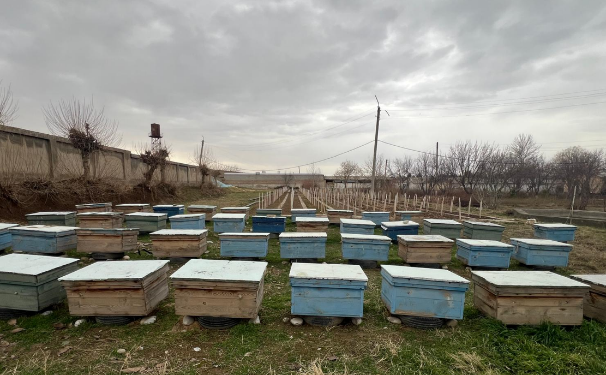
During the field visit to the Kitab Forestry Directorate, it was observed that approximately 50 beehives are maintained within the Forestry compound. Discussions with local officials confirmed that the Forestry Organization conducts beekeeping activities under an officially recognized program framework.
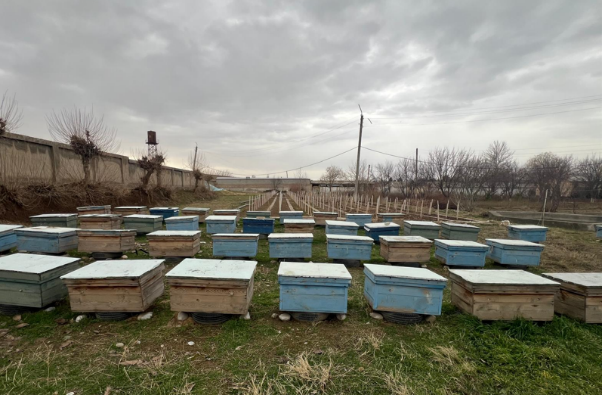
Honey production is carried out in a structured manner, and the harvested products are commercialized through formal and regulated channels. This indicates that the Forestry Organization is not solely engaged in afforestation and nursery activities, but also implements diversified income-generating ecosystem-based practices.
The presence of an operational apiary within the Forestry compound demonstrates:
• Institutional capacity for integrated forest-based livelihood activities
• Practical experience in non-timber forest product (NTFP) management
• Administrative capability to market and distribute value-added products through formal mechanisms
• Diversification of revenue streams beyond seedling production
From a strategic perspective, the integration of beekeeping activities reflects multi-functional forest management practices aligned with sustainable livelihood principles. Apiary operations are particularly relevant in the context of forest restoration, as they contribute to pollination services, biodiversity support, and ecosystem health.
The existence of a functioning and officially managed honey production system within the Kitab Forestry Directorate further reinforces the conclusion that the institution possesses operational flexibility, entrepreneurial orientation, and experience in value-chain integration, which are important indicators of institutional resilience.
Within the broader framework of RESILAND CA+ and FAO–GEF mountain forestry programming, this observation confirms that the Kitab Forestry Organization operates beyond conventional timber-based forestry models and demonstrates capacity for ecosystem-based, income-diversified forest management systems.
During the visit, additional official planning files (“working project” / Ishchi loyihasi) were presented in hardcopy form, prepared under national institutional structures (Ministry-level framework and licensed design institute). The observed packages include titles and annex structures consistent with formally issued planning documentation, including:
- A “working project” file associated with Kitob forestry land planning in 2025, prepared under the institutional framework of the Ministry of Ecology, Environmental Protection and Climate Change and related agencies;
- A separate “working project” package referring to soil protection / erosion-control measures in water-protection and mountain forest areas (including a stated project area of 64 hectares);
- A larger-scale planning package indicating an overall area of 2,868 hectares, supported by annexes that include maps/schematics, lists of attached documents, and technical–economic indicators pages.
These materials are significant because they demonstrate that the local forestry administration is operating within a system of formal planning instruments, with documented basemaps, annex lists, and quantified scope parameters. While these packages are not nursery design documents per se, they show that Kitab is embedded in an active pipeline of regulated land-use and restoration planning, which is directly relevant for alignment of nursery production (species demand, planting schedules, and destination landscape typologies).

Taken together, the FAO–GEF conceptual framework, the 2025 operational performance record, and the presence of formal working project documentation indicate a consistent pattern: Kitab possesses a functioning operational base and active planning environment, while the principal development gap remains the modernization of nursery systems and supporting infrastructure required for higher efficiency and resilience.
During visit to the Kitob Forestry Bureau, it was evident that:
- The FO already manages substantial forest resources (54,000 ha).
- Nursery operations are structurally integrated into revenue generation.
- The FAO–GEF project has laid a conceptual and technical foundation for nursery modernization.
- Mountain forestry restoration is already a structured priority.
- There is institutional openness for expanding nursery capacity, including the potential establishment of a second nursery closer to forest lands.
The alignment between:
- FAO–GEF (GCP/UZB/004/GFF),
- Ongoing district forestry operations,
- And future RESILAND CA+ nursery development
creates a strong institutional and technical baseline for scaling nursery modernization in Kitob.
1.4.2. Visiting to Kitob Nursery
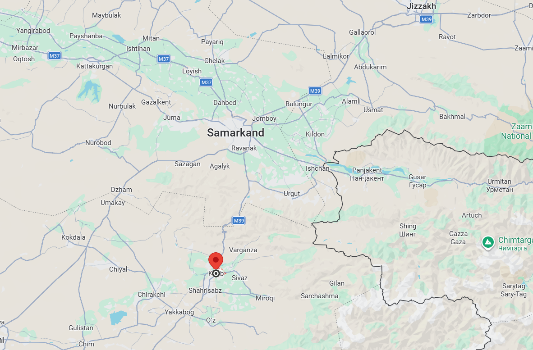
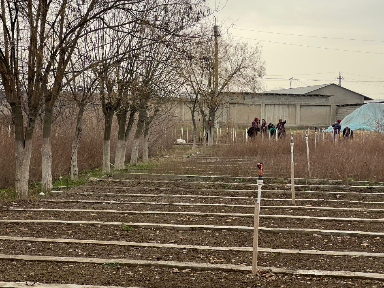
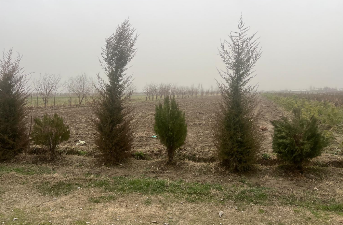
The proposed nursery site in Kitob is geographically well-positioned within an active agricultural landscape of the Qashqadaryo Region, at an elevation of approximately 620 meters above sea level. The site is located approximately 6–7 km west of the Kitob district center (straight-line distance) and approximately 12.5 km by road, corresponding to an estimated travel time of around 20 minutes under normal dry conditions.
The administrative headquarters of the Kitob Forestry Bureau (39°8’33″N, 66°53’10″E; 39.142500, 66.886111) and the proposed nursery site (39°8’33″N, 66°48’17″E; 39.142500, 66.804722) are aligned almost directly along an east–west axis, with a geodesic separation of approximately 7.0 km. This proximity ensures efficient managerial supervision and operational coordination, while maintaining sufficient distance from dense residential areas, thereby allowing operational flexibility and future expansion capacity within the 63-hectare catchment area.
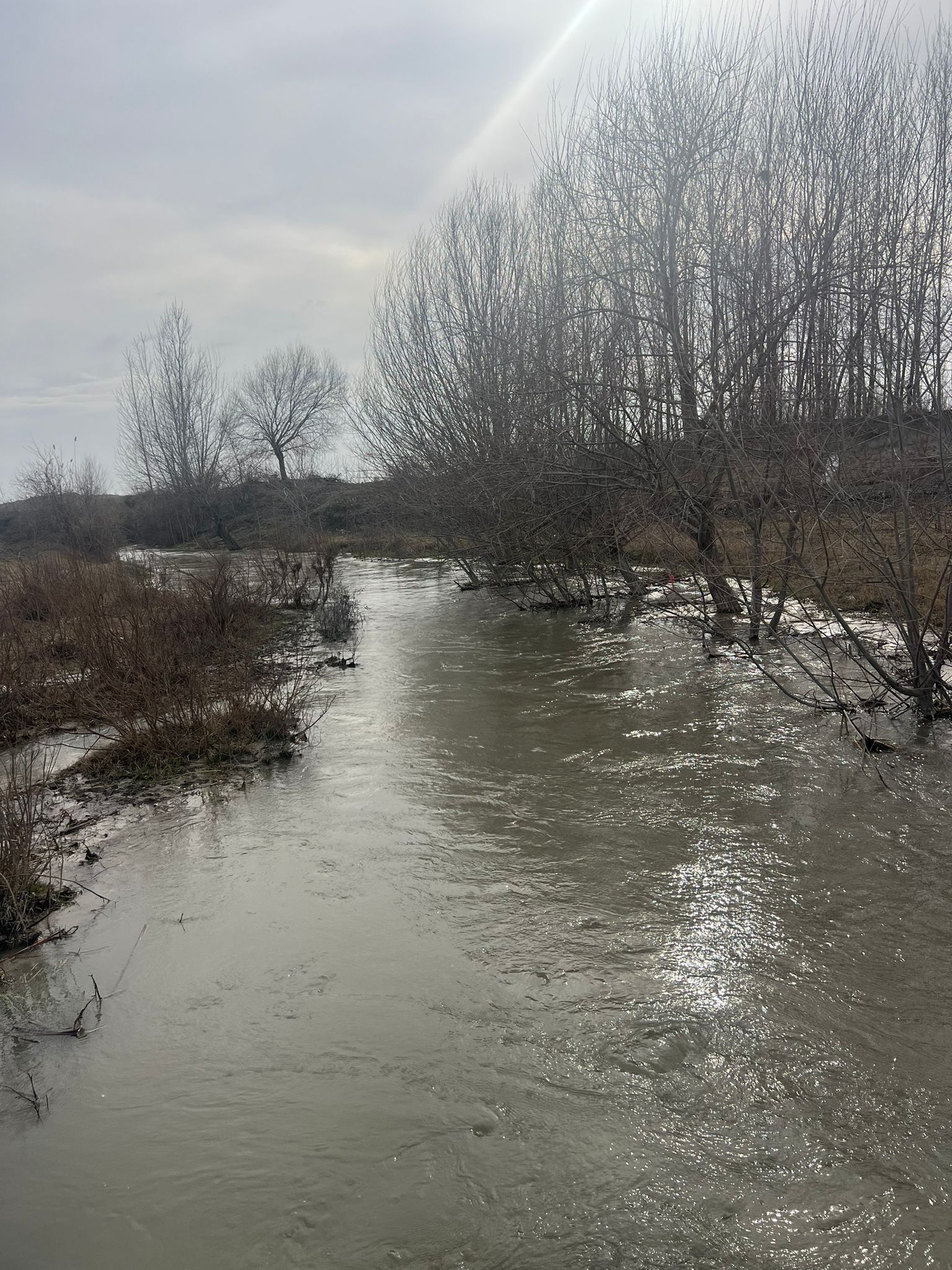
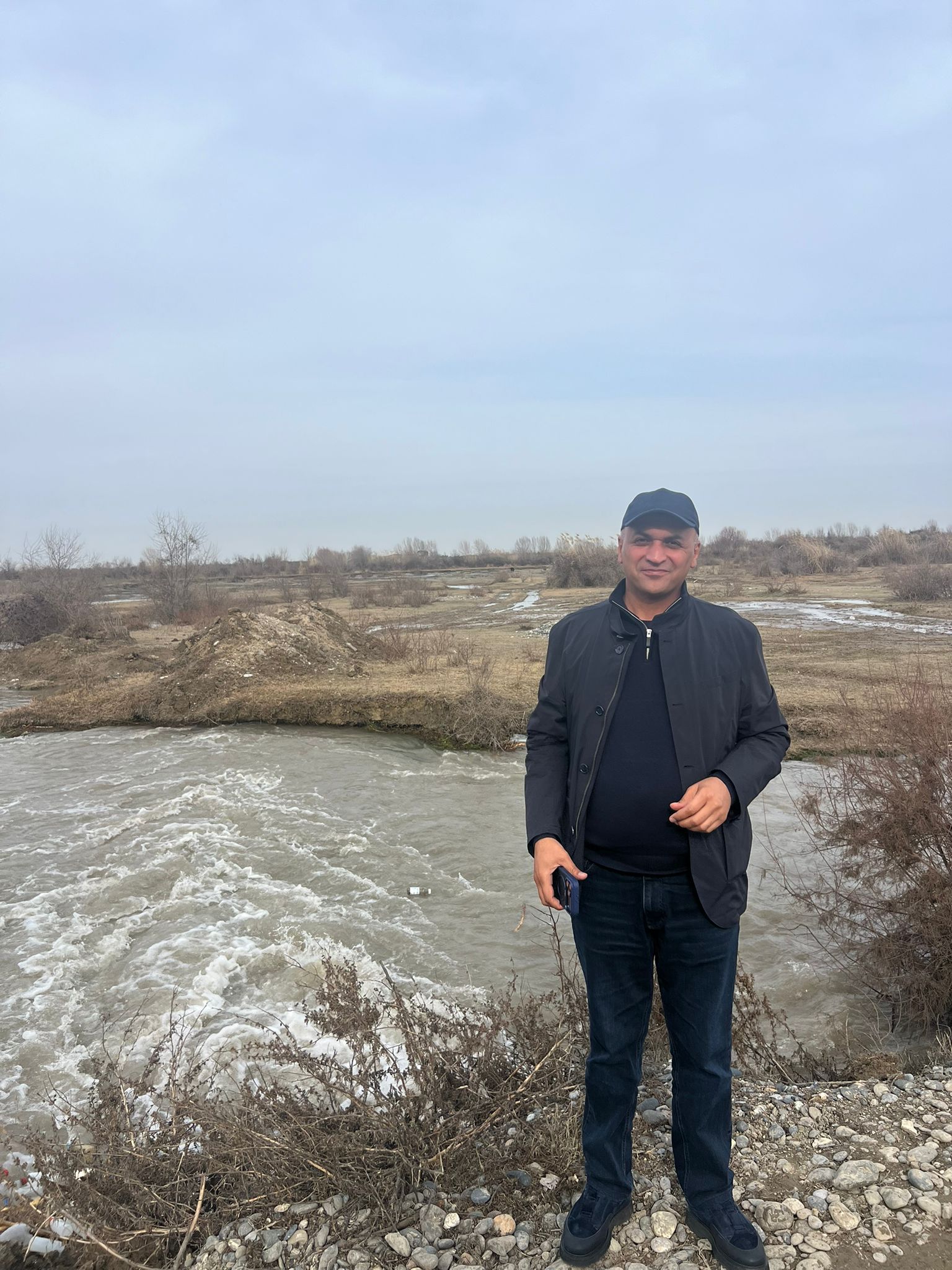
The site lies within an intensively cultivated agricultural zone, where surface irrigation systems are actively used. Field observations and surrounding land-use patterns confirm the presence of irrigation canals and secondary distribution networks, supplying adjacent agricultural parcels. In addition, long-established farming practices strongly indicate the availability of groundwater resources accessed through wells, which are common in the Kitob area. These combined factors demonstrate that water availability is not expected to constitute a structural constraint for nursery establishment, provided that irrigation modernization measures are incorporated during the design phase.
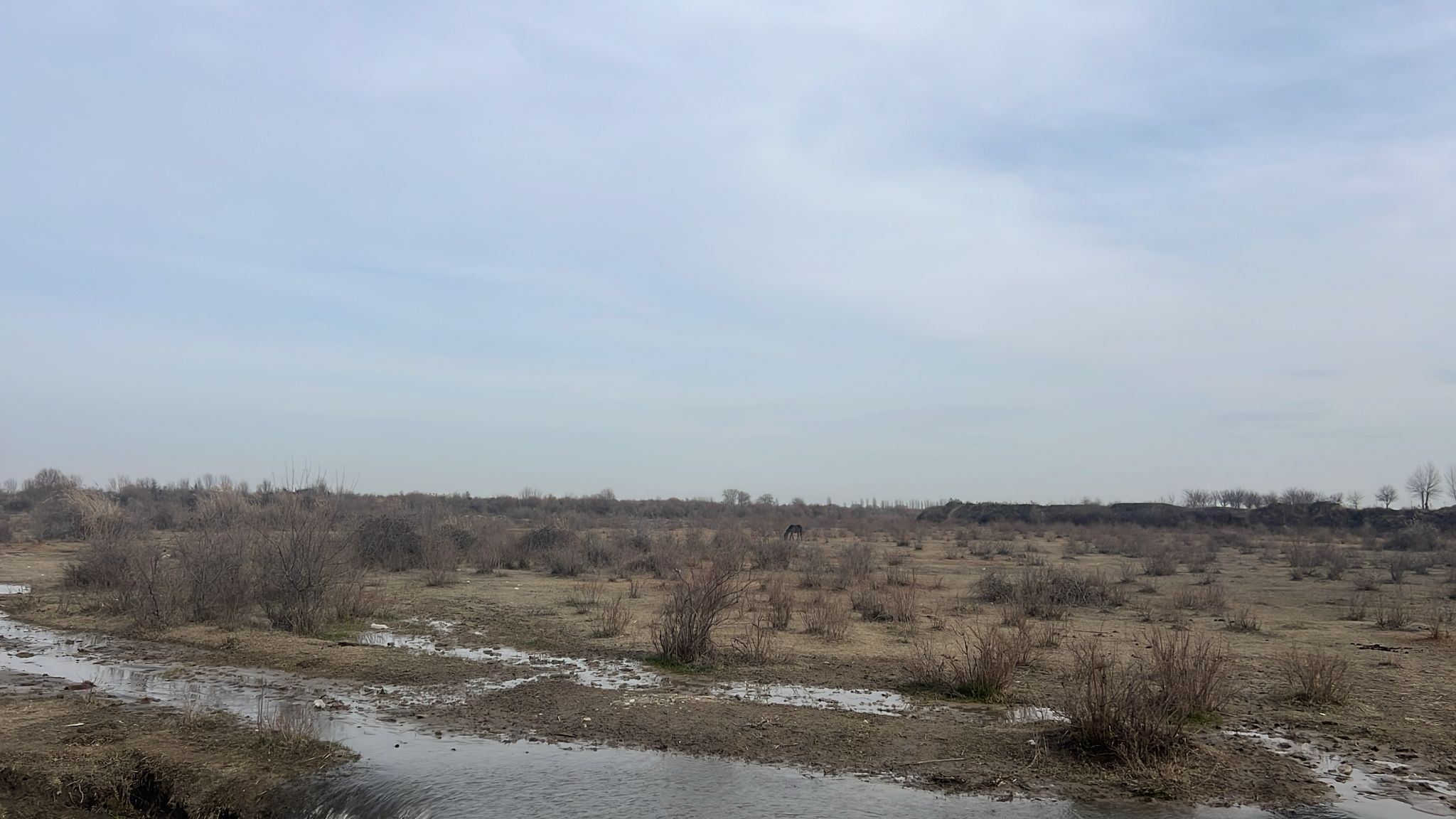
The terrain is predominantly flat to gently sloping, supporting efficient nursery layout planning, infrastructure installation, and phased development. Existing tree belts surrounding the site function as natural windbreaks, contributing positively to microclimatic regulation, evapotranspiration control, and improved water-use efficiency for seedling production.
However, it must be noted that the final access section to the nursery consists of a stabilized gravel/dirt road rather than asphalt. While currently passable, seasonal rainfall may affect surface stability and transport efficiency during peak seedling distribution periods. Given the projected production scale of 1,527,000 seedlings annually, future phases should evaluate targeted improvements to ensure logistical reliability.
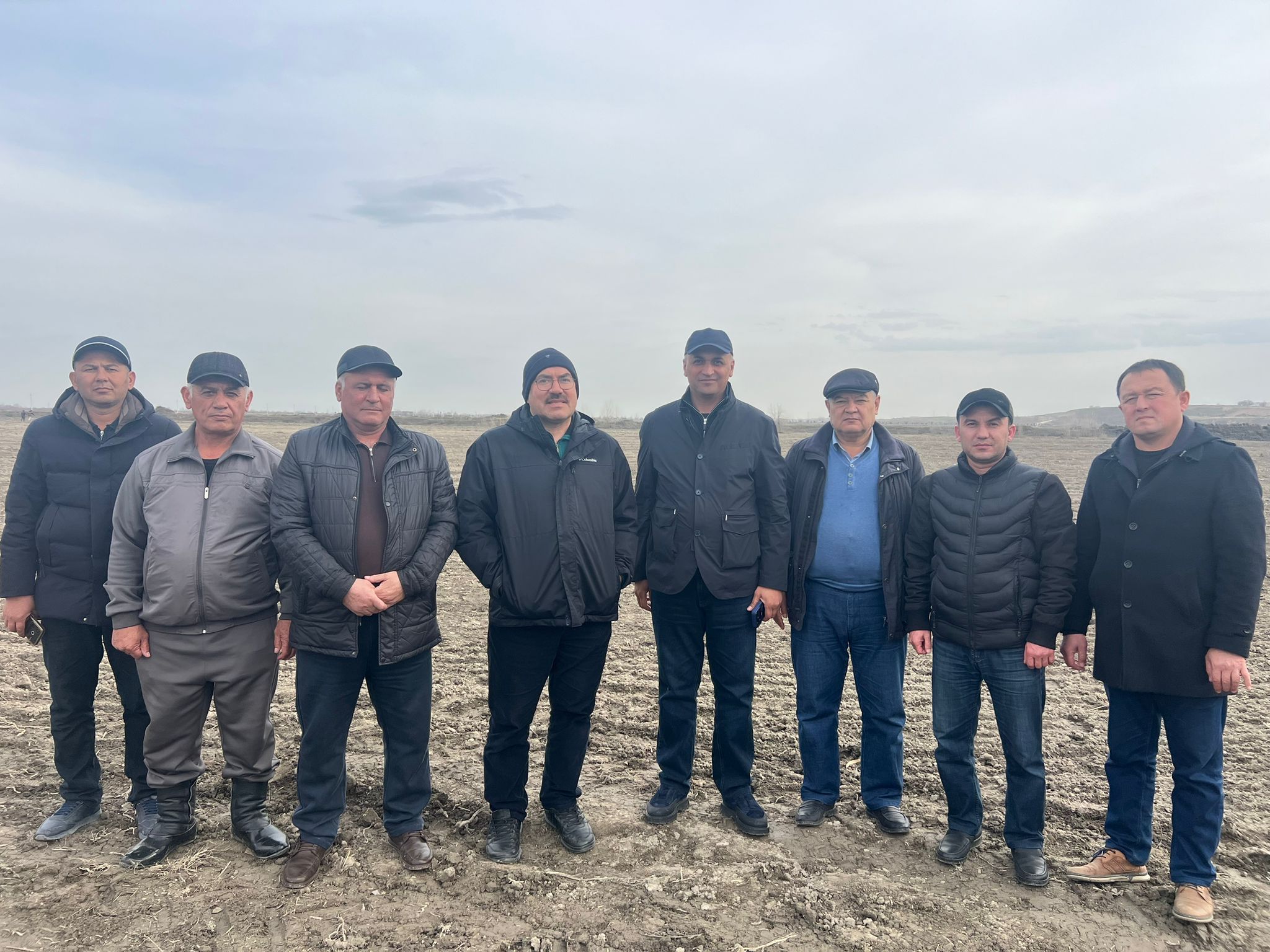
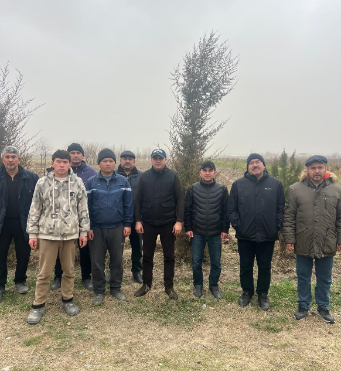
During the site visit, detailed information regarding land characteristics, water use practices, and development potential was provided by key local and regional stakeholders, including:
• Faxriddin Xaydarov – RESILAND Project Coordinator for the Qashqadaryo Region
• Miraziz Turopov – Representative of the Kitob Forest Nursery
• Adilov Sherzod Burxonovich – Regional Director, Kitob/Samarkand Forestry (Leshoz)
In addition, a coordination meeting was held with:
• Aliser Shahrisabz – Director of Shahrisabz Forestry Administration
These discussions confirmed a shared institutional commitment to inter-district coordination, particularly in relation to nursery planning, seedling distribution logistics, watershed-based afforestation, and alignment of restoration activities across administrative boundaries.
Overall, the site’s favorable elevation, manageable operational distance from the Forestry Bureau, secure access to surface and groundwater resources, suitable terrain conditions, and strong institutional engagement at both district and regional levels collectively indicate that the proposed Kitob nursery location is technically viable, logistically feasible, and strategically well-positioned for establishment and modernization under the RESILAND CA+ framework.

1.4.3 Observation and Strategic Assessment
The strategic assessment of the proposed Kitab Forest Nursery is based on three complementary sources of evidence:
(i) Institutional findings obtained during the field mission conducted on 5 February 2026 under RESILAND CA+;
(ii) Operational performance data of Kitob District Forestry Enterprise (Kitob KIDÖX) for 2025;
(iii) Technical planning parameters defined under the FAO–GEF project “Sustainable Management of Forests in Mountain and Valley Areas in Uzbekistan (GCP/UZB/004/GFF)”.
When assessed collectively, these sources indicate that the Kitab nursery system is institutionally established, operationally active, and structurally positioned for modernization rather than initial establishment.
Kitob Forestry Organization manages a substantial Forest Fund area and has demonstrated consistent performance in afforestation, mountain slope restoration, assisted natural regeneration, seed collection, and large-scale seedling production. Nursery operations contribute significantly to institutional revenue, confirming that seedling production is a structurally embedded institutional function rather than an auxiliary activity.
The existence of an operational nursery within the Forestry Directorate compound further confirms that technical routines, managerial capacity, and production experience are already institutionalized. Accordingly, the proposed 39-hectare development represents capacity expansion and qualitative upgrading, not institutional creation.
The species portfolio currently cultivated and observed in the district reflects strong ecological adaptation to semi-arid foothill conditions (~620 m elevation) and mountain-forest transition zones.
Dominant and strategically relevant species include:
- Populus spp. (Poplar / Terak) – widely established in irrigated agricultural systems and shelterbelts. Their prevalence confirms ecological suitability for material gardens and fast-growing plantation supply.
- Juniperus spp. (Juniper / Archa) – ecologically significant for mountain slope stabilization and watershed protection, aligning with FAO–GEF mountain restoration objectives.
- Pistacia vera (Pistachio / Pista) – suitable for dry foothill zones and integrated livelihood forestry systems.
- Juglans regia (Walnut / Yong‘oq) – compatible with agroforestry systems and moisture-retaining foothill environments.
- Ulmus pumila (Elm / Qayrag‘och) and Elaeagnus angustifolia (Jiyda) – drought-tolerant species suitable for degraded land and windbreak applications.
- Salix spp. (Willow / Tol) – adaptable to riparian and moist micro-sites.
- Fruit-bearing Prunus and Malus species – indicating integration between forestry and horticultural systems.
The coexistence of fast-growing riparian species, drought-tolerant broadleaves, mountain conifers, and nut-bearing species demonstrates that the ecological production base is diversified and regionally validated.
This diversity supports afforestation, agroforestry, watershed rehabilitation, and livelihood-oriented forestry simultaneously, reinforcing the nursery’s multi-functional regional role.
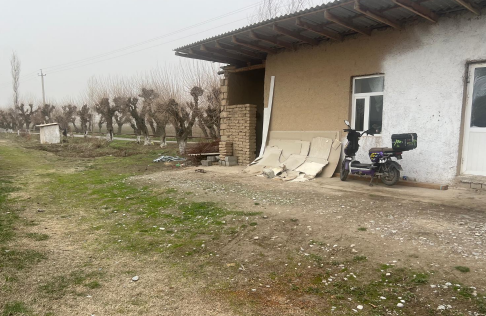
Field observations of the existing nursery compound and associated structures indicate that basic operational infrastructure is present but structurally modest.
Observed buildings consist primarily of:
- Single-story masonry structures with simple roofing systems;
- Limited insulated or climate-controlled production areas;
- Basic storage and administrative rooms;
- Absence of modern greenhouse or container production facilities.
The buildings are functional for small-scale operations but do not reflect contemporary nursery infrastructure standards required for mechanized or container-based production systems. Staff facilities and sanitary provisions appear limited in scale and comfort.
No structural instability was visually observed; however, the facilities indicate incremental development over time rather than planned integrated layout design.
The main access road to the proposed nursery site is a stabilized gravel/dirt road, not asphalted. It is operational under dry conditions but may experience reduced structural stability during wet periods. While passable by light vehicles, heavy transport logistics during peak seedling distribution seasons may be affected.
Internally, parcel organization appears fragmented, with limited evidence of structured rotational production zoning. Internal circulation routes are informal rather than engineered.
No major physical access barriers were observed. The terrain is flat to gently sloping, allowing conventional access without topographical constraints.
From a strategic perspective, the Kitab Forest Nursery occupies a pivotal regional position linking national afforestation commitments, mountain watershed restoration, and climate-resilient landscape management objectives. Its function extends beyond local production, operating as a regional biological infrastructure platform within both the RESILAND CA+ framework and the FAO–GEF mountain forestry program.
Within the scope of Phase 4 – First Assessment & Feasibility, the modernization concept is therefore assessed as:
• Technically viable, supported by adaptive and diversified species composition
• Institutionally grounded, with established operational capacity
• Ecologically suitable, aligned with foothill and mountain restoration needs
• Strategically aligned with national and international restoration frameworks
• Scalable within the available land base, given both ecological range and institutional continuity
The principal limitations identified relate to infrastructure modernization, production system structuring, and access road reinforcement, rather than ecological or institutional feasibility constraints.
1.4.4 Water Resources and Hydrogeological Feasibility
The assessment of water resources and hydrogeological conditions at the proposed Kitab Forest Nursery site indicates that water availability is present and functionally integrated within the surrounding agricultural system.
The site is located within an intensively irrigated agricultural landscape supported by established surface water infrastructure. Field observations confirm the presence of primary irrigation canals and secondary distribution channels supplying adjacent agricultural parcels. In addition, groundwater is accessed in the area through artesian well systems, reflecting a mixed-source water supply structure.
Kitab District is situated in the upper and middle sections of the Qashqadaryo basin, where hydrological dynamics are influenced by mountain-fed seasonal runoff from the Pamir–Alay system. Compared to downstream irrigated plains, hydrogeological conditions in Kitab are generally characterized by lower salinity exposure and comparatively favorable irrigation water quality, due to its upstream position within the basin.
Current irrigation practices observed in the area rely predominantly on traditional surface (flood) irrigation methods, consistent with regional agricultural practices. No centralized on-site water storage or buffering infrastructure was observed within the proposed nursery core area at the time of the visit.
Topographical conditions (flat to gently sloping terrain) support natural drainage and reduce the likelihood of prolonged waterlogging under normal irrigation regimes. No visible signs of large-scale salinity accumulation, surface salt crusting, or structural soil waterlogging were observed during the field mission; however, laboratory-based soil and water analyses have not yet been conducted and remain necessary for full hydrogeological verification.
Seasonal variability in surface water availability is inherent to mountain-fed systems, particularly during peak summer demand periods. Nevertheless, based on field observation and local irrigation patterns, no immediate structural water scarcity constraints were identified at the assessment stage.
From a Phase 4 feasibility perspective, hydrogeological conditions at the Kitab site are therefore assessed as adequate and technically suitable for nursery development, subject to detailed hydrological testing and design-phase verification in subsequent project stages.
1.4.5 Energy Infrastructure and Accessibility
The assessment of energy infrastructure and site accessibility confirms that basic service connectivity is available and operational, and no structural constraints were identified that would prevent nursery functioning at the feasibility stage.
Electricity infrastructure is present in close proximity to the proposed nursery site. Field observations confirm overhead transmission lines serving adjacent agricultural parcels, indicating that grid connection is technically feasible without reliance on isolated off-grid systems. No evidence of chronic power shortages or infrastructural instability was reported during stakeholder consultations.
Telecommunication infrastructure is functional. Mobile network coverage is available and operational, ensuring that administrative coordination, digital reporting, and operational communication can be maintained without systemic limitations.
In terms of accessibility, the proposed nursery site is located approximately 12.5 km from Kitab district center and the Kitab Forestry Bureau, with an average travel time of approximately 20 minutes under normal dry conditions. This distance is considered operationally manageable for routine supervision, material transport, and institutional coordination.
The primary access corridor follows regional paved roads before transitioning into secondary rural roads. The final segment consists of a stabilized gravel/dirt road rather than asphalt pavement. While passable under dry conditions, its structural quality may be affected during periods of heavy precipitation. No river crossings, steep gradients, or flood-prone bottlenecks were observed along the route.
The terrain is predominantly flat to gently sloping, enabling conventional vehicle access without specialized transport requirements.
Labor accessibility is assessed as adequate. Surrounding villages provide a potential workforce base, and no settlement isolation issues were identified. The distributed rural settlement pattern supports both permanent and seasonal labor mobilization capacity.
From a Phase 4 feasibility perspective, energy infrastructure and accessibility conditions are assessed as functionally sufficient and operationally manageable, with logistical improvement considerations limited primarily to road surface reinforcement.
1.4.6 Review of Technical Planning Documentation
The review of technical planning documentation is based on two principal reference sources:
(i) The FAO–GEF project framework under “Sustainable Management of Forests in Mountain and Valley Areas in Uzbekistan (GCP/UZB/004/GFF)” (2019 Concept Framework for Nursery Development);
(ii) The 2025 Forestry Work Plan Implementation Report of Kitob District Forestry Enterprise (Kitob KIDÖX).
The FAO–GEF technical framework identifies systemic structural challenges within Uzbek forestry nurseries, including:
• Outdated production techniques
• Limited mechanization
• Predominantly traditional irrigation systems
• Insufficient container-based seedling production
• Fragmented infrastructure layout and weak spatial planning
The framework emphasizes modernization toward structured layout planning, containerized seedling systems, irrigation efficiency, and standardized production protocols.
Kitab Forestry Organization is designated within the FAO–GEF framework as a mountain forestry demonstration site, with programmatic commitments including:
• Sustainable management of mountain forest landscapes
• Watershed-based restoration models
• Mixed plantation systems
• Development of technical manuals
• Establishment of container-based nursery systems
• Potential creation of a Regional Mountain Forestry Training and Extension Centre
This designation confirms that Kitab holds strategic importance beyond district-level production, positioning it within a broader national mountain forestry development agenda.
The 2025 Forestry Work Plan Implementation Report provides operational evidence supporting institutional capacity. Key performance indicators include:
• 48 hectares of terrace-based mountain afforestation implemented as planned
• Assisted natural regeneration exceeding targets
• 10,155.5 kg of seed collection against a planned 6,500 kg
• Over 4 million seedlings produced
These data confirm strong operational performance and biological production capacity.
However, structural gaps are also evident. Under “Repair of Irrigation Networks,” 500 hectares were planned while only 88.1 hectares were implemented. This discrepancy indicates infrastructure rehabilitation constraints, particularly relevant for nursery modernization planning. Additionally, some activities lack complete implementation reporting, suggesting weaknesses in systematic monitoring mechanisms.
When FAO–GEF strategic documentation and 2025 operational data are reviewed collectively, a consistent conclusion emerges:
Kitab demonstrates robust field-level capacity and biological production strength, yet requires structural modernization in layout design, irrigation systems, and mechanization to align with contemporary nursery standards.
No contradictions were identified between institutional performance and strategic technical frameworks. On the contrary, operational achievements confirm that modernization would build upon an existing functional production base rather than initiate a new system.
1.4.7 Integrated Strategic Conclusion of the Field Assessment
The integrated field assessment confirms that the proposed Kitab Nursery modernization is supported by three converging feasibility dimensions:
- Biophysical Suitability
The site is located at approximately 620 m elevation, within a semi-arid foothill agro-ecological zone. Soil conditions, drainage characteristics, and water availability are assessed as adequate at the feasibility stage. No ecological barriers were identified. - Institutional Capacity
Kitab Forestry Organization possesses demonstrable operational experience in afforestation, seed collection, and large-scale seedling production. Nursery management functions are already institutionalized. - Strategic Alignment
The nursery is positioned within national afforestation commitments (including Yashil Makon and Uzbekistan–2030), RESILAND CA+, and FAO–GEF mountain forestry programming.
The assessment indicates that constraints are primarily infrastructural rather than ecological or institutional. These relate to irrigation modernization, layout structuring, mechanization, and access road reinforcement.
The species portfolio (Populus spp., Juniperus spp., Pistacia vera, Juglans regia, Ulmus pumila, Elaeagnus angustifolia, Salix spp., and fruit-bearing Prunus and Malus species) confirms ecological adaptation to both irrigated foothill systems and mountain restoration contexts, reinforcing the nursery’s regional relevance.
Accordingly, the nursery functions as a regional biological infrastructure platform, linking policy commitments to field-level implementation.
1.5 Conclusion of First Assessment & Feasibility Report
The First Assessment & Feasibility analysis of the proposed Kitab Forest Nursery modernization confirms the following:
• Technical feasibility is established — the site is biophysically suitable, accessible, and supported by existing energy and water infrastructure.
• Institutional feasibility is confirmed — operational capacity, production experience, and management routines are already embedded within Kitab Forestry Organization.
• Ecological suitability is validated — species diversity reflects adaptation to semi-arid foothill and mountain restoration conditions.
• Strategic alignment is clear — the nursery directly supports RESILAND CA+, FAO–GEF mountain forestry objectives, and national afforestation strategies.
• Scalability is feasible — available land base and existing production structure allow expansion within a structured modernization pathway.
No fundamental environmental, institutional, or logistical barriers were identified during Phase 4 assessment.
The primary requirements moving forward relate to structured infrastructure upgrading, irrigation system optimization, spatial layout planning, and production system modernization, which fall under detailed design considerations for Phase 5.
Therefore, within the scope of Phase 4 – First Assessment & Feasibility, the Kitab Nursery modernization concept is assessed as feasible, strategically justified, and eligible to proceed to detailed technical design, subject to PIU review and approval.