Phase 4: First Assessment &Feasibility Report
Design, Upgrading, and Preparation of Nine (9) Forestry Nurseries
Uzbekistan Resilient Landscapes Restoration Project (RESILAND CA)
Report Title:
Pastdargʻom Forest Section Nursery
First Assessment &Feasibility Report
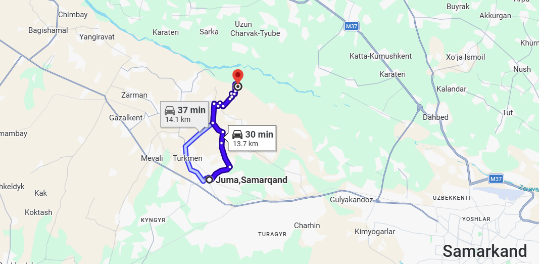
https://www.google.com/maps?q=39.7886,66.6983
Prepared by:
İsmail Belen
International Consultant – Forestry Nursery Design and Preparation
Date: 6 March 2026
1. Introduction, Context and Policy Framework 4
1.1 Strategic Positioning of the Pastdargʻom Nursery within RESILAND CA+ 4
1.2 Alignment with the Uzbekistan–2030 Strategy and National Environmental Priorities 5
1.3 District Context: Pastdargʻom, Samarkand Region 5
1.4 Field Mission and Site Assessment Findings – Pastdargʻom Forest Section Nursery 12
1.4.1 Institutional Visit – Samarkand Specialized State Forestry Enterprise 12
1.4.2 Visit to the Pastdargʻom Forest Section Nursery 14
1.4.3 Observation and Strategic Assessment 16
1.4.4 Water Resources and Hydrogeological Feasibility 17
1.4.5 Energy Infrastructure and Accessibility 18
1.4.6 Review of Technical Planning Documentation 18
1.4.7 Integrated Strategic Conclusion of the Field Assessment 19
1.5. Conclusion of First Assessment &Feasibility Report 20
Introduction
This First Assessment &Feasibility Report is prepared for “Pastdargʻom Nursery” in line with the “Technical Disposition for the Design, Upgrading, and Preparation of Forest Nurseries in Uzbekistan (RESILAND CA Nursery Framework – RNF)” has been developed as an integral component of the consultancy services under Contract No. LRP/IC/08, titled “International Consultant to Provide Technical Expertise for the Design, Upgrading, and Preparation of Nine (9) Forestry Nurseries.”
To this end, Mr. İsmail Belen, the international consultant visited to Pastdargʻom Nursery at 4th of February, 2026 and finalized the “First Assessment &Feasibility Report” in line with the contract and in close cooperation with the authorities of Agency for Increasing Forests and Green Areas and Combating Desertification.
With the completion of this report, Phase 4 – Assessment & Feasibility (First Assessment & Feasibility Report) for Pastdargʻom Nursery has been concluded. Subject to the approval of RESILAND CA+ PIU, the project will proceed to the subsequent phases:
- Phase 5 – Nursery Design: Detailed Nursery Designs
- Phase 6 – Technical Specifications & BoQ: Technical Specifications & BoQ
- Phase 7 – Validation & Training: Second Field Visit – Validation & Training
1. Introduction, Context and Policy Framework
1.1 Strategic Positioning of the Pastdargʻom Nursery within RESILAND CA+
The Pastdargʻom Forest Section Nursery is one of the nine (9) priority state forestry nurseries selected under the Uzbekistan Resilient Landscapes Restoration Project (RESILAND CA+).
The inclusion of Pastdargʻom among the nine target nurseries reflects its strategic importance in addressing a fundamental constraint in Uzbekistan’s restoration agenda: the insufficient and inconsistent supply of high-quality, climate-resilient planting material.
Under RESILAND CA+, nurseries are not treated as auxiliary facilities supporting isolated planting campaigns. They are conceived as enabling public infrastructure forming the biological and operational backbone of large-scale landscape restoration. In this context, the Pastdargʻom Nursery contributes directly to the Project Development Objective (PDO) target of bringing 280,000 hectares under sustainable landscape management.
The nursery’s strategic role aligns with two core project components:
- Sub-component 1.1 – Strengthen Institutions and Policies
Supporting legal and regulatory reforms, including the Draft Forest Code, standardization of nursery operations, seed certification, and ecological planning. - Sub-component 2.1 – Enhance Tree-based Landscape Restoration and Management
Providing site-matched, climate-resilient planting material required for agroforestry, reforestation, farmer-managed natural regeneration (FNR), protective forest belts, and ecosystem service-oriented interventions.
Within the RESILAND CA+ results chain, the Pastdargʻom Nursery functions as:
- An enabling infrastructure linking policy reform to field implementation;
- A risk-reduction mechanism minimizing failure rates through quality and species-site matching;
- A scaling platform supporting corridor-based and regionally differentiated restoration.
1.2 Alignment with the Uzbekistan–2030 Strategy and National Environmental Priorities
The Uzbekistan–2030 Strategy (Presidential Decree No. UP-158, 11 September 2023) establishes binding national targets under Articles 67–71 related to afforestation, erosion control, biodiversity conservation, climate adaptation, and Aral Sea region restoration.
Key quantified national commitments include:
- Planting 200 million seedlings annually;
- Increasing green area coverage to 30%;
- Expanding forest area to 6.1 million hectares;
- Establishing 600,000 hectares of climate-protective green areas;
- Restoring 2.6 million hectares in the Aral Sea region;
- Increasing tree and shrub seed harvesting by 840 tonnes.
These targets require a permanent, technically robust nursery system capable of producing large volumes of diverse, climate-adapted planting material.
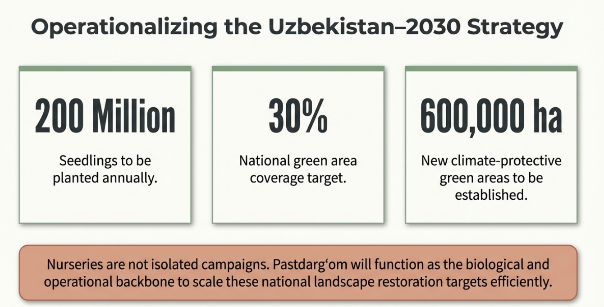
The Pastdargʻom Nursery directly supports:
- Article 67 – “Yashil Makon” National Project expansion;
- Article 68 – Forest area expansion and protective forest establishment;
- Article 70 – Climate change adaptation and desertification control;
- Article 71 – Biodiversity conservation and medicinal plant cultivation.
The nursery therefore operationalizes national commitments by translating quantified afforestation targets into biologically viable seedling supply systems.
1.3 District Context: Pastdargʻom, Samarkand Region
(Official district data accessed 27 February 2026 – Pastdargʻom District Administration)
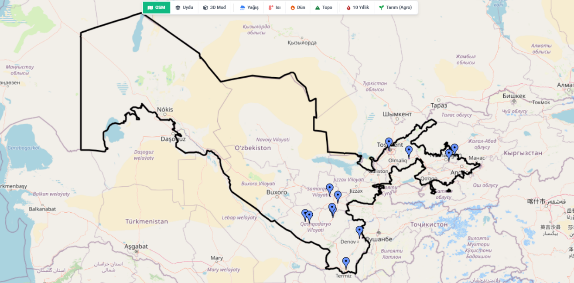
The Pastdargʻom Forest Section Nursery is located in Pastdargʻom District, Samarkand Region, within the Zarafshan River basin, one of Uzbekistan’s most historically irrigated and agriculturally productive territories.
Total district area:
- 870 km²
- 87,000 hectares (ha)
This scale is significant: nearly 87,000 ha of intensively used land under irrigated semi-arid conditions creates sustained ecological pressure and continuous demand for landscape stabilization interventions.
The district’s administrative center is Juma city, located 24 km from Samarkand city, the regional capital and main institutional, logistical, and technical hub. This proximity ensures:
- continuous technical supervision,
- access to inputs and markets,
- transportation efficiency,
- availability of seasonal and permanent labor.
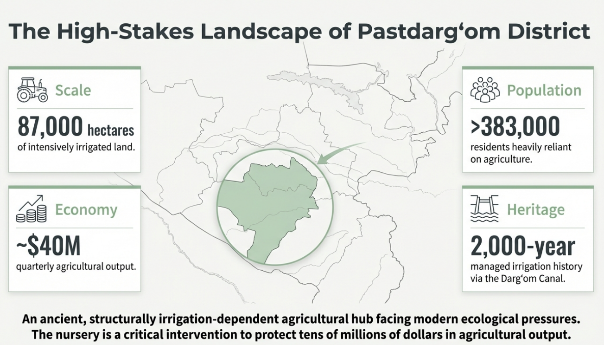
Pastdargʻom’s identity is deeply linked to the Dargʻom Canal, an ancient irrigation channel branching from the Zarafshan River.
- Approximate length: 100 km
- Historical origin: 5th–4th century BC
- Mentioned in Claudius Ptolemy’s 2nd century map as “Dargomoni”
The etymology derives from:
- “Darg” meaning “long”
- “-om” as a phonetic evolution of “-ob” (water)
Thus, “Dargʻom” historically signifies “long water” or “large water.”
This confirms that:
- The district has over 2,000 years of managed irrigation history.
- Agricultural settlement patterns evolved around engineered water systems.
- Water governance is structurally embedded in the district’s development.
For nursery planning, this historical continuity indicates both:
- strong irrigation dependency,
- and vulnerability during seasonal water stress.
Even where canals and visible water channels exist, summer peak irrigation demand across the Zarafshan basin can reduce reliability, requiring nursery water storage and efficiency systems.
Permanent population (1 January 2024): 383,291
- Men: 192,877
- Women: 190,414
Other key indicators:
- Labor resources: 187,900 persons
- Economically active population: 136,100
- Unemployment rate: ~7%
- Migrant workers abroad: 17,400
- Returning migrants: 8,700
This reflects:
- high land–people interaction pressure,
- availability of labor for nursery production,
- opportunity for value-chain employment integration.
The district includes:
- 12 urban-type settlements
- 107 mahalla assemblies
- 164 rural settlements
The social density reinforces continuous demand for:
- farm protection systems,
- agroforestry,
- canal stabilization,
- climate-resilient planting material.
Economic Structure (USD Converted)
Exchange rate used:
1 USD = 12,134.19 UZS
Main Economic Indicators (Jan–Mar 2024)
| Sector | Billion UZS | ≈ USD Equivalent |
|---|---|---|
| Industry | 273.7 | ≈ 22.55 million USD |
| Agriculture, forestry & fisheries | 485.4 | ≈ 40.00 million USD |
| Fixed capital investment | 661.5 | ≈ 54.51 million USD |
| Construction | 141.7 | ≈ 11.68 million USD |
| Services | 549.5 | ≈ 45.28 million USD |
Foreign trade turnover (Jan–Mar 2024):
- Total: 16.1 million USD
- Exports: 3.8 million USD
- Imports: 12.3 million USD
Export (First half 2024): 7.6 million USD
Strategic Interpretation
The district produces approximately:
- 40 million USD agricultural output in just one quarter
This means:
Tree-based protection systems safeguard tens of millions of USD worth of agricultural production annually.
Thus, nursery establishment directly supports:
- economic stabilization,
- risk reduction,
- and income protection.
Agricultural Land Use and Production Pressure
Reported seasonal planting programs include:
- 6,300 ha of household crop cultivation
- 742 ha leased to population/youth
- 63,000 household-level cultivation contracts
Given the total district size of 87,000 ha, a large proportion of land is under active agricultural use.
This confirms:
- intensive irrigation reliance,
- exposure to salinity and waterlogging,
- wind erosion risk in open fields,
- climate heat stress in summer months.
Environmental and Climate Stress Factors
Pastdargʻom is located in a semi-arid continental climate zone characterized by:
- hot, dry summers,
- high evapotranspiration,
- irrigation dependence,
- increasing climate variability.
Key degradation pressures include:
- soil salinization in irrigated fields,
- declining soil organic matter,
- wind erosion,
- water erosion near canals,
- heat and drought stress.
These pressures generate structural demand for:
- windbreaks and shelterbelts,
- canal-side stabilization plantings,
- agroforestry buffer systems,
- salt- and drought-tolerant species.
Suitable Tree Species for Nursery Production
Based on irrigated semi-arid regional practice, appropriate species include:
Windbreak / Shelterbelt:
- Populus spp.
- Ulmus pumila
- Robinia pseudoacacia
- Morus alba
- Elaeagnus angustifolia
Salinity & Drought Tolerant:
- Tamarix spp.
- Haloxylon spp.
- Elaeagnus spp.
Canal/Riparian Stabilization:
- Poplar hybrids
- Willow (moist zones)
- Mulberry
Species selection must emphasize:
- drought hardiness,
- salinity tolerance,
- strong root systems,
- rapid early growth,
- compatibility with irrigated agro-ecosystems.
Investment and Industrial Development Context
The district demonstrates strong investment orientation:
- ~9 hectares currently offered via auction in industrial/youth zones
- 234.3 hectares designated for new industrial zone development
- Tax incentives for foreign investment:
- 300,000–3M USD → 3 years
- 3–10M USD → 5 years
- 10M USD → 7 years
Quarterly fixed capital investment:
≈ 54.5 million USD
This indicates:
- infrastructure development capacity,
- feasibility for greenhouse installation,
- irrigation reservoir construction,
- mechanization and equipment acquisition.
Integrated Strategic Justification
Pastdargʻom District represents:
- 87,000 hectares of intensively managed land
- 383,000+ population
- 40 million USD quarterly agricultural output
- 54 million USD quarterly investment flow
- 2,000-year irrigation heritage
- structurally irrigation-dependent economy
- rising climate and land degradation pressures
- favorable investment framework
- proximity to Samarkand institutional hub
In such a context, the establishment of the Pastdargʻom Forest Section Nursery is:
- environmentally necessary,
- economically protective,
- socially inclusive,
- institutionally feasible,
- aligned with sustainable irrigated landscape management,
- fully justified under RESILAND CA+ objectives.
The nursery will supply:
- climate-resilient seedlings,
- salt- and drought-tolerant planting material,
- windbreak systems,
- agroforestry-compatible species,
- canal stabilization trees,
thereby protecting both ecosystems and livelihoods within a high-pressure irrigated agricultural district.
1.4 Field Mission and Site Assessment Findings – Pastdargʻom Forest Section Nursery
1.4.1 Institutional Visit – Samarkand Specialized State Forestry Enterprise
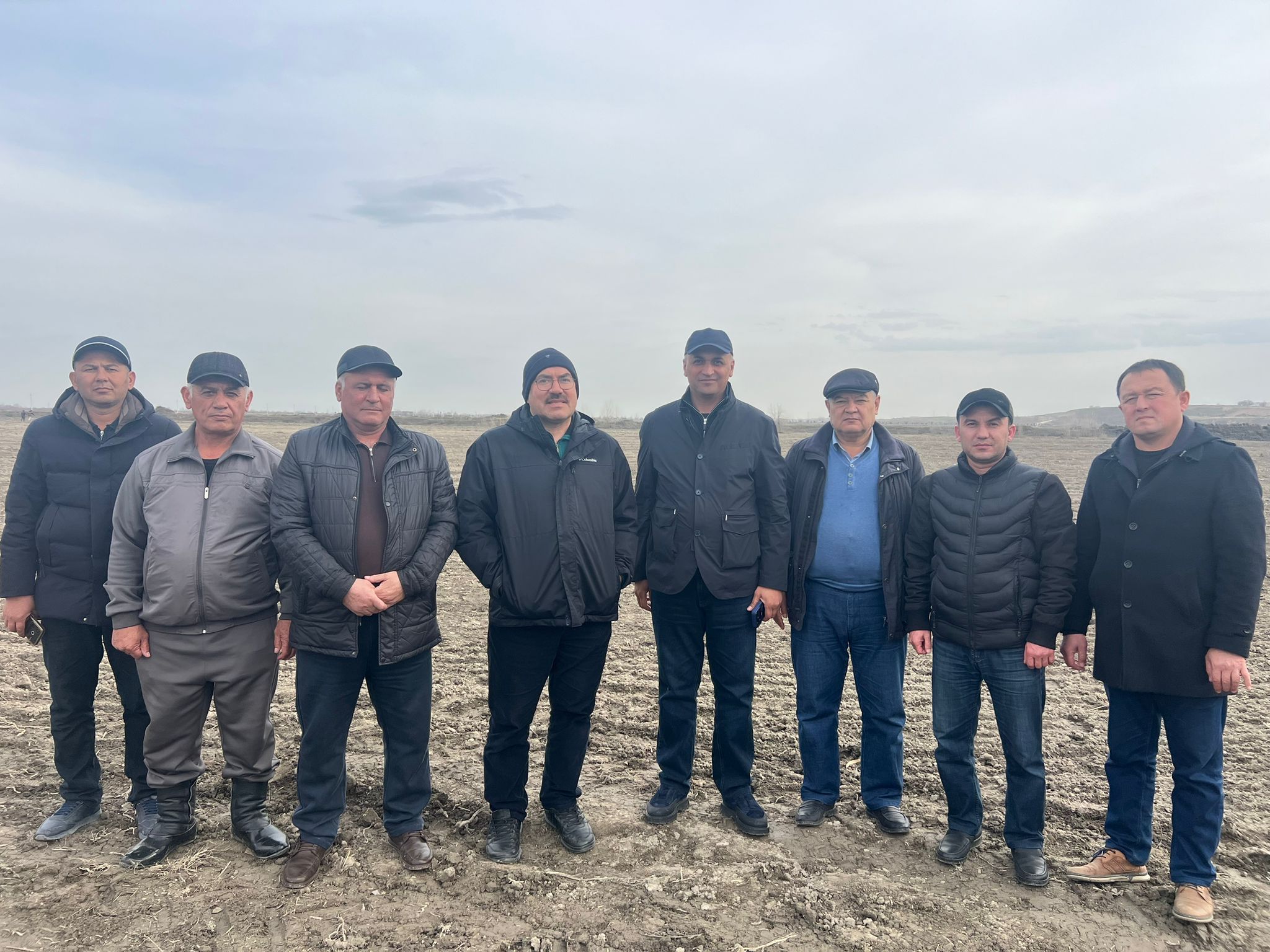
On 4 February 2026 (Wednesday), a field mission was conducted to the Samarkand Specialized State Forestry Enterprise, where a coordination meeting was held with the Director, Mr. Ilxom Yetkirov.
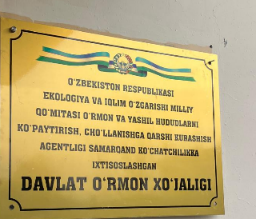
Republic of Uzbekistan, National Committee on Ecology and Climate Change, Agency for Forest and Green Area Expansion and Combating Desertification, Samarkand Specialized State Forestry Enterprise (Seedling Production)
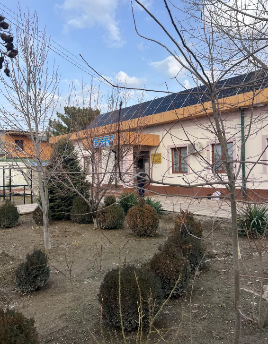
The meeting was attended on behalf of the RESILAND Project by:
- Mr. Abdulvohid Ergashev, the Coordinator of RESILAND
- Mr. Normamat Isakovich Kuziev – Regional Office Coordinator, Samarkand Region
- Mr. Shuhrat Maxmudovich Egamberdiev – Technical Specialist, Samarkand Region
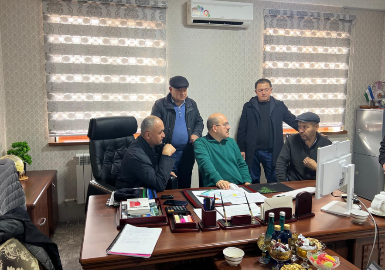
The discussions focused on:
- The regional forestry structure and operational capacities;
- Ongoing afforestation and restoration programs in Samarkand Region;
- Institutional readiness for nursery upgrading;
- Integration of the Pastdargʻom site within regional restoration planning under Sub-component 2.1 of RESILAND CA+.
This institutional consultation ensured that subsequent site assessments were grounded in both regional policy priorities and operational realities.
1.4.2 Visit to the Pastdargʻom Forest Section Nursery
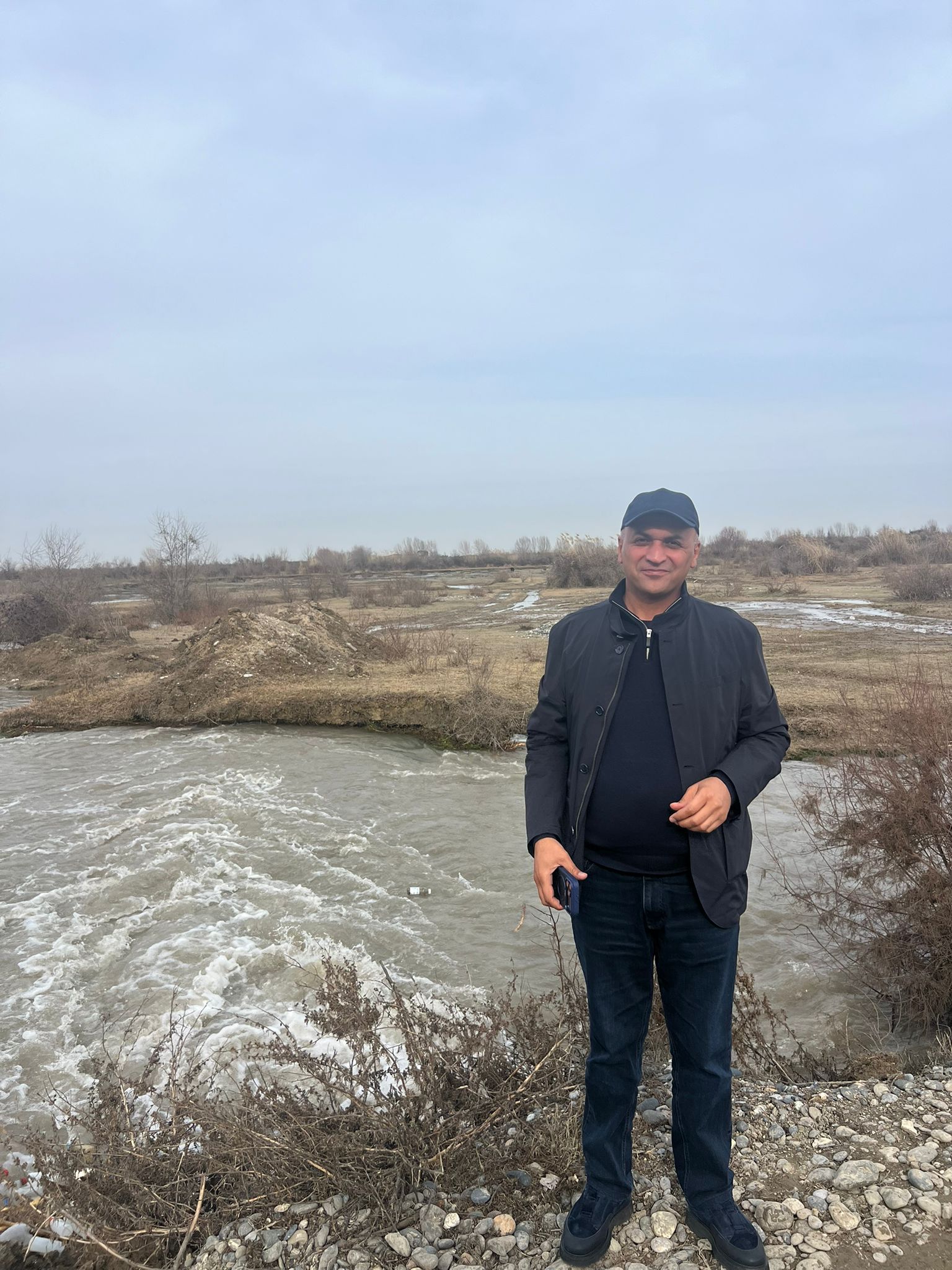
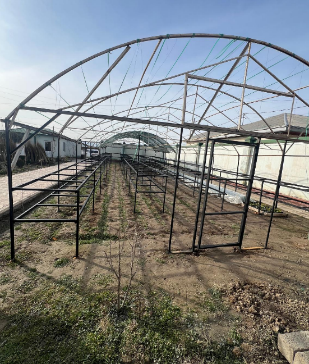
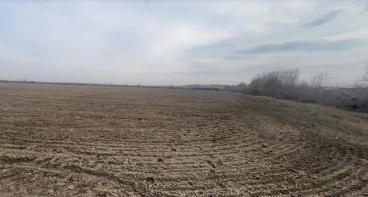
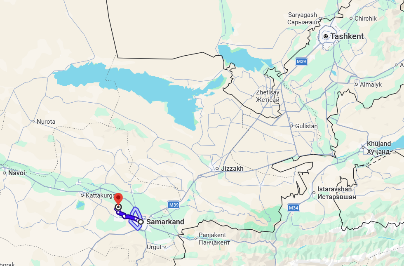
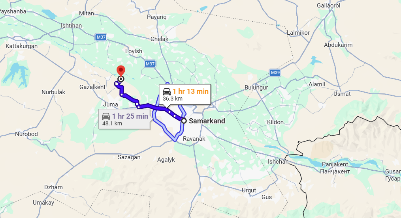
Following institutional consultations, the delegation proceeded to the Pastdargʻom Forest Section Nursery, located in Pastdargʻom District, under the authority of the Samarkand State Forestry.
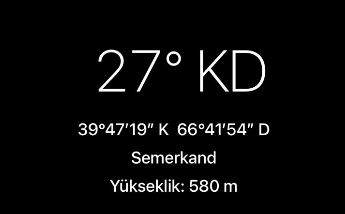
The site is geographically positioned at:
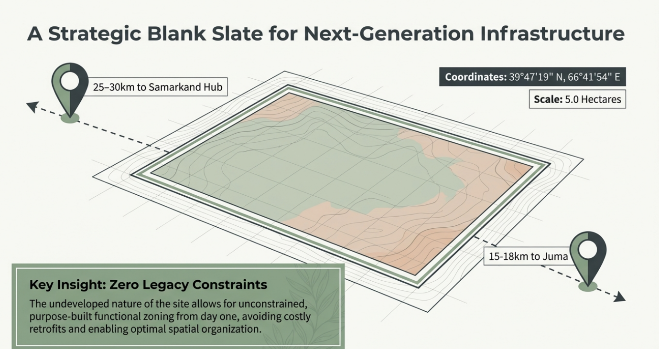
- 39°47′19″ N latitude
- 66°41′54″ E longitude
- Elevation: approximately 580 meters above sea level
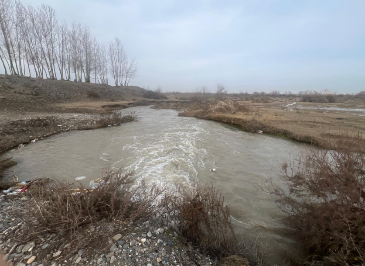
The area lies within the Zarafshan River basin, a critical hydrological and agricultural landscape in the Samarkand plain.
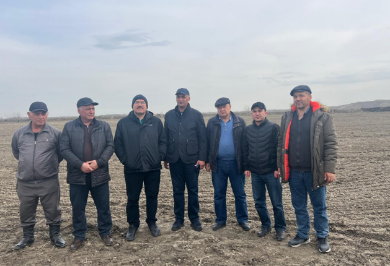
1.4.3 Observation and Strategic Assessment
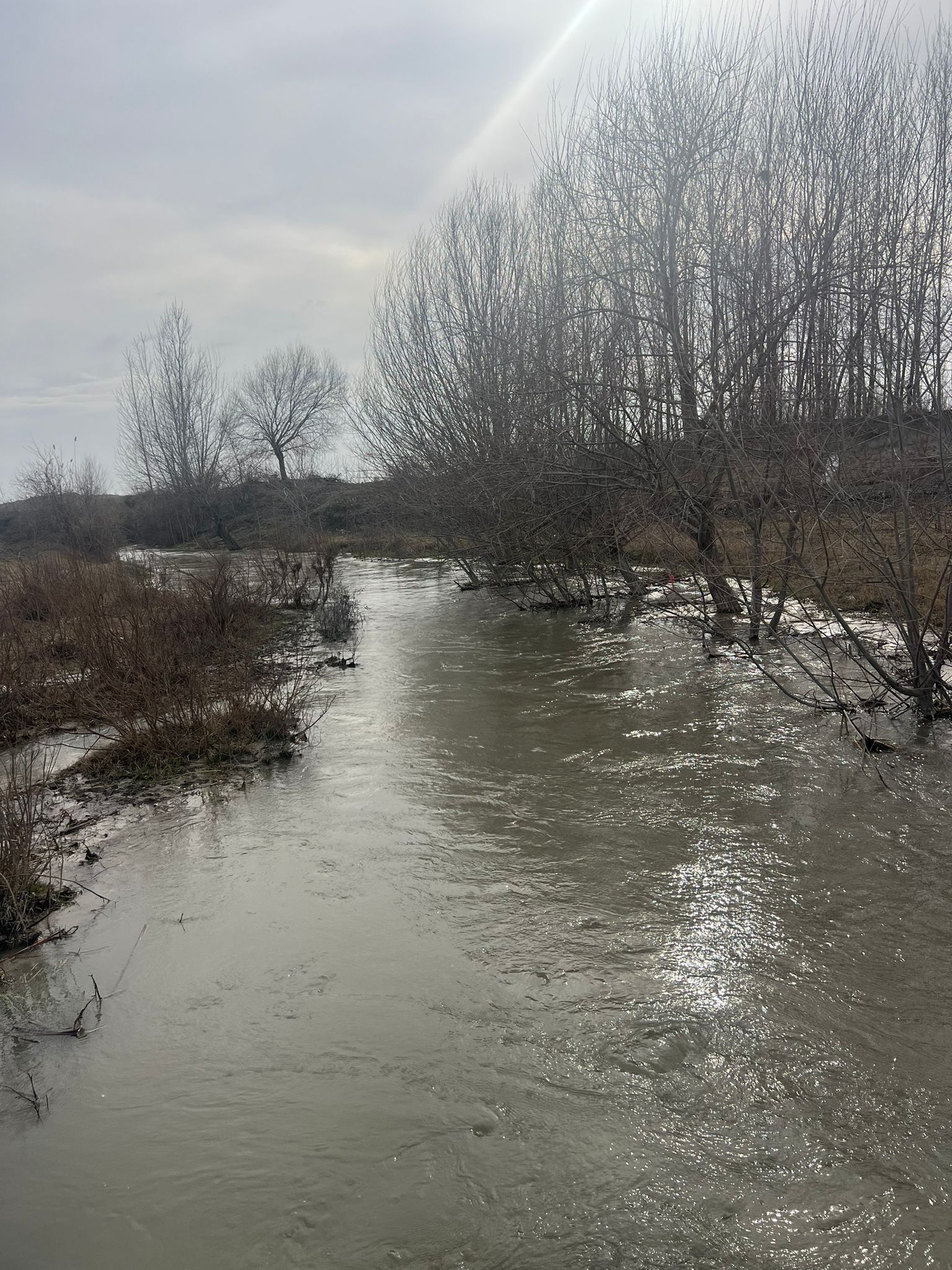
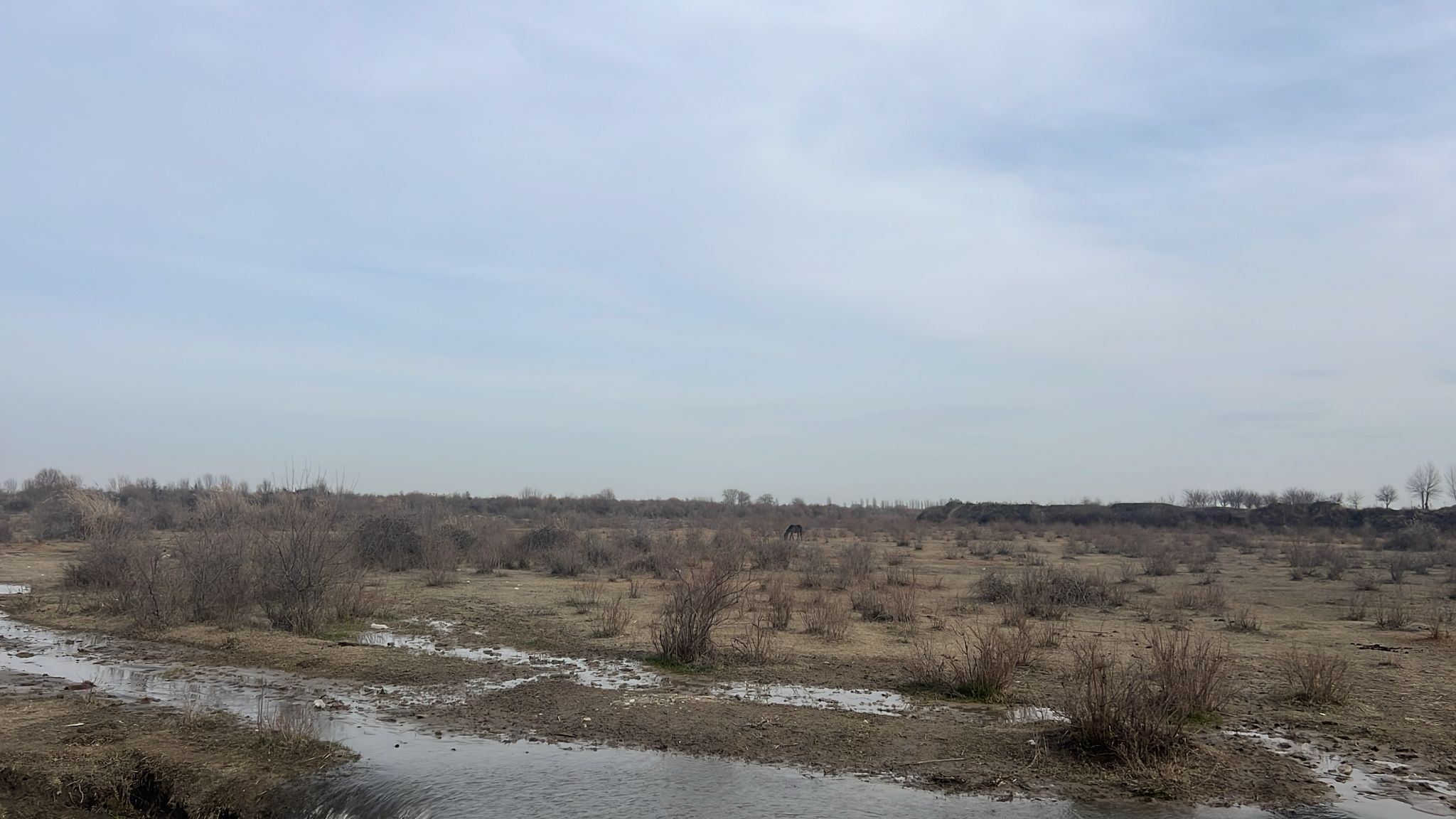
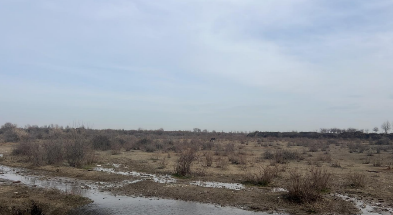
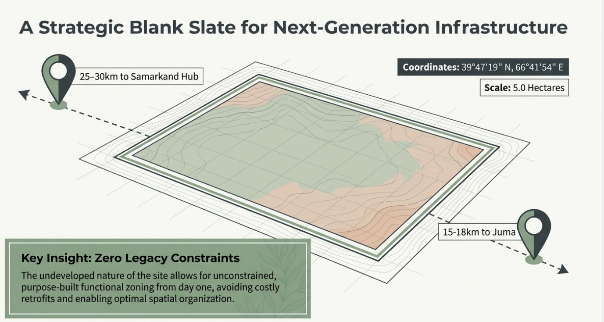
Tthe Pastdargʻom site was observed to be largely vacant and undeveloped.
This characteristic was explicitly evaluated as a major strategic advantage for the following reasons:
- No structural constraints from legacy buildings;
- Full flexibility in master planning;
- Opportunity to design functional zoning from inception;
- Integration of modern irrigation, drainage, and biosecurity systems;
- Embedding of climate-resilient and resource-efficient technologies from the outset.
The absence of permanent structures allows the nursery to be developed as a purpose-built, next-generation model facility, fully aligned with the RESILAND CA Nursery Framework (RNF).
1.4.4 Water Resources and Hydrogeological Feasibility
Water availability was assessed as a critical determinant of site viability.
The site benefits from:
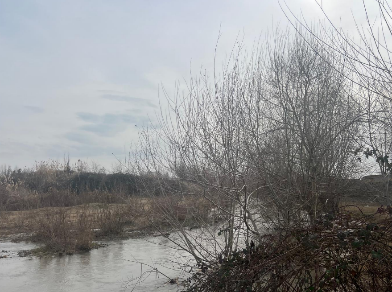
- Proximity to surface irrigation systems historically fed by the Zarafshan River;
- A hydrogeological study carried out in the Oshik Ota neighborhood area confirmed the presence of accessible and sustainable groundwater resources suitable for supplying the proposed nursery’s irrigation system..
The hydrogeological findings indicate:
- Estimated daily water requirement: approximately 10 m³;
- Recommended well depth: approximately 250 meters;
- Expected discharge rate: 4–5 liters per second;
- Mineralization level: 0.27–0.3 g/l, suitable for irrigation purposes.
These parameters confirm the technical feasibility and environmental sustainability of groundwater abstraction for nursery operations.
Reliable irrigation supply significantly reduces operational risk and supports climate-resilient production systems under Sub-component 2.1.
1.4.5 Energy Infrastructure and Accessibility
The presence of electricity transmission lines within and adjacent to the site was clearly observed during the inspection. This ensures:
- Feasibility of pumping systems;
- Operation of greenhouses and shading structures;
- Cold storage facilities (if included in design);
- Administrative offices and basic digital communication systems (internet, computers, data management tools).
From a logistical perspective, the site offers strong accessibility advantages:
- Close proximity to Juma, the district administrative center;
- Approximately 25–30 km from Samarkand, the primary institutional and market hub of the region.
This location supports:
- Labor availability;
- Efficient seedling distribution;
- Institutional supervision;
- Access to services and markets.
1.4.6 Review of Technical Planning Documentation
In parallel with the field inspection, the delegation reviewed technical planning documents prepared by the Samarkand State Forestry for the development of a 5.0-hectare model nursery at the Pastdargʻom site.
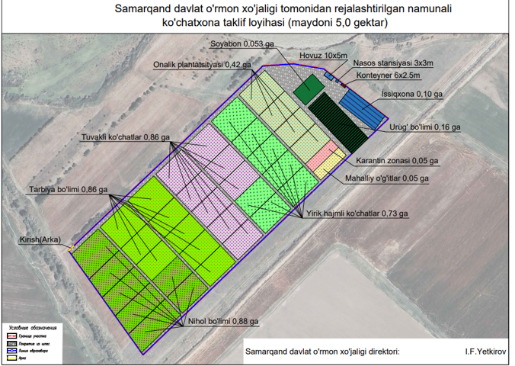
The proposed layout includes clearly defined functional zones covering the entire seedling production cycle:
- Seed propagation areas;
- Training and hardening sections;
- Containerized seedling blocks;
- Large-sized planting material zones;
- Mother plantation area;
- Seed processing section;
- Greenhouses and shading structures;
- Quarantine and phytosanitary zones;
- Composting and local fertilizer preparation areas;
- Irrigation ponds and pumping stations;
- Service and access infrastructure.
The undeveloped nature of the site enables optimal spatial organization, improved internal logistics, and efficient water-energy management.
1.4.7 Integrated Strategic Conclusion of the Field Assessment
The combined findings from:
- Institutional consultations;
- On-site physical inspection;
- Hydrogeological assessment;
- Infrastructure observation;
- Review of planning documentation;
- Proximity and accessibility analysis
collectively confirm that the Pastdargʻom Forest Section Nursery site is technically feasible, strategically located, and fully aligned with RESILAND CA+ objectives.
The site presents a forward-looking investment opportunity capable of:
- Expanding climate-resilient seedling production capacity;
- Supporting agroforestry and restoration interventions;
- Strengthening corridor-based landscape management;
- Enhancing institutional capacity in Samarkand Region;
- Contributing directly to Uzbekistan–2030 afforestation and restoration targets.
Within the framework of the nine nurseries under RESILAND CA+, Pastdargʻom stands out as a high-potential model site suitable for development as a modern, climate-smart, purpose-built forest nursery serving both regional and national restoration objectives.
1.5. Conclusion of First Assessment &Feasibility Report
Based on the full review of institutional consultations, district-level strategic analysis, field observations, hydrogeological verification, infrastructure assessment, and planning documentation, the Pastdargʻom Forest Section Nursery is conclusively assessed as technically viable, environmentally appropriate, institutionally supported, and economically justified for development under the RESILAND CA+ framework.
The assessment confirms that the site fulfills all critical feasibility parameters required for advancing to the detailed design and implementation stage.
Technical Feasibility
- Confirmed groundwater availability with adequate discharge capacity and acceptable mineralization levels, ensuring sustainable irrigation supply;
- Proximity to surface irrigation systems within the Zarafshan basin;
- Existing electricity infrastructure enabling pumping, greenhouse systems, storage, and digital management;
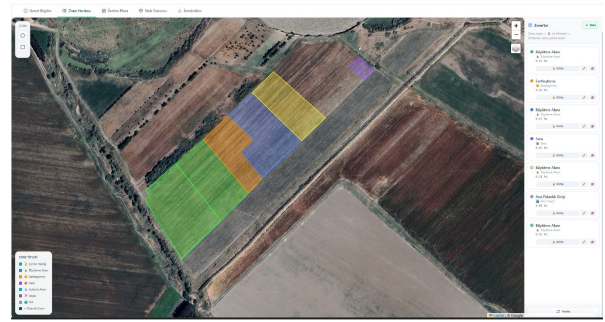
- Unconstrained 5.0-hectare land availability allowing full master planning flexibility;
- Favorable topography and elevation (≈580 m a.s.l.) suitable for nursery production systems.
No structural, environmental, or infrastructural constraints were identified that would prevent development, provided that implementation adheres to the RESILAND CA Nursery Framework (RNF).
Strategic and Economic Justification
Pastdargʻom District represents:
- 87,000 hectares of intensively irrigated land;
- A population exceeding 383,000 inhabitants;
- Approximately 40 million USD quarterly agricultural production;
- High exposure to salinity, wind erosion, drought stress, and irrigation dependency.
In such a high-pressure agricultural landscape, the establishment of a modern, climate-smart forest nursery is structurally necessary to:
- Protect agricultural productivity;
- Reduce land degradation risks;
- Support windbreak and agroforestry systems;
- Stabilize canal and riparian zones;
- Enhance climate resilience of farming systems.
The nursery directly contributes to the quantified targets of the Uzbekistan–2030 Strategy, including annual seedling production expansion, forest area growth, protective green belt establishment, and climate adaptation measures.
Institutional Alignment
The site benefits from:
- Active engagement and planning by the Samarkand Specialized State Forestry Enterprise;
- Integration into Sub-component 2.1 of RESILAND CA+;
- Strong regional coordination mechanisms;
- Proximity to Samarkand as an institutional and logistical hub.
Institutional ownership and planning documentation are already in place, significantly reducing implementation risk.
Programmatic Value within RESILAND CA+
Within the portfolio of nine nurseries, Pastdargʻom stands out as a:
- Purpose-built model facility;
- Low-risk, high-impact investment site;
- Scalable production platform for climate-resilient planting material;
- Strategic node supporting corridor-based and regionally differentiated restoration.
The nursery will function as:
- A biological backbone for landscape restoration interventions;
- A risk-reduction mechanism lowering plantation failure rates;
- A capacity-building platform strengthening regional forestry systems.
Overall Feasibility Judgment
The First Assessment & Feasibility Report concludes that the Pastdargʻom Forest Section Nursery is:
Fully feasible, strategically justified, environmentally suitable, institutionally supported, and economically sound.
The site is strongly recommended to proceed to the detailed design, budgeting, and implementation phase under Contract No. LRP/IC/08.
The development of the Pastdargʻom Nursery represents a forward-looking investment that will generate long-term ecological, economic, and social benefits while reinforcing Uzbekistan’s national restoration architecture and climate resilience objectives.
In this context, it is assessed that Phase 5 – Nursery Design can be formally initiated in accordance with the RESILAND CA Nursery Framework (RNF) and contractual provisions.