Phase 4: First Assessment &Feasibility Report
Design, Upgrading, and Preparation of Nine (9) Forestry Nurseries
Uzbekistan Resilient Landscapes Restoration Project (RESILAND CA+)
Report Title:
Namangan Forestry Nursery (Terakzor Division)
under the Namangan Specialized State Forestry Enterprise
Uchqo‘rg‘on District – Namangan Region
First Assessment & Feasibility Report
Prepared by:
İsmail Belen
International Consultant – Forestry Nursery Design and Preparation
Date: 6 March 2026
1. Introduction, Context and Policy Framework 3
1.1 Strategic Positioning of the Namangan Nursery within RESILAND CA+ 3
1.2 Alignment with the Uzbekistan–2030 Strategy and National Environmental Priorities 5
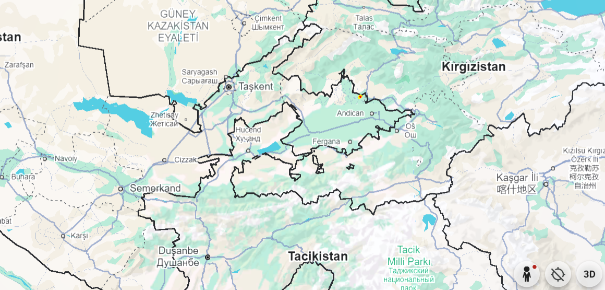
1.3 Regional Context: Namangan Region and Uchqo‘rg‘on District, Fergana Valley 6
1.3.1 Geographic Location and Elevation Profile 11
1.3.2 Climate and Temperature Regime 12
1.3.4 Landform and Terrain Conditions 16
1.3.5 Water Availability and Hydrological Context 18
1.3.6 Environmental Risks and Climate Stressors 20
1.3.7 Implications for Species Selection and Nursery Typology 21
1.3.8. Integrated Technical Conclusion 22
1.4 Field Mission and Site Assessment Findings 24
1.4.1. Visit to Nursery Area 24
1.4.2 Reviewing Existing Nursery Design 28
1.4.3 Water Resources and Hydrogeological Feasibility 30
1.4.4 Energy Infrastructure and Accessibility 31
1.4.5 Integrated Strategic Conclusion of the Field Assessment 32
1.5 Conclusion of First Assessment & Feasibility Report 34
Introduction
This First Assessment and Feasibility Report is prepared for the Namangan Forestry Nursery (Terakzor Division) under the Namangan Specialized State Forestry Enterprise, located within the administrative boundaries of Uchqo‘rg‘on District, Namangan Region, in accordance with the Technical Disposition for the Design, Upgrading, and Preparation of Forest Nurseries in Uzbekistan under the RESILAND CA+ Nursery Framework (RNF).
The report has been developed as an integral component of the consultancy services under Contract No. LRP/IC/08, titled:
“International Consultant to Provide Technical Expertise for the Design, Upgrading, and Preparation of Nine (9) Forestry Nurseries.”
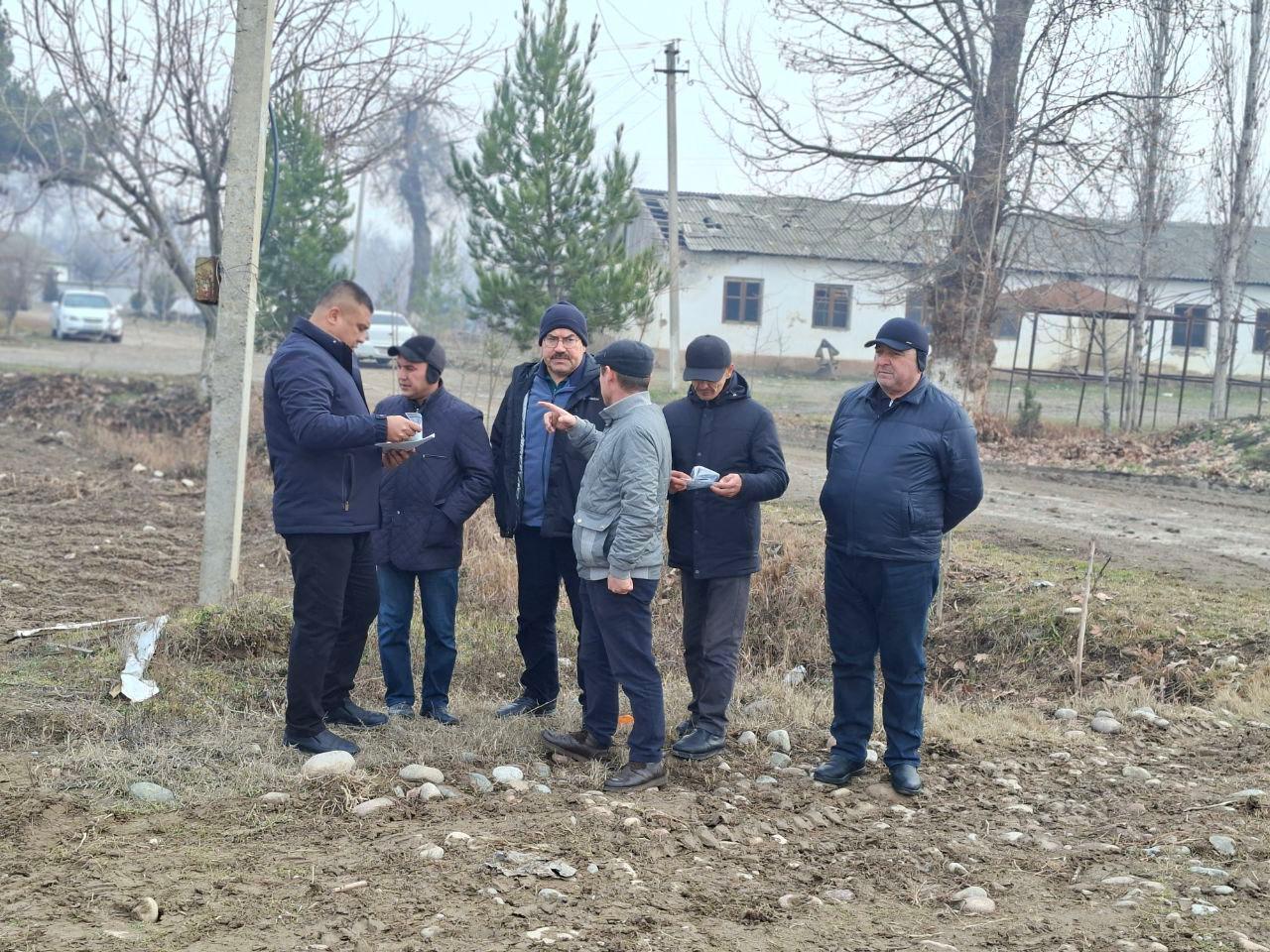
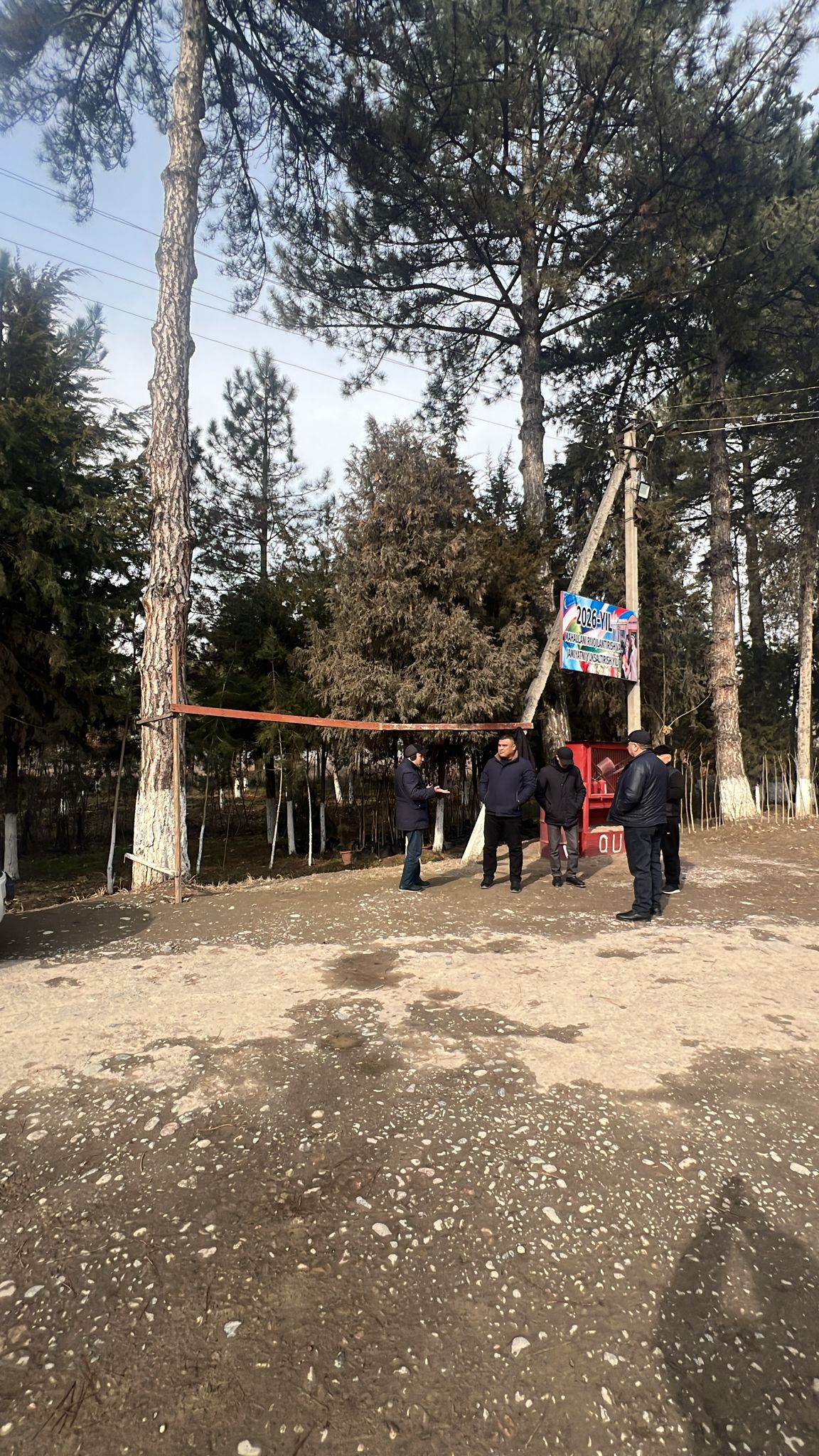
Within this framework, Mr. İsmail Belen, International Consultant, conducted a field mission to the Namangan Forestry Nursery (Terakzor Division) located in Uchqo‘rg‘on District, Namangan Region, on Sunday, 8 February 2026.
The mission included site inspection, observation of existing nursery areas, evaluation of environmental and infrastructural conditions, and consultations with representatives of the Namangan Specialized State Forestry Enterprise and regional forestry officials.
This First Assessment and Feasibility Report has been finalized in full compliance with contractual obligations and in coordination with:
• The Agency for Forest and Green Area Expansion and Combating Desertification under the Ministry of Ecology, Environmental Protection and Climate Change of the Republic of Uzbekistan;
• Namangan Specialized State Forestry Enterprise.
The completion of this document formally concludes Phase 4 – Assessment and Feasibility for the Namangan Forestry Nursery within the RESILAND CA+ framework.
Subject to approval by the RESILAND CA+ Project Implementation Unit (PIU), the project will proceed to the subsequent implementation stages:
• Phase 5 – Nursery Design: Preparation of Detailed Nursery Engineering Designs
• Phase 6 – Technical Specifications & BoQ: Development of Technical Specifications and Bills of Quantities
• Phase 7 – Validation & Training: Second Field Mission for Technical Validation and Capacity Building
The present report establishes the technical, environmental, and institutional basis required for the structured upgrading and climate-resilient development of the Namangan Forestry Nursery (Terakzor Division) within the agricultural and irrigated landscape of the Fergana Valley in Namangan Region.
1. Introduction, Context and Policy Framework
1.1 Strategic Positioning of the Namangan Nursery within RESILAND CA+
The Namangan Forestry Nursery (Terakzor Division) under the Namangan Specialized State Forestry Enterprise, located within the administrative boundaries of Uchqo‘rg‘on District, Namangan Region, is one of the nine (9) priority state forestry nurseries selected under the Uzbekistan Resilient Landscapes Restoration Project (RESILAND CA+).
The inclusion of the Namangan nursery among the nine target nurseries reflects its strategic importance in addressing a key structural gap in Uzbekistan’s eastern landscape restoration systems, particularly within the intensively cultivated and densely populated environment of the Fergana Valley. In this region, there is increasing demand for high-quality planting material suitable for shelterbelt systems, agroforestry development, and urban greening programs.
Unlike nurseries located in arid southern lowland regions or erosion-prone mountainous areas, the Namangan Forestry Nursery operates within the irrigated agricultural plains of the Fergana Valley, characterized by:
• Flat alluvial valley terrain
• Extensive irrigation canal networks supporting agricultural production
• Intensive agricultural land use
• Moderate continental climate conditions
• High population density and land-use pressure
Under RESILAND CA+, nurseries are not treated as auxiliary facilities supporting seasonal planting campaigns. Instead, they are conceived as core public production infrastructure forming the biological and operational backbone of large-scale landscape restoration and climate adaptation strategies.
Within this framework, the Namangan Forestry Nursery contributes directly to the Project Development Objective (PDO) of bringing 280,000 hectares under sustainable landscape management by supplying climate-adapted planting material suited to the agro-ecological conditions of the Fergana Valley and eastern Uzbekistan.
The nursery’s strategic role aligns with two core project components:
• Sub-component 1.1 – Strengthen Institutions and Policies
Supporting institutional capacity building, standardization of nursery operations, improvement of seed and planting material quality control systems, and alignment with national forestry regulatory reforms.
• Sub-component 2.1 – Enhance Tree-based Landscape Restoration and Management
Ensuring the production and supply of site-matched, climate-resilient planting material required for:
• Shelterbelt establishment in irrigated agricultural landscapes
• Agroforestry systems in valley farming zones
• Rehabilitation of degraded or intensively used agricultural lands
• Protective green infrastructure in urban and peri-urban environments
• Regional greening initiatives across Namangan Region
• Ecosystem service-oriented restoration interventions within the Fergana Valley
Within the RESILAND CA+ results chain, the Namangan Forestry Nursery functions as:
• A regional production hub for climate-adapted planting material supporting restoration and greening programs in eastern Uzbekistan;
• A risk-reduction mechanism improving plantation success through better species–site matching and quality-controlled seedling production;
• A scalable production and demonstration platform supporting regionally differentiated restoration strategies across Namangan Region and the broader Fergana Valley landscape.
In this sense, the Namangan Forestry Nursery (Terakzor Division) is positioned not merely as a production site, but as a strategic valley-based model nursery capable of supporting landscape restoration, agricultural protection systems, and climate-resilient greening initiatives in one of Uzbekistan’s most intensively utilized regions.
1.2 Alignment with the Uzbekistan–2030 Strategy and National Environmental Priorities
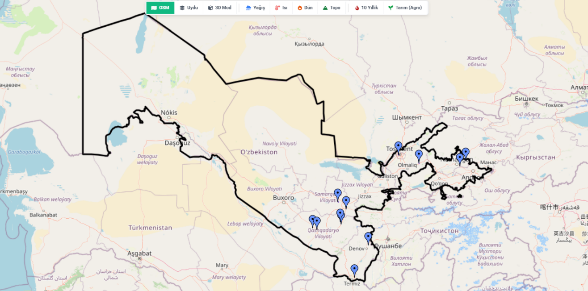
The Uzbekistan–2030 Strategy (Presidential Decree No. UP-158, 11 September 2023) establishes binding national targets under Articles 67–71 concerning afforestation, expansion of green areas, climate adaptation, biodiversity conservation, desertification control, and restoration of degraded lands, including territories influenced by the Aral Sea crisis.
Key quantified national commitments include:
• Planting 200 million seedlings annually;
• Increasing national green area coverage to 30 percent;
• Expanding total forest area to 6.1 million hectares;
• Establishing 600,000 hectares of climate-protective green zones;
• Restoring 2.6 million hectares in the Aral Sea region;
• Increasing annual tree and shrub seed harvesting by 840 tonnes.
Achieving these targets requires a permanent, technically robust, and ecologically differentiated nursery system capable of producing large volumes of climate-adapted planting material suited to Uzbekistan’s diverse ecological zones, including irrigated agricultural valleys, foothill environments, and semi-arid lowland plains.
The Namangan Forestry Nursery (Terakzor Division) under the Namangan Specialized State Forestry Enterprise, located within Uchqo‘rg‘on District in Namangan Region, contributes directly to the implementation of these national priorities within the Fergana Valley, one of the most densely populated and intensively cultivated regions of Uzbekistan.
The nursery supports the implementation of several strategic articles of the Uzbekistan–2030 Strategy:
• Article 67 – Expansion of the “Yashil Makon” National Project, particularly through urban and peri-urban greening initiatives in Namangan Region;
• Article 68 – Forest area expansion and establishment of protective forest belts, especially shelterbelt systems in irrigated agricultural landscapes of the Fergana Valley;
• Article 70 – Climate change adaptation and sustainable land management, focusing on improving ecological resilience within intensively used agricultural landscapes;
• Article 71 – Biodiversity conservation and cultivation of economically and ecologically valuable species, including species suitable for agroforestry, shelterbelts, and landscape restoration.
Unlike nurseries located in arid southern lowland regions or mountainous erosion-prone districts, the Namangan Forestry Nursery operates within the irrigated agricultural plains of the Fergana Valley, characterized by:
• flat alluvial terrain
• extensive irrigation canal networks
• intensive agricultural land use
• moderate continental climate conditions
• high population density and land-use pressure.
Its strategic function is therefore oriented toward producing planting material suitable for:
• Shelterbelt establishment in irrigated agricultural landscapes
• Agroforestry systems within valley farming zones
• Urban and peri-urban greening programs
• Rehabilitation of degraded agricultural lands
• Landscape stabilization and ecological improvement within the Fergana Valley.
Through structured upgrading and climate-resilient production systems, the Namangan Forestry Nursery translates national afforestation targets into biologically viable, quality-controlled, and site-matched seedling production aligned with the ecological realities of the Fergana Valley agricultural landscape.
In this manner, the nursery serves as an operational instrument for implementing the Uzbekistan–2030 Strategy within eastern Uzbekistan’s irrigated valley ecosystem, supporting both landscape restoration and sustainable agricultural protection systems.
1.3 Regional Context: Namangan Region and Uchqo‘rg‘on District, Fergana Valley
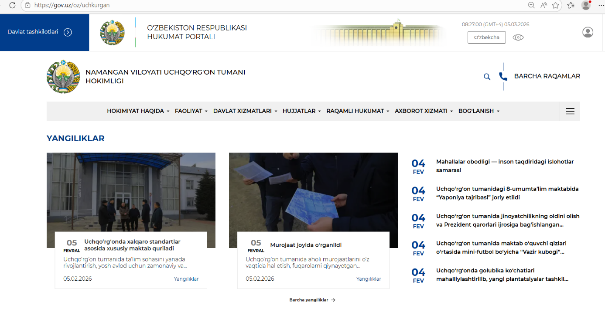
Official administrative data were accessed in February 2026 through the Government Portal of the Republic of Uzbekistan. The following official sources were consulted:
• Uchqo‘rg‘on District Administration (Namangan viloyati Uchqo‘rg‘on tumani hokimligi)
https://gov.uz/oz/uchkurgan
Uchqo‘rg‘on District is an administrative district located in Namangan Region in eastern Uzbekistan. The district lies within the northern part of the Fergana Valley, one of the most fertile and densely populated agricultural regions in Central Asia. Because of its favorable natural conditions, irrigation infrastructure, and agricultural traditions, the district plays an important role in regional rural development and food production.
The district was officially established in 1935 and covers a total territorial area of 300 square kilometres, which is equivalent to 30,000 hectares. This land area consists mainly of irrigated agricultural plains typical of the Fergana Valley landscape. The administrative centre of the district is the city of Uchqo‘rg‘on, which serves as the main political, economic, and service centre for surrounding rural communities.
As of 2021, the population of the district was estimated at approximately 174,600 inhabitants, while more recent regional statistics indicate that the population exceeded 180,000 people by 2023, reflecting steady demographic growth. The population is distributed between the district capital, several small urban-type settlements, and a number of rural communities that depend largely on agricultural livelihoods.
Administratively, the district includes one city (Uchqo‘rg‘on), four urban-type settlements, and several rural community units. These settlements function as local service centres where residents can access markets, schools, health services, and administrative institutions. The district capital acts as the primary hub for commerce and transportation.
The physical geography of Uchqo‘rg‘on District is characterized mainly by flat irrigated plains. Much of the district’s 30,000 hectares of land is suitable for agriculture due to fertile soils and a network of irrigation canals connected to regional river systems. The climate is continental, with hot summers and relatively mild winters, conditions that support intensive crop cultivation.
Agriculture forms the backbone of the district’s economy. Farmers in Uchqo‘rg‘on cultivate a variety of crops, particularly cotton, wheat, fruits, and vegetables. Cotton production has historically been the dominant crop in the region, reflecting Uzbekistan’s national agricultural structure. In addition, horticulture and household farming contribute to food security and local income generation. Livestock production, including cattle and small ruminants, also plays a role in rural livelihoods.
Small industrial activities in the district are mostly linked to agricultural processing. Facilities such as cotton-cleaning plants and oil-processing factories operate in the district capital, supporting the local agricultural sector and providing employment opportunities.
Social infrastructure in Uchqo‘rg‘on District includes schools, healthcare centres, cultural institutions, and local administrative services. These institutions support community development and contribute to improving the quality of life in both urban and rural areas.
Overall, Uchqo‘rg‘on District represents a typical irrigated agricultural district of the Fergana Valley, where economic activity is closely connected to farming, agro-processing, and rural settlement networks. With its 30,000 hectares of territory, fertile soils, and growing population, the district continues to play an important role in the agricultural and socio-economic landscape of Namangan Region.
• Namangan Regional Administration (Namangan viloyati hokimligi)
https://gov.uz/oz/namangan
Namangan is one of the major cities of Uzbekistan and serves as the administrative centre of Namangan Region in the eastern part of the country. Located in the northern section of the fertile Fergana Valley, the city has developed into an important economic, cultural, and educational hub. With a population estimated at around 475,700 in 2014, Namangan is among the largest urban centres in Uzbekistan and plays a significant role in the development of the region.
Geographically, Namangan occupies a strategic position within the Fergana Valley. It lies approximately 430 kilometres east of the national capital, Tashkent, about 65 kilometres west of Andijan, and around 75 kilometres north of the city of Fergana. The valley in which the city is located is one of the most productive agricultural areas in Central Asia, known for its fertile soils and favourable climate. These natural conditions have historically supported intensive agricultural production, particularly cotton and various food crops, which have contributed to the city’s economic growth.
The name Namangan has Persian linguistic origins. It is derived from the words “namak,” meaning salt, and “kon,” meaning mine or deposit. Historically, the area where the city developed contained salt resources, and the original name “Namakkon,” meaning “salt mine,” gradually evolved into the modern name Namangan.
The historical development of the city dates back to the fifteenth century, when the first settlements began to appear in the area. By the early seventeenth century, Namangan had gained greater recognition as a regional settlement. During the eighteenth century, the city became an important urban centre within the territory of the Kokand Khanate, which controlled much of the Fergana Valley at that time.
During the period of the Russian Empire, Namangan developed into an important centre of Islamic education and religious life. Historical accounts indicate that the city once had approximately twenty madrasas and more than six hundred mosques, reflecting its significance as a centre of learning and religious scholarship. In the late nineteenth century, particularly after 1876, the local economy began to shift toward cotton cultivation and food processing industries, which became important economic activities in the region.
In 1926, Namangan experienced a major earthquake that caused significant damage to the city. Despite this setback, the city continued to develop and expand during the twentieth century. Following the independence of Uzbekistan in 1991, Namangan remained an important administrative and economic centre in eastern Uzbekistan.
Education also plays an important role in the city’s development. Namangan hosts several higher education institutions, including Namangan State University, the Namangan Engineering Pedagogical Institute, and the Namangan Engineering and Economics Institute. In addition to these institutions, the city has academic lyceums and specialized colleges that provide training in fields such as medicine, law, pedagogy, sports, and economics.
Sports activities, particularly football, are also prominent in the city. Namangan is home to the football club Navbahor Namangan, which was founded in 1978 and competes in Uzbekistan’s top football league. The team plays its home matches at Navbahor Central Stadium, one of the main sports facilities in the region.
Overall, Namangan stands as a historically rich and economically active city. Its strategic location in the Fergana Valley, its long cultural and educational traditions, and its continuing economic development make it one of the key cities of Uzbekistan.
• Namangan Specialized State Forestry Enterprise (Namangan ko‘chatchilikka ixtisoslashgan davlat o‘rmon xo‘jaligi)
(Operating under the Agency for Forest and Green Area Expansion and Combating Desertification)
Namangan Region is located in the eastern part of the Republic of Uzbekistan, within the Fergana Valley, one of the most densely populated and intensively cultivated regions of Central Asia. The regional administrative center, Namangan city, functions as a major political, economic, and educational hub within eastern Uzbekistan.
According to official statistics published by the State Committee of the Republic of Uzbekistan on Statistics, Namangan Region has a population exceeding 2.9 million inhabitants, making it one of the most populous regions in the country. The total administrative area of Namangan Region is approximately 7,400 km².
Geographically, Namangan Region occupies the northern part of the Fergana Valley, bordered by:
• Fergana Region to the west
• Andijan Region to the south
• Kyrgyzstan to the north and northeast
This location gives the region strong economic connectivity within the valley and facilitates agricultural production supported by extensive irrigation systems.
The Namangan Forestry Nursery (Terakzor Division) is located within the administrative boundaries of Uchqo‘rg‘on District, situated in the central part of Namangan Region. The district landscape is dominated by irrigated agricultural land, rural settlements, and valley plains typical of the Fergana Valley agro-ecological system.
Unlike arid southern lowland regions of Uzbekistan, the Fergana Valley is characterized by a continental valley climate, fertile alluvial soils, and extensive irrigation infrastructure supporting intensive agriculture. These conditions create a favorable environment for tree cultivation, shelterbelt establishment, and agroforestry development.
The landscape of Uchqo‘rg‘on District is generally characterized by:
• Flat alluvial valley terrain
• Extensive irrigation canal networks
• Intensive agricultural land use
• Shelterbelt plantings protecting agricultural fields
• Rural settlement patterns integrated with farming systems
Climatically, Namangan Region experiences a moderate continental climate, with warm summers and relatively cool winters compared to southern lowland regions. Summer temperatures typically range between 30–35°C, while winter temperatures occasionally fall below freezing. Annual precipitation averages 200–300 mm, with the majority occurring during winter and spring.
These environmental conditions create favorable opportunities for forestry nursery development, particularly for species used in agricultural shelterbelts, agroforestry systems, and urban greening programs.
Unlike erosion-prone mountainous areas, the valley plains surrounding the nursery site are characterized by:
• minimal slope variation
• stable agricultural soils
• high irrigation availability
• intensive land management practices
In this context, nursery development strategies should prioritize:
• production of climate-adapted planting material suitable for irrigated agricultural landscapes
• support for shelterbelt and agroforestry systems
• improvement of ecological resilience within intensively cultivated valley environments.
Supporting International Context
According to the World Bank – Uzbekistan Resilient Landscapes Restoration Project (RESILAND CA+) documentation, the project aims to bring 280,000 hectares under sustainable landscape management, requiring regionally adapted nursery systems capable of producing climate-resilient planting material.
Project Appraisal Document:
https://documents1.worldbank.org/curated/en/099100009262217553/pdf/P174135081e0ad0040a7b409e0f5c4a32c9.pdf
Implementation Status Report:
https://documents1.worldbank.org/curated/en/099092823163533223/pdf/P1741350bf921908108f320c790673fc9c7.pdf
According to FAO AQUASTAT – Uzbekistan Country Profile, irrigation accounts for approximately 90% of total freshwater withdrawals in Uzbekistan, highlighting the structural importance of irrigation-supported agricultural landscapes such as the Fergana Valley.
FAO AQUASTAT – Uzbekistan Profile:
https://www.fao.org/aquastat/en/countries-and-basins/country-profiles/country/UZB
FAO regional forestry and climate adaptation initiatives in Central Asia also emphasize the importance of climate-resilient nursery systems capable of supporting large-scale landscape restoration and sustainable land management.
1.3.1 Geographic Location and Elevation Profile
The Namangan Forestry Nursery (Terakzor Division), operated by the Namangan Specialized State Forestry Enterprise, is located within the administrative boundaries of Uchqo‘rg‘on District, Namangan Region, at approximately 41°05′44″ N – 72°03′12″ E, at an elevation of around 480 meters above sea level.
According to cadastral documentation prepared by the State Cadastre Chamber of Uchqo‘rg‘on District, the nursery area forms part of the officially registered lands allocated to the Terakzor Division of the Namangan Specialized State Forestry Enterprise. The nursery territory covers an area of approximately 10 hectares.
The site is situated on the flat irrigated plains of the Fergana Valley, with very limited topographic variation. This relatively even terrain provides favorable conditions for structured nursery layout, internal circulation roads, planting blocks, and irrigation infrastructure without the need for major earthworks.
The surrounding landscape is dominated by intensively cultivated agricultural fields, irrigation canals, and rural infrastructure typical of the Fergana Valley agro-ecosystem. Satellite imagery and cadastral maps indicate a mosaic pattern of agricultural plots surrounding the nursery boundary.
Because the terrain is largely flat, surface drainage capacity is naturally limited. Therefore, appropriate land leveling, drainage channels, and water management planning will be necessary to prevent localized water accumulation during irrigation cycles.
At approximately 480 meters elevation, the nursery site falls within the continental valley climatic zone of eastern Uzbekistan. Compared with arid southern regions of the country, the Fergana Valley experiences moderate summer temperatures and relatively higher precipitation, creating favorable conditions for forestry seedling production and nursery management.
Overall, the geographic and elevation profile of the Namangan Forestry Nursery provides suitable physical conditions for nursery development. However, careful attention should be given to irrigation management, micro-drainage systems, and wind protection measures during the detailed design stage to ensure optimal seedling growth and operational efficiency.
1.3.2 Climate and Temperature Regime
Namangan Region is characterized by a continental valley climate typical of the Fergana Valley, with warm summers, moderately cold winters, and a seasonal precipitation regime concentrated mainly in winter and spring. The Namangan Forestry Nursery (Terakzor Division) is located at approximately 480 meters above sea level, which provides relatively moderate climatic conditions compared with the extreme lowland climates of southern Uzbekistan.
Regional climatic norms indicate the following approximate parameters:
• Mean annual temperature: 13–15°C
• Average July temperature: 28–32°C
• Peak summer temperatures: occasionally reach 36–38°C
• Average January temperature: –1°C to +3°C
• Absolute winter minima: occasionally below –15°C
Annual precipitation in Namangan Region averages approximately 220–300 mm, which is higher than in the arid southern regions of Uzbekistan. Precipitation is strongly seasonal and concentrated mainly in:
• Late autumn
• Winter
• Early spring
The summer period is typically warm and dry, characterized by:
• High solar radiation
• Moderate to high evapotranspiration rates
• Low summer precipitation
• Irrigation-supported vegetation growth
Although climatic conditions in the Fergana Valley are more favorable than those of southern desert regions, irrigation remains essential for nursery operations, particularly during the summer growing season.
Given the prevailing climatic conditions in Namangan Region, nursery establishment and operation require careful climatic and water management planning. The following aspects are particularly important:
1. Irrigation Management
Seedling production depends on reliable irrigation throughout the growing season, as summer precipitation is limited and insufficient to sustain nursery crops without supplementary watering.
2. Microclimate Regulation
Shade structures and wind protection systems may be used to regulate solar exposure and reduce heat stress during peak summer periods.
3. Species Selection Strategy
Priority should be given to species adapted to continental valley climates, particularly those suitable for shelterbelts, agroforestry systems, and urban greening within the Fergana Valley.
4. Evaporation Control Measures
Windbreak establishment and soil surface management practices help reduce evaporation losses and stabilize microclimatic conditions within nursery plots.
5. Production System Approach
Both open-field nursery production and containerized (closed-root) systems can be applied to improve seedling quality and operational flexibility.
6. Efficient Irrigation Technologies
Modern irrigation systems such as drip irrigation or micro-sprinklers are recommended to optimize water use efficiency and ensure uniform moisture distribution.
In summary, the continental valley climate of Namangan Region provides generally favorable conditions for forestry nursery development. With appropriate irrigation management, microclimate regulation, and climate-adapted species selection, stable and resilient seedling production can be effectively maintained.
1.3.3 Soil Characteristics
Field observations and satellite imagery analysis confirm that the Namangan Forestry Nursery (Terakzor Division) is located within the irrigated floodplain landscape of Uchqo‘rg‘on District, Namangan Region, in the central part of the Fergana Valley.
The nursery parcel is situated within a low-gradient alluvial floodplain area surrounded by multiple irrigation channels and natural river branches, which form part of the broader Syr Darya basin hydrological system. Satellite imagery indicates that the nursery area occupies a slightly elevated agricultural island between water channels, typical of historical river deposition zones within the valley.
This hydrological setting provides structural access to irrigation water, which is a key advantage for nursery operations. At the same time, the proximity of surface water bodies requires careful integration of drainage management, groundwater monitoring, and flood risk considerations within the technical design framework.
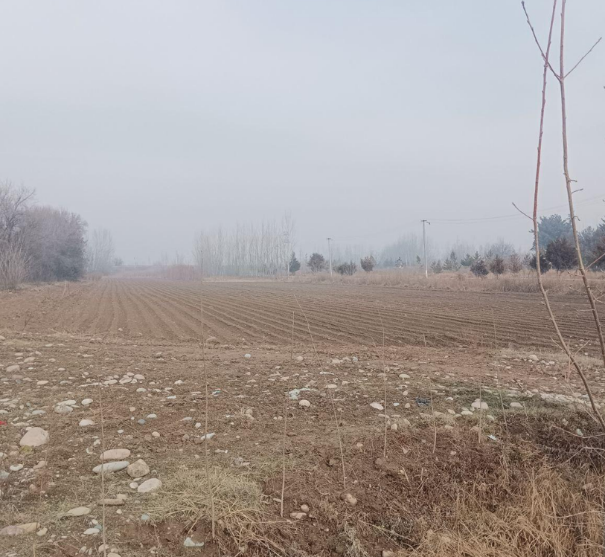
The surrounding landscape consists predominantly of intensively cultivated agricultural fields, irrigation infrastructure, and rural settlements typical of the Fergana Valley agro-ecosystem. The nursery area is therefore well integrated into the regional agricultural production system.
Field inspection confirms that the terrain is generally flat with minimal slope gradients, suitable for mechanized nursery layout and structured planting systems. However, slight micro-relief variations and shallow informal drainage channels are visible along parcel boundaries, indicating the need for precision land leveling and controlled drainage planning to ensure uniform irrigation distribution.
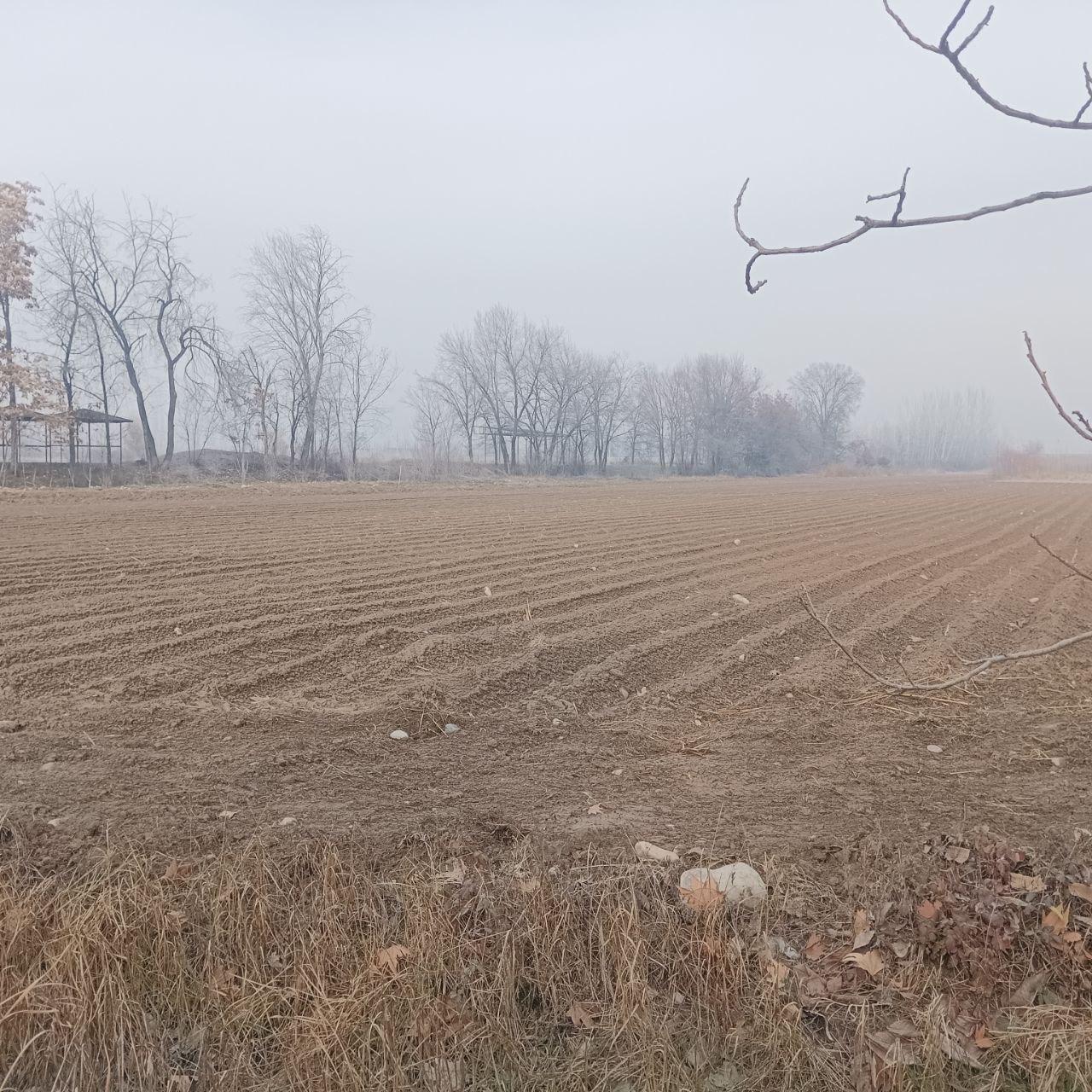
Surface soil observations and photographic documentation indicate the presence of coarse-textured alluvial soils containing a high proportion of gravel and rounded stones, suggesting deposition from historical river flows. Such soils typically exhibit high permeability and rapid infiltration rates, but relatively low water-holding capacity. This characteristic requires careful irrigation scheduling and potential soil amendment strategies to improve moisture retention within nursery production beds.
Existing shelterbelt tree lines surrounding parts of the parcel function as windbreak systems, contributing to microclimate stabilization by reducing wind speed and evapotranspiration. These shelterbelts represent an important structural element and should be preserved and integrated into future nursery layout planning.
Basic operational infrastructure is already present on site, including a small service building, simple equipment storage areas, and nearby electrical lines. These existing facilities provide a foundation for further technical upgrading under the modernization framework.
Access to the nursery is provided through unpaved agricultural roads connecting the site to surrounding rural settlements and farming areas. While current access conditions are generally adequate for daily operations, improvements to internal circulation routes and surface stabilization will be necessary to support mechanized nursery management.
In summary, the Namangan Forestry Nursery site demonstrates several structural advantages, including reliable irrigation water availability within the floodplain landscape, flat terrain suitable for mechanized production, existing shelterbelt systems, and integration within the agricultural infrastructure of the Fergana Valley.
At the same time, several technical considerations must be addressed during the modernization process, including:
• drainage management within the floodplain environment
• soil improvement measures for coarse alluvial substrates
• monitoring of groundwater levels
• integration of existing shelterbelts into the nursery layout
• installation of modern irrigation systems.
With appropriate engineering measures and modern nursery management systems, the site is technically suitable for upgrading and expansion under the RESILAND CA+ framework.
1.3.4 Landform and Terrain Conditions
The terrain of the Namangan Forestry Nursery located in Uchqo‘rg‘on District, Namangan Region, is characterized by a low-gradient alluvial floodplain landscape within the central Fergana Valley, shaped primarily by fluvial deposition associated with the Syr Darya river system and its irrigation networks.
Unlike foothill–agricultural transition zones that occur along the margins of the Fergana Valley, the nursery site is situated within a broad floodplain environment composed of accumulated alluvial sediments and intensively irrigated agricultural land. The terrain therefore exhibits very low natural slope gradients and high hydrological connectivity with surrounding irrigation canals and river branches.
Satellite imagery and cadastral documentation indicate that the nursery parcel lies within an agricultural island formed between river channels and irrigation canals, a common geomorphological pattern within the central Fergana Valley floodplain. This landscape has been extensively modified through irrigation development, resulting in a mosaic of cultivated fields, canal corridors, shelterbelts, and rural settlements.
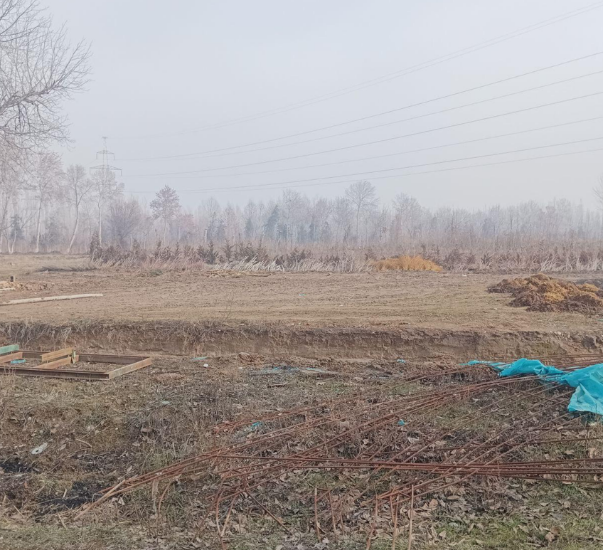
According to FAO AQUASTAT documentation for Uzbekistan, agricultural systems in the Fergana Valley are highly dependent on controlled irrigation and engineered canal networks, with landforms shaped largely by alluvial sediment accumulation and irrigation infrastructure rather than by natural slope processes
(FAO AQUASTAT – Uzbekistan Country Profile:
https://www.fao.org/aquastat/en/countries-and-basins/country-profiles/country/UZB).
The dominant landform characteristics of the Namangan nursery landscape include:
• Flat floodplain surfaces formed through long-term alluvial deposition
• Dense irrigation canal and drainage networks integrated into cultivated land
• Minimal natural slope variation across agricultural parcels
• Agricultural and shelterbelt-dominated landscape structure typical of the Fergana Valley
Regional irrigation modernization assessments highlight that agricultural productivity in the Fergana Valley depends heavily on engineered irrigation and drainage systems, since natural runoff capacity is limited by the very low terrain gradient across the basin
(World Bank – Irrigation Modernization and Sector Review, Uzbekistan:
https://projects.worldbank.org/en/projects-operations/project-detail/P178340).
Slope gradients within the nursery area are typically:
• Below 2% across most parcels
• Characterized mainly by micro-relief variations and historical leveling patterns
• Influenced by irrigation canal alignment and agricultural land preparation practices
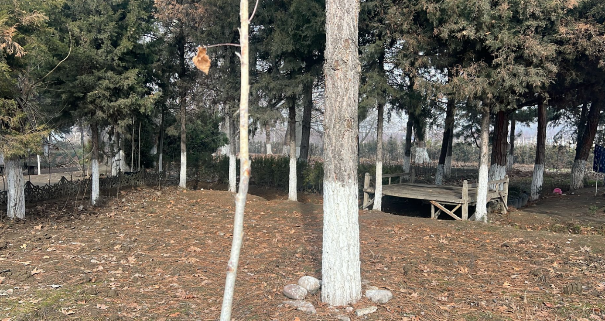
These terrain conditions have several operational implications. The flat floodplain terrain provides clear advantages for mechanized nursery operations, structured production zoning, and irrigation network installation. However, the same conditions also increase dependence on engineered drainage systems, as low natural slope reduces the capacity for gravity-driven surface runoff.
In floodplain environments such as the central Fergana Valley, insufficient drainage or uneven land leveling may lead to localized waterlogging, shallow groundwater accumulation, and secondary soil salinity, particularly under high irrigation intensity.
The World Bank Country Climate and Development Report for Uzbekistan notes that irrigated agricultural systems within the Fergana Valley face increasing pressure from water stress, evaporation losses, and climate variability, reinforcing the importance of efficient irrigation and drainage management in flat basin landscapes
(World Bank – Country Climate and Development Report: Uzbekistan:
https://openknowledge.worldbank.org/handle/10986/40382).
For nursery development, the terrain conditions in the Namangan site provide several advantages:
• High suitability for mechanized nursery operations
• Feasibility of structured production zoning with minimal earthworks
• Efficient installation of irrigation systems under controlled grading conditions
At the same time, these advantages are balanced by several technical requirements:
• Dependence on well-designed drainage infrastructure
• Potential risk of groundwater rise and soil salinity under irrigation conditions
• Requirement for precise land leveling and water management
Wind exposure across the open agricultural plains of the Fergana Valley is generally moderate, though locally stronger winds may occur during seasonal weather patterns. Because terrain variation offers limited natural wind protection, shelterbelt systems and tree corridors play an important role in stabilizing microclimatic conditions within agricultural landscapes.
International guidance for land management in irrigated semi-arid regions emphasizes the importance of windbreak systems in flat floodplain environments to reduce evapotranspiration losses and protect young plants from wind stress
(FAO – Climate Smart Agriculture Guidance:
https://www.fao.org/climate-smart-agriculture/en/).
In summary, the terrain surrounding the Namangan Forestry Nursery is defined by a flat, irrigation-dependent alluvial floodplain landscape within the Fergana Valley, offering strong operational advantages for mechanized nursery management and infrastructure development. However, long-term sustainability of nursery production requires careful drainage design, precise land leveling, groundwater monitoring, and efficient irrigation management within this floodplain environment.
1.3.5 Water Availability and Hydrological Context
The hydrological regime of the Namangan Forestry Nursery located in Uchqo‘rg‘on District, Namangan Region, is defined by its position within the central Fergana Valley irrigation system associated with the Syr Darya river basin. Unlike downstream desert lowlands where water supply is constrained by basin-end allocation pressures, the hydrology of the Fergana Valley is characterized by an intensively managed irrigation network supplied by both natural river channels and engineered canal systems.
The nursery area lies within a floodplain agricultural landscape surrounded by irrigation canals and secondary river branches, which form part of the broader Syr Darya hydrological system. In this environment, surface water availability is primarily regulated through canal distribution networks, diversion structures, and regional irrigation management infrastructure, rather than through local rainfall or direct runoff.
According to FAO AQUASTAT, Uzbekistan exhibits one of the highest levels of irrigation dependency globally, with agriculture accounting for the vast majority of freshwater withdrawals. This structural dependence is particularly evident in the Fergana Valley, where highly productive agricultural systems rely on extensive irrigation networks and controlled water allocation
(FAO AQUASTAT – Uzbekistan Country Profile:
https://www.fao.org/aquastat/en/countries-and-basins/country-profiles/country/UZB).
Within the Fergana Valley irrigation system, canals distribute regulated surface water across flat agricultural plains. At the local scale, water availability for agricultural production depends largely on:
• canal discharge management and maintenance
• sediment control within irrigation infrastructure
• operational allocation scheduling during the irrigation season
• performance of diversion and pumping facilities where required
World Bank irrigation modernization assessments emphasize that in Uzbekistan’s irrigated valleys, water supply reliability is closely linked to infrastructure performance, maintenance of canal systems, and efficient water management practices
(World Bank – Irrigation Modernization Project, Uzbekistan:
https://projects.worldbank.org/en/projects-operations/project-detail/P178340).
Compared to upland catchments or foothill districts, the Fergana Valley floodplain environment presents several distinct hydrological characteristics:
• high dependence on controlled irrigation systems
• limited natural surface runoff due to very low terrain gradients
• potential groundwater table fluctuations associated with canal seepage and irrigation intensity
• seasonal water demand peaks during summer agricultural production periods
The World Bank Country Climate and Development Report for Uzbekistan notes that irrigated agricultural systems in the Fergana Valley are increasingly influenced by climate-driven evaporation pressure and water demand growth, which reinforces the need for efficient irrigation and drainage management across the basin
(World Bank – Country Climate and Development Report: Uzbekistan:
https://openknowledge.worldbank.org/handle/10986/40382).
Under these conditions, hydrological planning for nursery development must consider several key factors:
• stability of canal water supply during the irrigation season
• interaction between irrigation canals and shallow groundwater levels
• risk of localized waterlogging in flat floodplain terrain
• water quality variations influenced by sediment loads and mineral content
For nursery establishment within an irrigation-dependent floodplain system, hydrological planning should prioritize controlled water management and infrastructure reliability, rather than relying solely on proximity to surface water sources.
Key technical considerations include:
• verification of seasonal canal discharge reliability and allocation schedules
• monitoring of groundwater levels to identify potential waterlogging risks
• installation of sediment filtration systems for irrigation intake points
• adoption of high-efficiency irrigation technologies such as drip or micro-sprinkler systems
• establishment of systematic water quality monitoring protocols, including electrical conductivity (EC), pH, total dissolved solids (TDS), and mineral composition
• integration of engineered drainage systems to prevent water accumulation and secondary soil salinity
In summary, the hydrological environment of the Namangan Forestry Nursery is defined by an intensively managed irrigation system within the Syr Darya basin floodplain of the Fergana Valley. While reliable canal water availability provides a strong operational advantage for nursery development, sustainable long-term production requires integrated water management planning, infrastructure reliability assessment, groundwater monitoring, and efficient irrigation practices adapted to the hydrological conditions of the valley.
1.3.6 Environmental Risks and Climate Stressors
Key environmental pressures affecting the Namangan Forestry Nursery located in Uchqo‘rg‘on District, Namangan Region, are linked primarily to the ecological dynamics of the Fergana Valley irrigated floodplain system. Unlike arid downstream basins characterized by extreme heat and severe water scarcity, the environmental challenges in the Fergana Valley arise mainly from intensive irrigation agriculture, flat floodplain terrain, groundwater fluctuations, and soil management constraints.
The nursery area lies within a highly cultivated agricultural landscape where environmental conditions are shaped by long-term irrigation practices and the hydrological influence of the Syr Darya basin. In this setting, environmental pressures are associated less with extreme aridity and more with water management efficiency, drainage performance, and soil physical characteristics.
The dominant environmental pressures include:
• seasonal irrigation demand during warm summer periods
• groundwater table fluctuations linked to canal seepage and irrigation intensity
• localized waterlogging risk in low-gradient floodplain terrain
• soil compaction and surface crust formation in intensively cultivated areas
• limited soil organic matter content due to repeated cultivation cycles
• wind exposure across open agricultural fields
• coarse alluvial soil structure with relatively low moisture retention capacity
Unlike foothill districts where slope-induced erosion is often a primary environmental concern, the Fergana Valley floodplain environment is more sensitive to drainage efficiency, soil structure degradation, and irrigation-induced groundwater dynamics.
These environmental conditions create several technical requirements for sustainable nursery development:
• tree species adapted to irrigated valley environments and moderate summer heat
• efficient irrigation systems designed to optimize water use under warm conditions
• engineered drainage solutions to prevent waterlogging and maintain soil aeration
• windbreak systems to stabilize microclimatic conditions in open agricultural landscapes
• soil improvement measures aimed at increasing organic matter content and water retention capacity
• careful land leveling to ensure uniform irrigation distribution
The World Bank Country Climate and Development Report for Uzbekistan highlights that agricultural systems in the Fergana Valley are increasingly influenced by climate variability, water demand growth, and irrigation efficiency challenges, reinforcing the need for improved water management practices
https://openknowledge.worldbank.org/handle/10986/40382
Similarly, FAO guidance for climate-smart agriculture emphasizes the importance of integrated water efficiency, soil health management, and wind protection systems in irrigated agricultural landscapes, particularly in semi-arid valley environments
https://www.fao.org/climate-smart-agriculture/en/
Within the environmental context of the Fergana Valley floodplain, environmental management priorities for nursery development therefore focus on:
• drainage management and groundwater control
• efficient irrigation and water-use optimization
• soil structure improvement and organic matter enhancement
• windbreak integration to stabilize microclimatic conditions
• adaptation of nursery production systems to irrigated valley environments
In summary, the environmental context of the Namangan Forestry Nursery reflects the dynamics of an intensively irrigated floodplain landscape within the Fergana Valley, where sustainable nursery development depends on effective irrigation management, drainage control, soil improvement, and microclimate stabilization rather than on erosion control or extreme heat mitigation typical of arid lowland basins.
1.3.7 Implications for Species Selection and Nursery Typology
Given the irrigation-supported agricultural environment of the Fergana Valley, nursery production at the Namangan Forestry Nursery (Uchqo‘rg‘on District) should prioritize species and production systems adapted to continental valley climatic conditions, characterized by warm summers, moderately cold winters, and irrigation-dependent vegetation growth.
The ecological context of the Fergana Valley differs from the extreme lowland environments of southern Uzbekistan. Environmental conditions are influenced by seasonal irrigation regimes, fertile alluvial soils, and intensive agricultural land use, rather than by extreme desert heat or persistent drought conditions.
Nursery production in Namangan should therefore prioritize:
• Species adapted to continental valley climates with warm summers and winter frost periods
• Tree species suitable for irrigated agricultural landscapes and shelterbelt systems
• Species compatible with agroforestry and field protection functions within the Fergana Valley
• Wind-tolerant species capable of stabilizing open agricultural plains
• Fast-growing species for shelterbelt establishment, canal bank stabilization, and rural landscape greening
• Multipurpose species combining ecological protection and economic value
Because the nursery is located at approximately 480 meters above sea level, species selection should account for both summer heat tolerance and winter frost resistance, which remain relevant ecological constraints within the continental climate of eastern Uzbekistan.
Nursery production systems at the Namangan site should integrate:
• Structured open-field production blocks for species well adapted to valley agricultural environments
• Containerized (closed-root) seedling production to improve survival rates and planting flexibility
• Hardening zones allowing seedlings to acclimatize to solar radiation, seasonal winds, and variable irrigation conditions prior to field planting
• Efficient irrigation systems, such as drip or micro-sprinkler technologies, to optimize water use and ensure uniform moisture distribution
• Soil improvement and composting units to enhance organic matter content and increase water retention capacity in coarse-textured alluvial soils
• Shelterbelt integration within nursery compartments to reduce wind exposure and stabilize microclimatic conditions
• Controlled drainage and land leveling measures to prevent localized waterlogging in flat floodplain terrain
Within the Fergana Valley context, nursery design must therefore emphasize efficient irrigation management, soil improvement, microclimate stabilization, and careful species–site matching, ensuring that seedling production aligns with the ecological conditions of an intensively irrigated agricultural landscape.
In summary, the Namangan Forestry Nursery should function as a regional production facility supporting shelterbelt establishment, agroforestry development, rural landscape stabilization, and climate-resilient greening initiatives across the Fergana Valley through the production of site-adapted, high-quality planting material.
1.3.8. Integrated Technical Conclusion
The Namangan Forestry Nursery located in Uchqo‘rg‘on District, Namangan Region, presents a technically feasible and environmentally strategic location for forest nursery establishment within the central Fergana Valley irrigation system. Its biophysical context is defined by a flat alluvial floodplain landscape associated with the Syr Darya basin, characterized by irrigation-supported agriculture, fertile alluvial soils, and intensively managed water distribution networks.
According to FAO AQUASTAT, Uzbekistan is among the most irrigation-dependent agricultural systems globally, with agriculture accounting for the majority of national freshwater withdrawals. This structural reliance is particularly evident in highly productive agricultural valleys such as the Fergana Valley, where irrigation infrastructure, canal networks, and controlled water management sustain agricultural and forestry production systems
FAO AQUASTAT – Uzbekistan Country Profile:
https://www.fao.org/aquastat/en/countries-and-basins/country-profiles/country/UZB
The World Bank Country Climate and Development Report (CCDR) for Uzbekistan highlights that irrigated agricultural regions, including the Fergana Valley, are increasingly exposed to:
• rising temperatures and seasonal heat stress
• increasing evapotranspiration rates
• growing seasonal irrigation demand
• climate variability affecting water management systems
World Bank – Country Climate and Development Report (Uzbekistan):
https://openknowledge.worldbank.org/handle/10986/40382
Within the Syr Darya basin irrigation system, canals and secondary river channels distribute regulated water across the flat agricultural plains of the Fergana Valley. Water availability therefore depends largely on canal infrastructure performance, allocation scheduling, and irrigation management efficiency, as emphasized in World Bank irrigation modernization assessments
World Bank – Irrigation Modernization Project (Uzbekistan):
https://projects.worldbank.org/en/projects-operations/project-detail/P178340
Based on available environmental data and regional conditions, the biophysical characteristics of the Namangan nursery site include:
• location within a flat alluvial floodplain landscape typical of the Fergana Valley
• elevation of approximately 480 meters above sea level
• annual precipitation of approximately 220–300 mm, concentrated in winter and spring
• warm summers with peak temperatures generally reaching 34–38°C
• irrigation-supported agricultural production systems
• coarse-textured alluvial soils with moderate permeability and variable water retention
• very low natural slope gradients requiring careful irrigation and drainage planning
Compared with foothill districts, floodplain environments such as Uchqo‘rg‘on District are less exposed to erosion processes but are more sensitive to water management efficiency, soil structure stability, and groundwater fluctuations associated with irrigation systems.
From a technical perspective, the Namangan site provides several operational advantages for nursery development:
• high feasibility for mechanized nursery operations due to flat terrain
• efficient installation of irrigation infrastructure and production zoning
• proximity to existing agricultural irrigation networks
• integration within a well-developed agricultural production landscape
However, long-term sustainability of nursery operations depends on several technical considerations:
• maintaining efficient irrigation management under seasonal water demand
• preventing localized waterlogging in low-gradient floodplain terrain
• improving soil structure and organic matter content
• stabilizing microclimatic conditions within open agricultural landscapes
Therefore, nursery establishment in Namangan should incorporate:
• high-efficiency irrigation systems (drip or micro-sprinkler) to optimize water use
• engineered drainage and land-leveling measures to ensure uniform water distribution
• systematic soil testing and soil improvement programs to enhance water retention and soil fertility
• windbreak and shelterbelt systems to stabilize microclimatic conditions
• water quality monitoring (EC, pH, TDS, mineral composition) for irrigation management
• species-site matching emphasizing species adapted to irrigated valley environments and continental climate conditions
Based on FAO and World Bank assessments, the Namangan floodplain environment is defined primarily by irrigation management dynamics, soil structure conditions, and climate variability within a highly productive agricultural valley system. With properly designed irrigation efficiency measures, drainage management, and climate-adapted species selection, the site is technically well suited for the development of a modern climate-resilient forestry nursery aligned with RESILAND CA+ restoration objectives.
The key determinants of long-term success for the Namangan Forestry Nursery include:
• efficient irrigation and water-use management
• soil quality improvement and organic matter enhancement
• effective drainage and groundwater monitoring
• microclimate stabilization through shelterbelts
• climate-adapted species selection suitable for the Fergana Valley environment
Accordingly, the Namangan site represents a strategically suitable location for nursery establishment, capable of supporting regional landscape restoration, shelterbelt development, agroforestry systems, and climate-resilient greening initiatives across the Fergana Valley.
1.4 Field Mission and Site Assessment Findings
1.4.1. Visit to Nursery Area
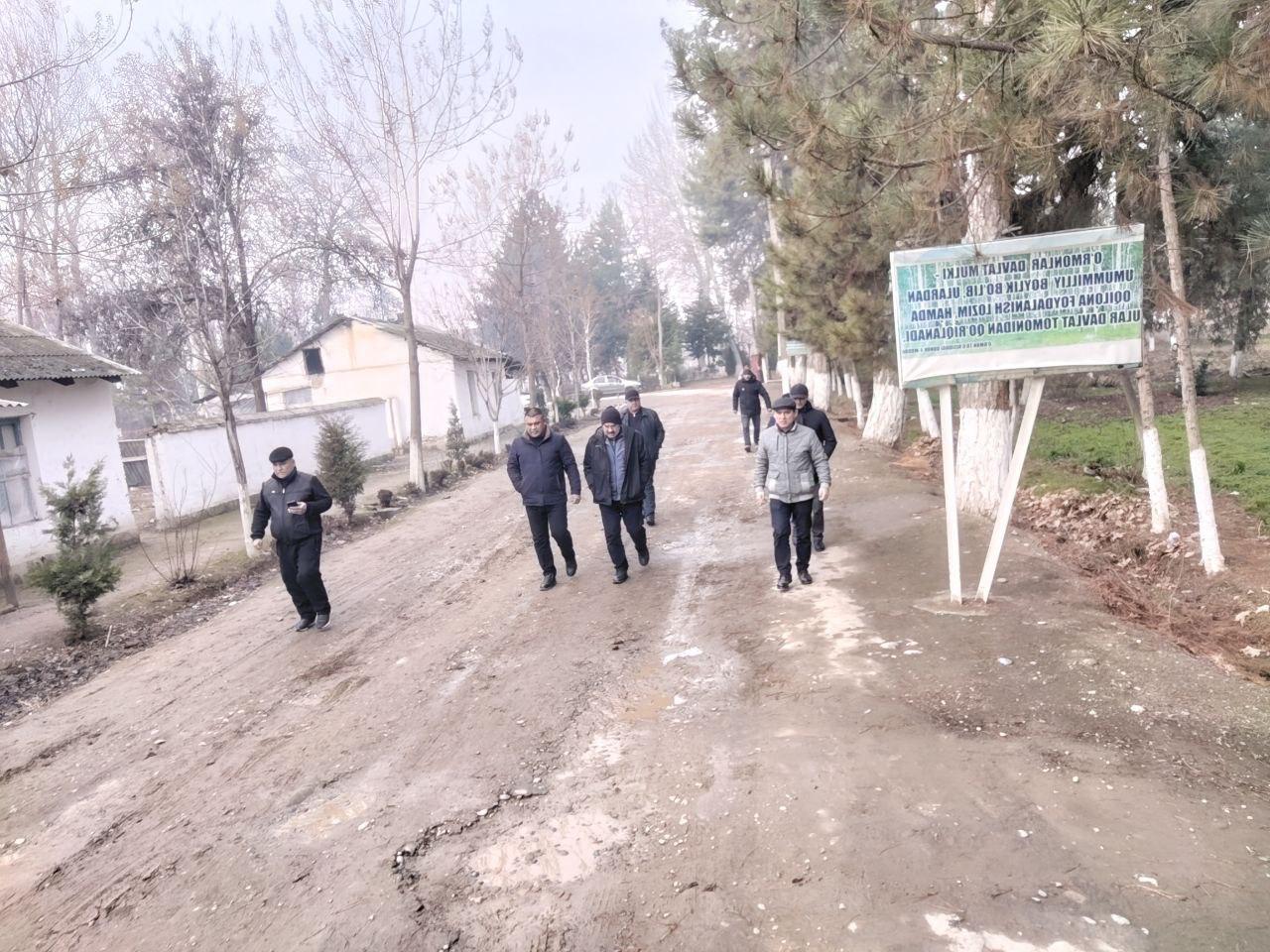
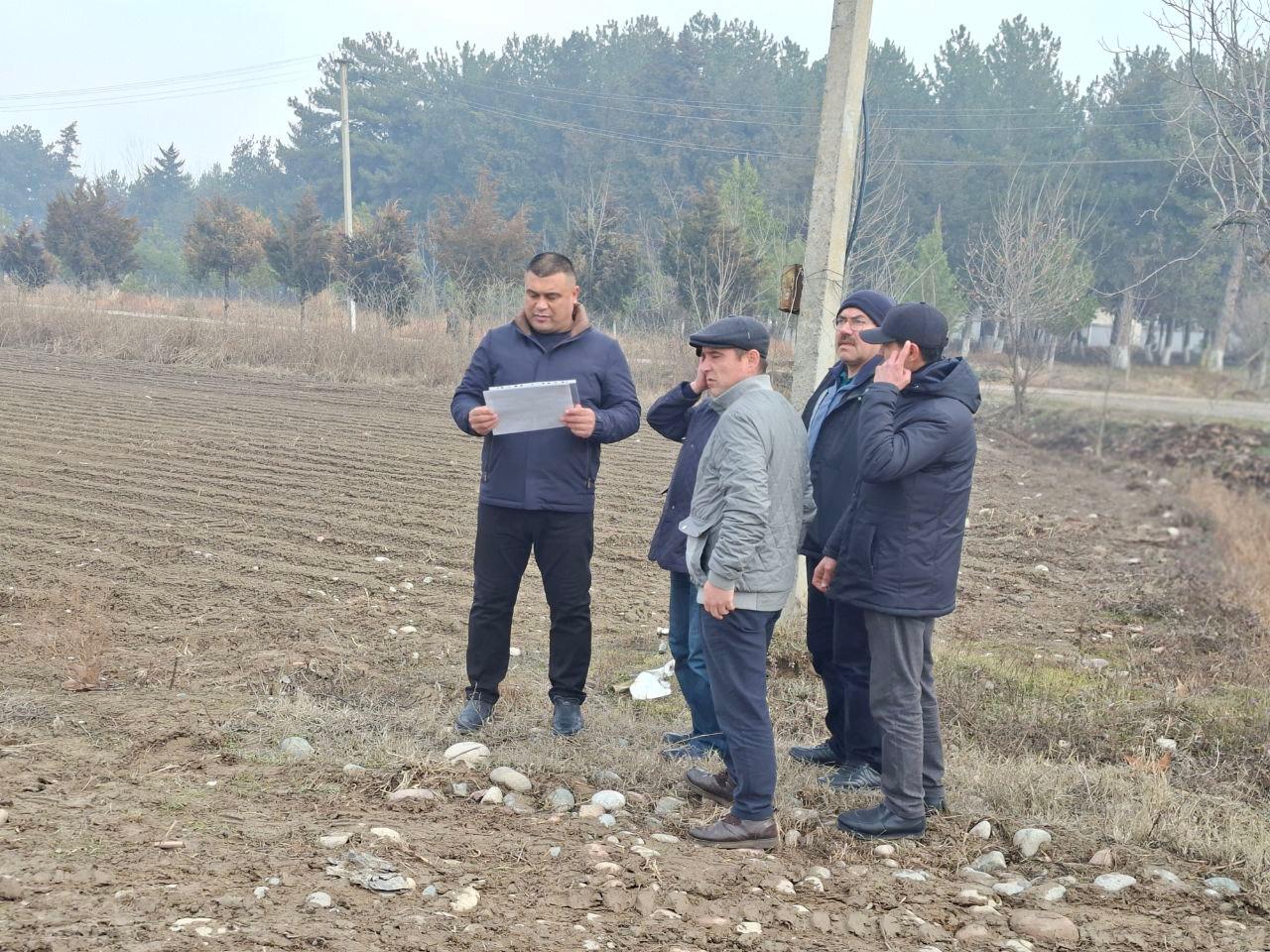
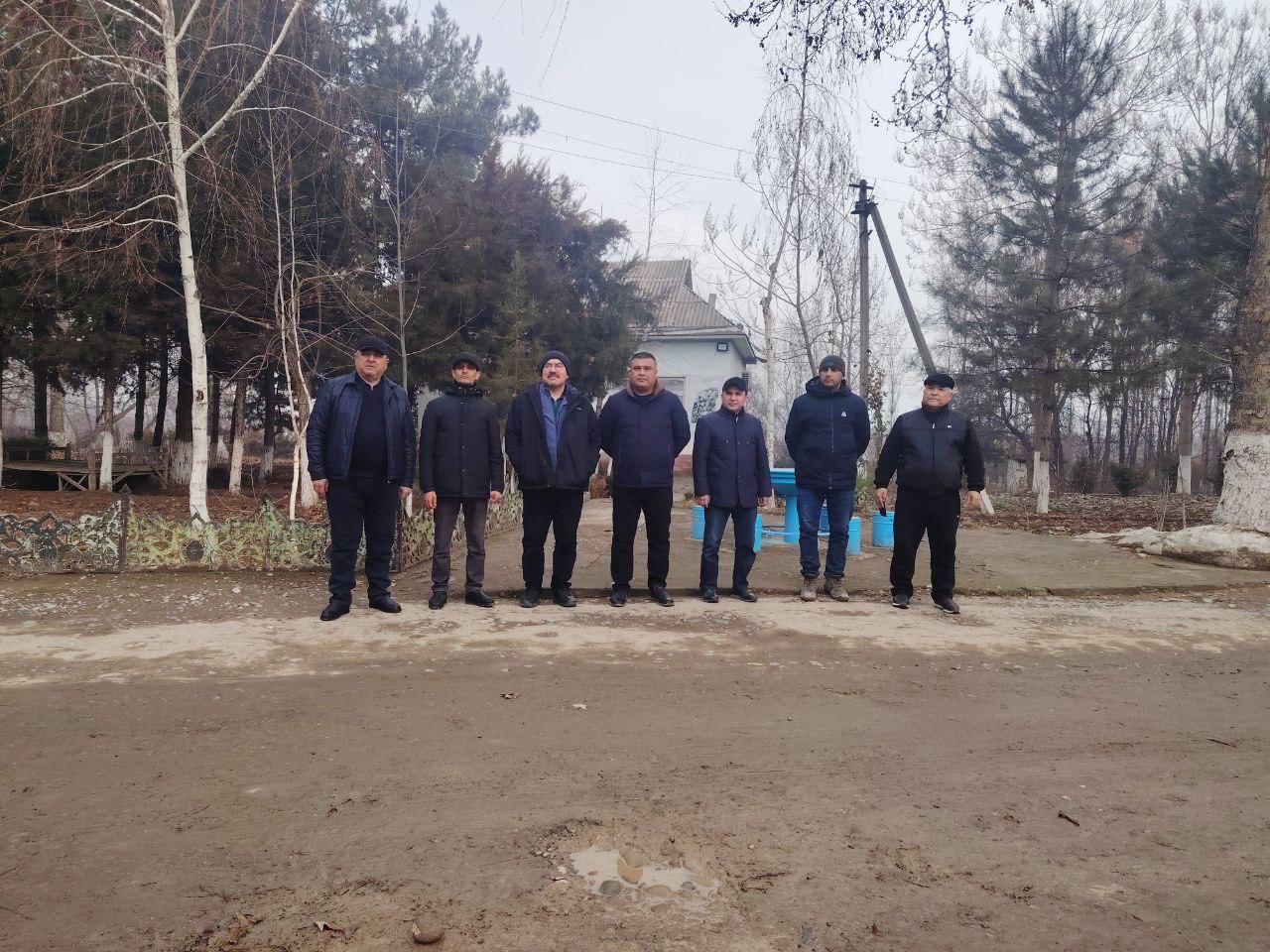
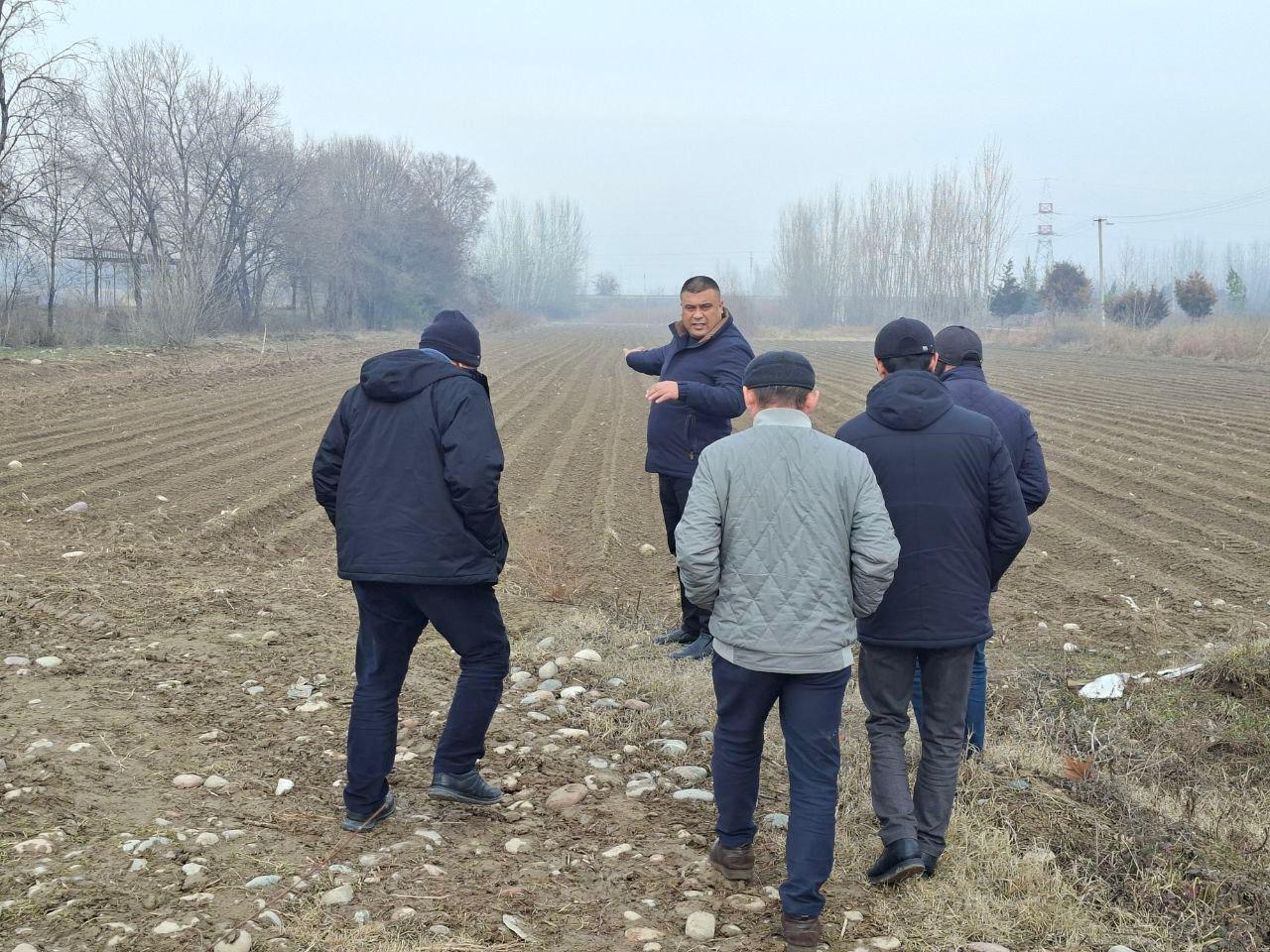
Within the scope of the RESILAND CA+ field mission to Namangan Region (Namangan viloyati), a site visit was conducted to the Namangan Forestry Nursery, located within the administrative boundaries of Uchqo‘rg‘on District.
The visit took place on Sunday, 8 February 2026, as part of the ongoing consultancy mission aimed at assessing the operational status and development potential of selected forestry nurseries under the RESILAND CA+ Nursery Framework.
The mission aimed to:
• assess the current operational status of the nursery
• evaluate existing infrastructure and production systems
• verify site-specific physical and environmental conditions
• review available layout and cadastral information
• exchange technical information with regional forestry representatives
During the visit, the delegation met with the following representatives involved in forestry and nursery activities in Namangan Region:
• Nazim Uzakov
Namangan Forestry / Uzbekistan RESILAND
📞 +998 97 374 11 83
• Ja’farov Maxamadxon Axmadxonovich
Namangan Regional Office Coordinator
📞 +998 98 771 24 77
• Voxobov Azizbek A’zamjonovich
Technical Specialist, Namangan Region
📞 +998 50 252 65 64
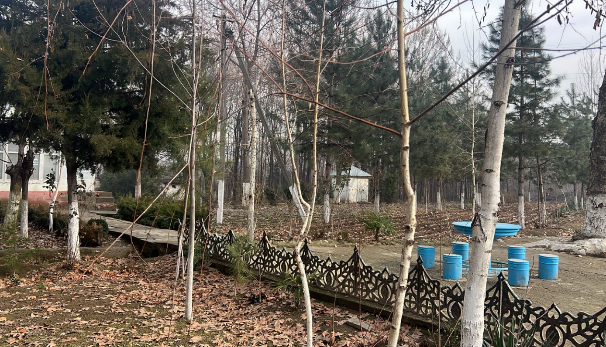
The representatives provided information regarding the Namangan Forestry Nursery, including its:
• geographic location within Uchqo‘rg‘on District
• approximate operational area
• existing planting blocks and nursery layout
• species currently produced or planted in the nursery
• irrigation arrangements serving the nursery plots
• current operational constraints and development needs
During the visit, the assessment was supported by field documentation and site verification, including:
• parcel boundaries and approximate nursery area
• internal access paths and planting block organization
• irrigation arrangements and nearby canal infrastructure
• existing operational structures and utility access
• general land-use characteristics of the surrounding landscape
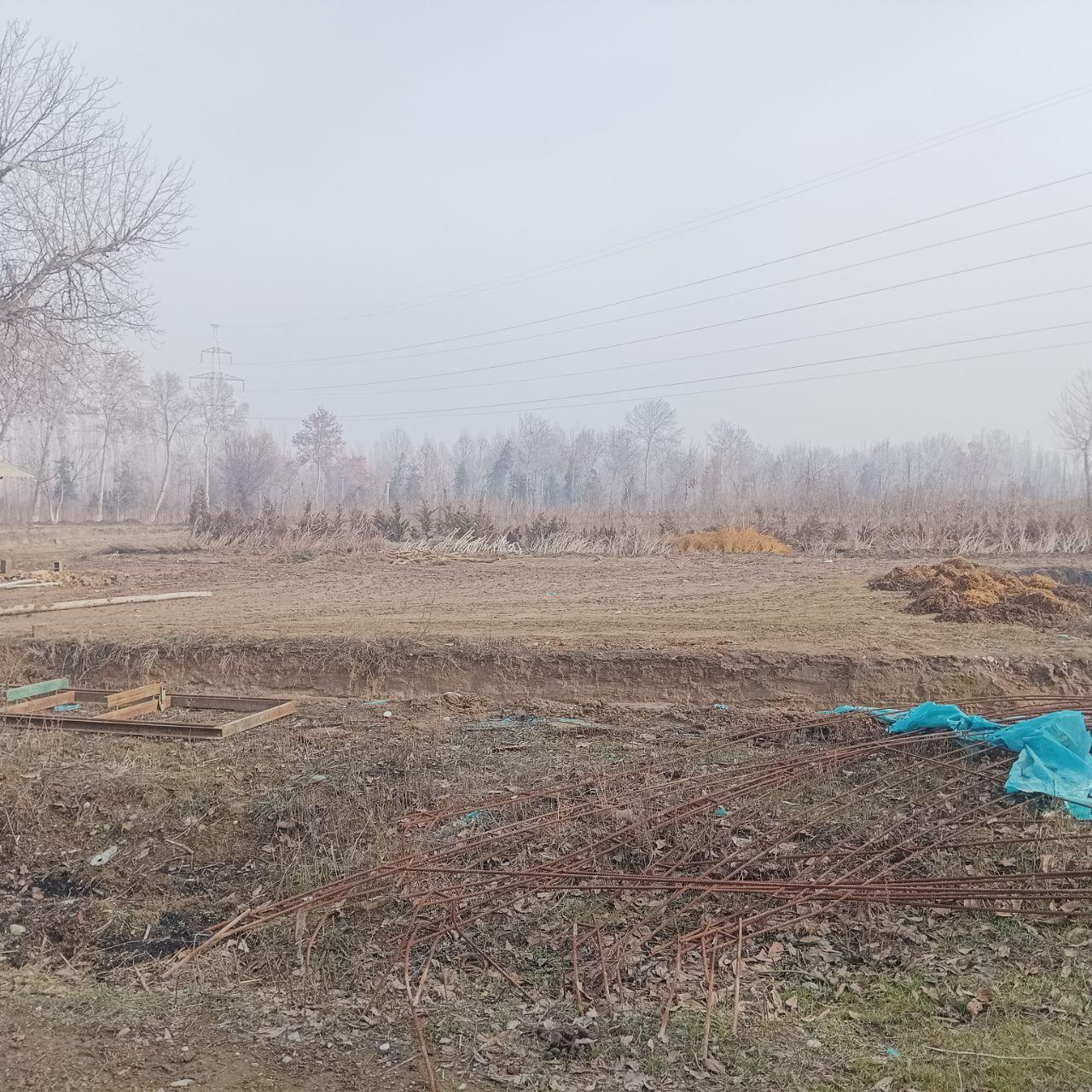
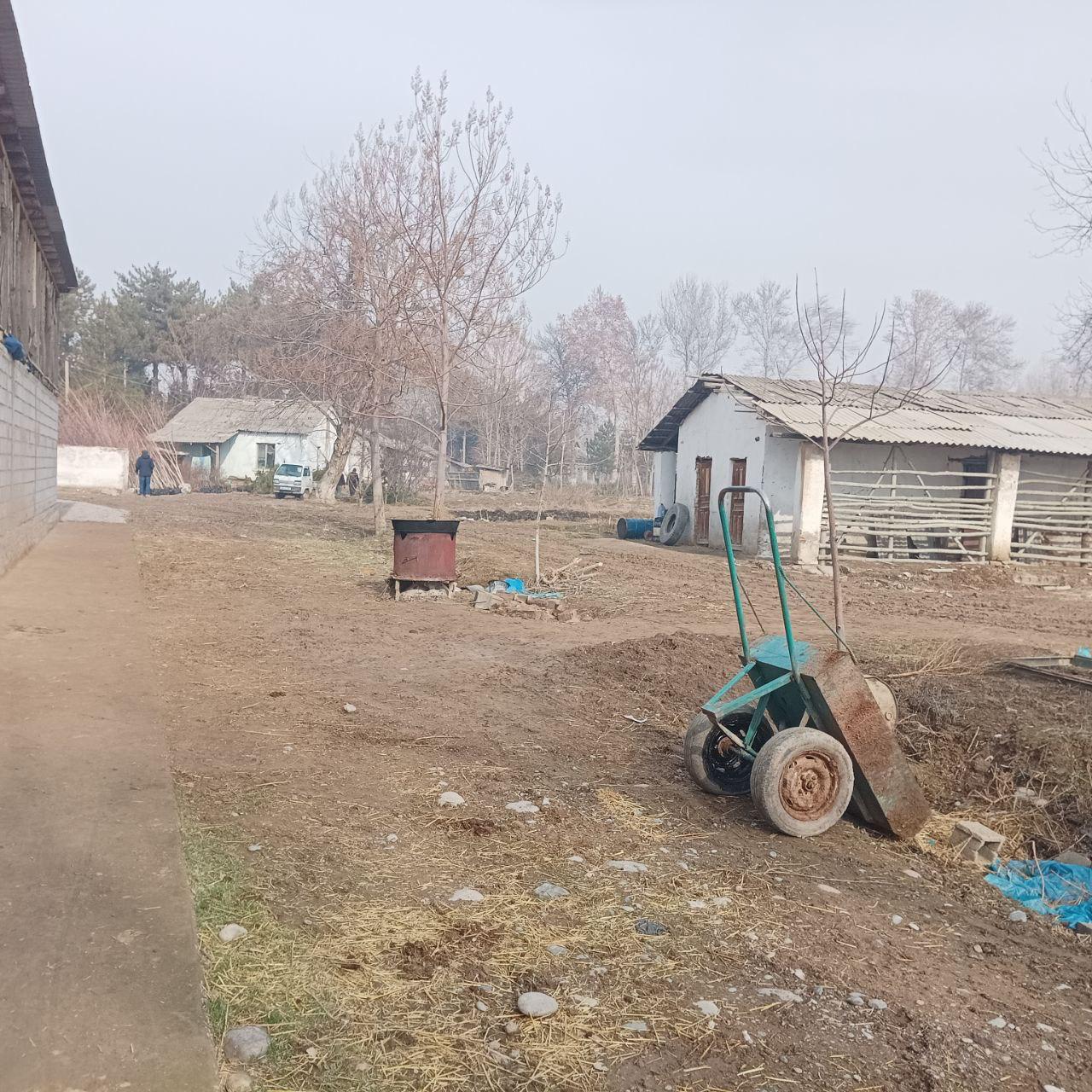
Field verification included direct observation of planting blocks, shelterbelt tree rows, soil surface conditions, irrigation arrangements, and internal dirt access roads within the nursery area.
The site visit confirmed that the Namangan Forestry Nursery is actively used as a planting and nursery area, although current infrastructure remains relatively basic and largely based on traditional open-field production techniques.
The nursery is located within the flat alluvial terrain of the Fergana Valley, surrounded by intensively cultivated agricultural land and rural infrastructure typical of irrigated valley landscapes.
Field observations indicate that the terrain exhibits very low slope gradients, which is favorable for structured nursery layout and mechanized operations. However, minor micro-topographic variations and uneven surface leveling are visible in certain areas.
In flat floodplain environments such as the Fergana Valley, such irregularities may contribute to:
• localized water stagnation
• uneven irrigation distribution
• soil surface crusting in compacted areas
Accordingly, precision land leveling and improved drainage planning should be considered key technical interventions for future nursery modernization.
Shelterbelt-style tree rows were observed along parts of the nursery boundary and within surrounding agricultural fields. These trees function as windbreak systems, providing:
• wind protection
• reduction of evapotranspiration
• microclimate stabilization for seedlings
The presence of these shelterbelts represents an important structural advantage and should be retained and integrated into future nursery layout planning.
Soil surface conditions indicate coarse-textured alluvial soils with visible gravel and stones, which are typical of Fergana Valley floodplain deposits. Such soils usually provide good permeability but relatively low moisture retention, requiring careful irrigation management and potential soil improvement measures.
Although no visible surface salinity was observed during the visit, laboratory soil testing remains necessary prior to detailed design and infrastructure planning. Recommended analyses include:
• soil pH
• electrical conductivity (EC)
• soil texture
• organic matter content
• infiltration rate
• nutrient profile
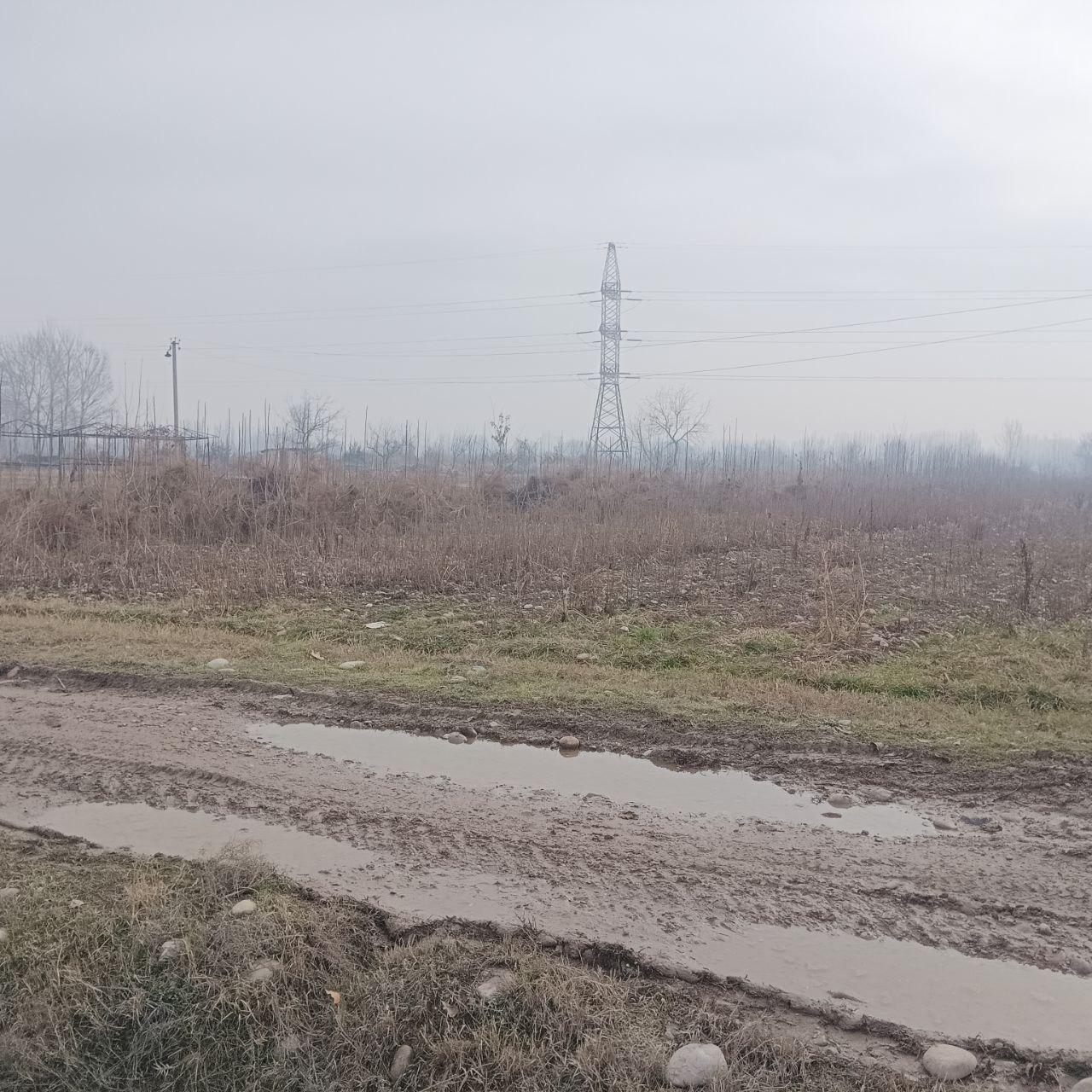
Access to the nursery is currently provided by unpaved agricultural roads, connecting the site with nearby rural settlements and farmland. While access conditions appear functional for routine activities, improvements to internal circulation and road stabilization may be required to support future mechanized nursery operations.
Nearby electricity infrastructure and utility lines suggest that electrical connectivity is available in the vicinity of the nursery, which could facilitate future infrastructure upgrades.
From a water management perspective, irrigation in the surrounding agricultural landscape is supported by canal networks associated with the Syr Darya basin irrigation system. Although the nursery currently relies on basic irrigation arrangements, modernization should consider the introduction of efficient irrigation technologies such as drip or micro-sprinkler systems.
In summary, the site presents several structural advantages:
• flat terrain suitable for mechanized nursery operations
• proximity to established irrigation infrastructure
• integration within an intensively managed agricultural landscape
• existing shelterbelt systems providing wind protection
• basic operational infrastructure and utility access
At the same time, several technical considerations were identified:
• uneven micro-topography affecting water distribution
• soil compaction and surface crusting in some areas
• coarse alluvial soil structure with limited moisture retention
• basic irrigation infrastructure requiring modernization
Overall, the field mission confirmed that the Namangan Forestry Nursery is technically suitable for upgrading and modernization. With appropriate interventions—including precision land leveling, improved irrigation systems, soil improvement measures, and structured nursery layout planning—the site can be developed into an efficient regional nursery facility supporting forestry planting and landscape restoration activities across the Fergana Valley under the RESILAND CA+ framework.
1.4.2 Reviewing Existing Nursery Design
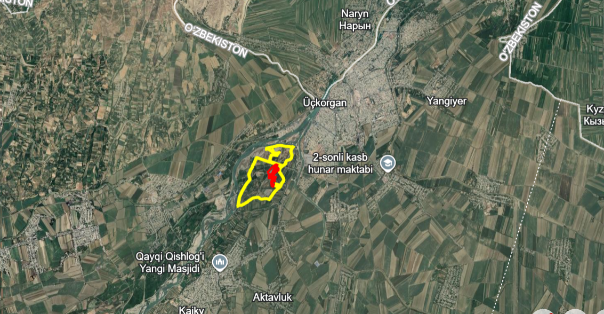
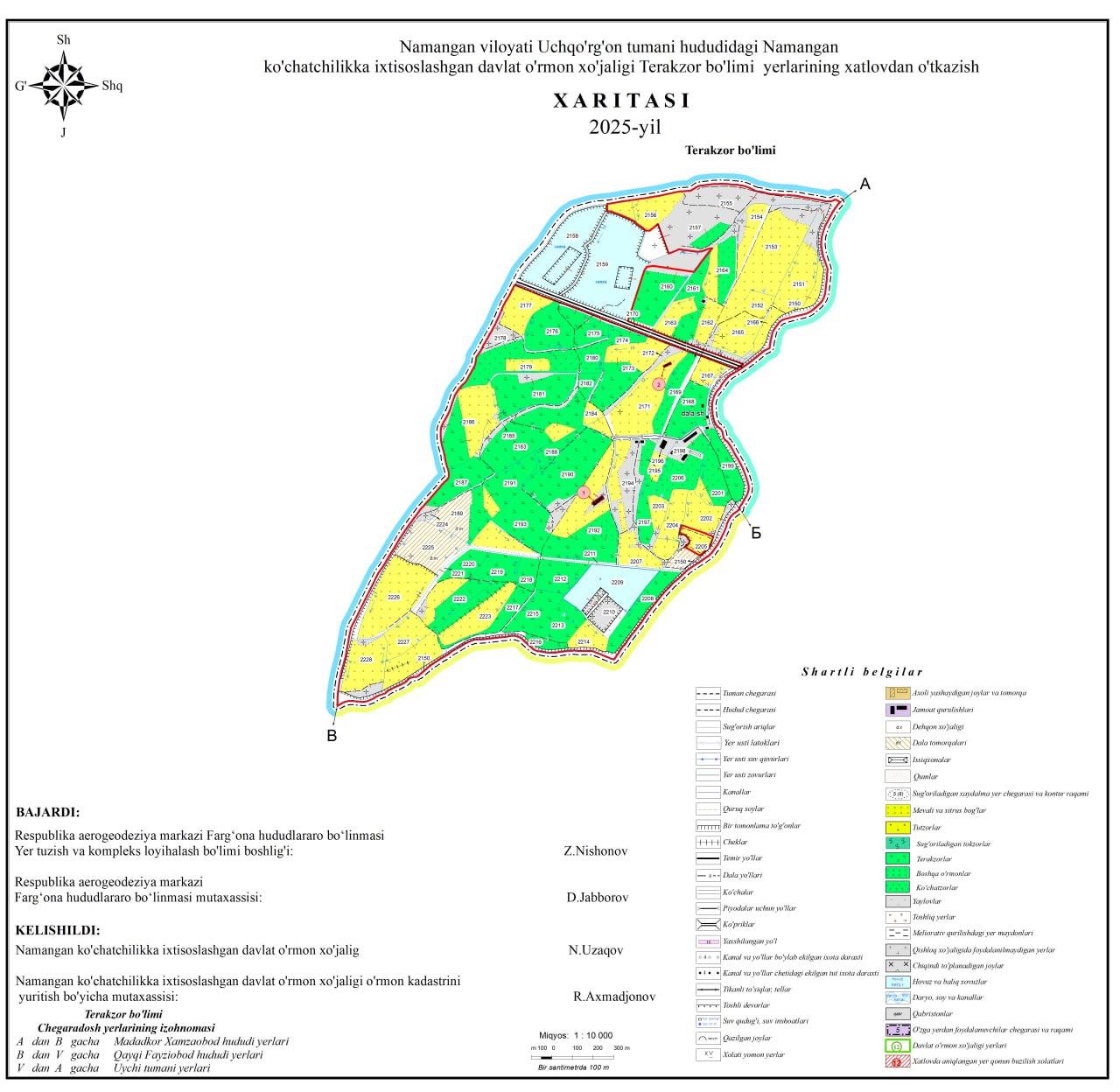
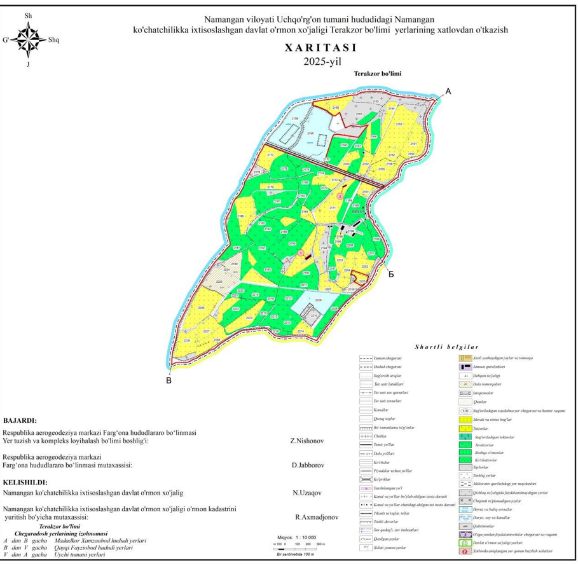
The spatial framework for nursery development in Namangan Region is defined by the Terakzor Division of the Namangan State Forestry Enterprise, located in Uchqo‘rg‘on District within the irrigated landscape of the Fergana Valley (Syr Darya basin). The division boundary is documented in the 2025 cadastral land-inventory map (“Terakzor bo‘limi yerlarining xatlovdan o‘tkazish xaritasi”, scale 1:10,000), prepared by the Republic Aerogeodesy Center – Fergana Interregional Branch and approved by the Namangan Forestry Enterprise. This map delineates the full management territory of the Terakzor Division and subdivides it into numbered compartments (predominantly 21xx–22xx series) used for forestry administration and land management.
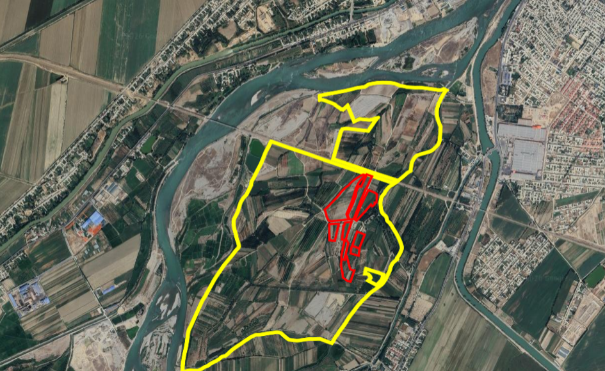
Integration of the cadastral map with Google Earth spatial data (KMZ layer: “bmt 10 gektar”) clarifies the relationship between the broader forestry estate and the specific project intervention area. The yellow boundary visible in satellite imagery corresponds to the Terakzor Division territory, while the red polygons represent the parcels allocated for nursery development.
Based on the cadastral boundary interpretation and satellite measurements, the Terakzor Division covers approximately 300 hectares of forestry land within the Uchqo‘rg‘on landscape. This territory contains a mixture of land uses typical for Fergana Valley forestry enterprises, including poplar plantations (terakzor), shelterbelts (ihotazor), nursery plots (ko‘chatxonalar), orchard and vineyard parcels, irrigation infrastructure, and some unused land areas. The mosaic structure reflects the integrated forestry–agriculture management model common in irrigated valley environments.
Within this broader forestry territory, a specific block of approximately 10 hectares has been allocated for the establishment or modernization of a forest nursery, as indicated by the KMZ dataset. The nursery area consists of several adjacent cadastral parcels located in the central portion of the Terakzor Division, forming a consolidated operational site for seedling production.
In spatial terms, the relationship between the two land units can therefore be summarized as follows:
- Total area of Terakzor Division: approximately 300 hectares of state forestry land under the Namangan Forestry Enterprise.
- Area allocated for nursery development: approximately 10 hectares, identified through the KMZ project layer.
Thus, the nursery site represents roughly 3–4 percent of the total Terakzor Division territory, while the remaining area continues to function primarily as plantation forestry, shelterbelt systems, and associated land uses.
From a planning perspective, this configuration provides several advantages. The nursery is embedded within an existing forestry management landscape, allowing integration with plantation operations and shelterbelt networks. At the same time, the relatively small share of land allocated for nursery production ensures that forestry plantation functions within the Terakzor Division remain intact, while still providing sufficient space for modern nursery infrastructure and future expansion if needed.
Satellite imagery further confirms that the site is located within a flat irrigated agricultural plain, surrounded by fields, shelterbelts, and irrigation canals connected to the broader Syr Darya irrigation system. These conditions are generally favorable for nursery development, provided that modern irrigation systems, soil preparation, and drainage management are incorporated into the design.
In conclusion, the combined interpretation of the 2025 cadastral map and Google Earth spatial data demonstrates that the Terakzor Division constitutes a ~300-hectare forestry management unit, within which a 10-hectare area has been specifically designated for nursery development. This spatial arrangement provides a clear administrative and land-use framework for planning the modernization of nursery production under regional forestry and landscape restoration programs.
1.4.3 Water Resources and Hydrogeological Feasibility
Field observations indicate that the nursery area is situated within a well-developed irrigation landscape, where agricultural production is supported by an extensive network of irrigation canals supplying water to surrounding farmland. Although the main Syr Darya river does not pass directly through the nursery area, the regional canal infrastructure provides a reliable surface-water source for agricultural and forestry activities across the valley.
This irrigation-supported setting offers a significant operational advantage for nursery development, as it enables controlled water abstraction and distribution for nursery production systems. With appropriate infrastructure improvements, the site could support modern high-efficiency irrigation technologies, such as drip or micro-sprinkler systems, provided that suitable intake control, filtration, and distribution mechanisms are installed.
At the same time, the flat floodplain terrain typical of the Fergana Valley introduces several hydro-environmental considerations. Low slope gradients may increase the risk of localized water accumulation in micro-depressions, particularly under intensive irrigation conditions. In addition, groundwater levels may fluctuate in response to canal seepage and seasonal irrigation patterns.
For this reason, sustainable upgrading of the Namangan nursery should incorporate several key water-management measures, including:
(i) engineered surface drainage and careful land leveling to ensure uniform water distribution;
(ii) irrigation scheduling and zonal management to prevent over-irrigation;
(iii) periodic monitoring of irrigation water quality parameters such as electrical conductivity (EC), pH, and salinity; and
(iv) installation of properly designed intake and filtration systems to ensure long-term performance of pressurized irrigation infrastructure.
With these measures in place, the irrigation-supported environment of the Fergana Valley can provide a reliable water resource base for efficient and climate-resilient nursery production.
1.4.4 Energy Infrastructure and Accessibility
Electricity supply is available through the regional distribution network, enabling the operation of essential nursery infrastructure, including:
• irrigation pumping systems connected to nearby irrigation canal networks
• nursery service buildings and operational facilities
• potential greenhouse structures (issiqxona) for controlled seedling production
• lighting, storage, and administrative functions
Reliable electricity supply is particularly important during the main growing season, when irrigation demand increases due to warm summer temperatures and limited natural precipitation typical of the continental climate of the Fergana Valley.
Accessibility to the nursery is facilitated by local agricultural roads connecting the site with surrounding rural settlements and the broader road network of Uchqo‘rg‘on District and Namangan Region. The relatively flat terrain of the Fergana Valley plains supports year-round vehicle access for nursery staff, transport of equipment, and distribution of planting material.
The presence of nearby irrigation canals forming part of the Syr Darya basin irrigation system further enhances operational feasibility by providing access to surface water resources required for nursery irrigation systems. Effective operation of pumping equipment and irrigation infrastructure will depend on stable electrical supply and proper maintenance of water intake structures.
No major geographical or topographical constraints to nursery modernization were identified during the field assessment. The flat terrain, existing basic infrastructure, access to irrigation water, and regional electricity supply provide a favorable foundation for upgrading the Namangan nursery into a more efficient and climate-resilient forestry production facility supporting restoration and greening activities within the Fergana Valley.
1.4.5 Integrated Strategic Conclusion of the Field Assessment
The field mission conducted to the Namangan Forestry Nursery located in Uchqo‘rg‘on District, Namangan Region, confirms that the site represents a technically viable and strategically important location for the upgrading and modernization of a state forestry nursery within the framework of the Uzbekistan Resilient Landscapes Restoration Project (RESILAND CA+).
The field visit took place on Sunday, 8 February 2026, during which the delegation inspected the nursery site and surrounding land parcels together with representatives of the regional forestry administration, including:
• Nazim Uzakov – Namangan Forestry / Uzbekistan RESILAND
• Ja’farov Maxamadxon Axmadxonovich – Namangan Regional Office Coordinator
• Voxobov Azizbek A’zamjonovich – Technical Specialist, Namangan Region
During the mission, discussions were held regarding the current operational status of the nursery, land availability for future expansion, irrigation conditions, and the potential development of a modernized forestry nursery within the region.
Direct field observations and consultations confirmed that the nursery area currently operates under traditional open-field nursery production practices, without modern greenhouse systems or containerized seedling production facilities. While the existing system supports basic seedling cultivation, it does not yet meet the technical standards required for climate-resilient nursery production envisioned under the RESILAND CA+ framework.
Nevertheless, the site presents several structural advantages that make it highly suitable for rehabilitation and modernization.
The nursery is located within the central plain of the Fergana Valley, at approximately 41.095428° N – 72.053322° E and an elevation of about 480 meters above sea level. The terrain is generally flat with minimal slope variation, creating favorable conditions for mechanized nursery operations, structured production zoning, and the installation of irrigation infrastructure with limited earthworks.
The surrounding landscape consists predominantly of intensively cultivated agricultural land, interspersed with shelterbelt plantings and rural infrastructure typical of irrigated farming systems in the Fergana Valley. The flat terrain facilitates easy access for machinery, transportation of planting materials, and potential future expansion of nursery operations.
Field inspection confirmed the presence of established pine shelterbelt stands surrounding parts of the nursery area. These mature trees serve as important windbreak structures, helping to reduce wind exposure across open production fields and contributing to microclimatic stabilization. Such shelterbelts represent a valuable structural asset that should be preserved and integrated into the future nursery layout.
However, several technical constraints were also identified during the site assessment. These include:
• Limited modern nursery infrastructure
• Basic internal access roads with seasonal surface deterioration
• Absence of structured irrigation distribution systems within planting blocks
• Soil surface compaction in some production areas
• Lack of dedicated greenhouse or containerized production facilities
In addition, field observations of the proposed expansion parcels indicate coarse-textured soils with visible gravel and stone content, which may influence water retention capacity and seedling establishment. Detailed soil laboratory testing will therefore be required to determine soil texture, fertility status, infiltration characteristics, and potential limitations for nursery production.
The site benefits from the presence of regional electricity infrastructure and nearby irrigation systems serving the surrounding agricultural landscape, which can support future irrigation pumping and nursery operations once modern infrastructure is installed.
Considering the environmental conditions of the Fergana Valley, characterized by continental climate patterns with warm summers, cold winters, and limited natural precipitation, irrigation will remain a critical operational component for nursery production.
Despite the current limitations, the field mission confirms that the Namangan nursery area possesses several key advantages for future development:
• Flat terrain suitable for mechanized operations
• Existing shelterbelt systems providing microclimatic protection
• Access to irrigation infrastructure typical of the Fergana Valley
• Availability of land parcels suitable for nursery expansion
• Proximity to Namangan city and regional transport networks
• Existing institutional support from the regional forestry administration
With appropriate engineering and operational improvements—including modern irrigation systems, greenhouse or containerized production facilities, improved internal circulation infrastructure, soil management programs, and integrated nursery zoning—the site has strong potential to evolve into a modern climate-resilient forestry nursery.
Such modernization would enable the Namangan nursery to serve as a regional production and support center for afforestation, landscape restoration, and greening initiatives across the Fergana Valley, in line with the objectives of the RESILAND CA+ program and Uzbekistan’s national landscape restoration strategy.
1.5 Conclusion of First Assessment & Feasibility Report
This First Assessment and Feasibility Report evaluates the proposed establishment and development of a forestry nursery within the Terakzor Division of the Namangan State Forestry Enterprise, located in Uchqo‘rg‘on District, Namangan Region, under the framework of the Uzbekistan Resilient Landscapes Restoration Project (RESILAND CA+).
The assessment examined the strategic relevance of the site, environmental and climatic conditions, spatial land allocation, operational feasibility, and long-term development potential of the nursery area, based on field observations, consultations with local forestry representatives, cadastral documentation, and satellite imagery analysis.
According to the official land inventory map prepared in 2025 for the Terakzor Division, the forestry enterprise manages a contiguous forestry territory of approximately 300 hectares (ha). This area forms an integrated forestry landscape consisting primarily of:
- poplar plantations (terakzor)
- shelterbelt systems (ihotazor)
- plantation forestry compartments
- agricultural interface areas
- supporting forestry infrastructure
Such a land-use mosaic is typical of forestry enterprises operating within the irrigated agricultural landscape of the Fergana Valley, where forestry activities are integrated with agricultural production systems.
Within this broader forestry estate, a dedicated area of approximately 10 hectares has been identified and allocated for nursery establishment and development. Spatial analysis of the project KMZ layer (“bmt 10 gektar”), integrated with satellite imagery, confirms that this nursery area consists of several adjacent parcels forming a consolidated production block located within the central part of the Terakzor Division.
In spatial terms, the nursery area represents approximately 3–4 percent of the total forestry land managed within the Terakzor Division, allowing nursery operations to function as part of the forestry system while maintaining the existing plantation and shelterbelt functions of the surrounding territory.
From a strategic perspective, the site demonstrates significant potential for future expansion beyond the initial nursery footprint. The surrounding lands within the Terakzor Division remain largely suitable for forestry use and include plantation plots and open parcels that could be gradually integrated into nursery infrastructure if operational demand increases. This spatial flexibility provides an opportunity for the nursery to evolve through phased development into a larger regional nursery center serving the eastern Fergana Valley.
The geographic location of the site further strengthens its strategic importance. Namangan Region occupies a central position within the eastern part of the Fergana Valley, one of the most densely populated and agriculturally productive regions of Uzbekistan. The nursery’s proximity to Namangan city and surrounding districts creates favorable conditions for the efficient distribution of planting material to afforestation projects, shelterbelt systems, agroforestry initiatives, and urban greening programs throughout the region.
Beyond its strategic location, the site also benefits from significant infrastructure and logistical advantages that support nursery development. The area is situated within the well-developed irrigation network of the Fergana Valley, connected to the broader Syr Darya basin water management system. The presence of irrigation canals and agricultural water infrastructure provides a reliable source of surface water necessary for nursery operations, which is particularly important in a continental climate characterized by limited natural precipitation.
The site also benefits from existing rural infrastructure typical of irrigated agricultural landscapes, including electricity supply and local road networks. The availability of electrical infrastructure enables the operation of irrigation pumping systems, greenhouse facilities, storage infrastructure, and other operational components of a modern nursery, while the existing road network facilitates the transport of equipment, nursery inputs, and planting material.
These infrastructural conditions significantly reduce the technical and financial barriers associated with nursery establishment and create a favorable environment for the development of a modern forestry nursery with scalable production capacity.
From a technical perspective, the site possesses several structural characteristics supporting long-term nursery operations. These include:
- flat terrain suitable for mechanized nursery operations and structured production layout
- access to irrigation water through the regional canal network
- integration within an existing forestry management area (Terakzor Division)
- accessibility through regional road infrastructure
- availability of electricity for operational infrastructure
Together, these factors provide a strong operational foundation for nursery establishment without requiring major land restructuring or relocation.
At the same time, the assessment identifies several technical aspects that should be addressed during the design phase to ensure long-term sustainability of nursery production. These include soil management within intensively irrigated valley soils, drainage planning in flat terrain, and the optimization of irrigation efficiency under conditions of increasing climate variability. Such challenges are typical of irrigated agricultural landscapes and can be effectively addressed through appropriate engineering design and improved nursery management practices.
To ensure the successful development of the nursery as a modern, climate-resilient forestry production facility, several technical measures should be incorporated during the next stage of project implementation. These include:
- installation of high-efficiency irrigation systems (drip or micro-sprinkler technologies)
- implementation of precision land leveling and structured drainage systems
- introduction of containerized seedling production systems
- integration of wind protection and shelterbelt elements to stabilize the nursery microclimate
- establishment of soil and water quality monitoring systems
Species selection strategies should prioritize fast-growing plantation species, shelterbelt species, and agroforestry-compatible trees adapted to irrigated valley environments, enabling the nursery to support both landscape restoration and agricultural productivity enhancement across the Fergana Valley.
Overall, the findings of this assessment confirm that the Terakzor Division nursery site in Namangan is technically suitable for development as a modern forestry nursery under the RESILAND CA+ framework. The presence of a large forestry management area of approximately 300 hectares combined with a dedicated 10-hectare nursery development site provides a solid spatial and institutional foundation for long-term nursery operations.
Importantly, the availability of surrounding land suitable for future expansion significantly enhances the strategic value of the site. With phased development and targeted investments in irrigation infrastructure, modern nursery production technologies, and operational facilities, the site has the potential to evolve into a regional forestry nursery center serving Namangan Region and the wider Fergana Valley landscape restoration program.
The completion of this First Assessment and Feasibility Report therefore establishes the technical, spatial, and strategic foundation required to proceed to the next stage of the consultancy process. Subject to approval by the RESILAND CA+ Project Implementation Unit (PIU), the project will advance to Phase 5 – Nursery Design, during which detailed engineering designs, operational layouts, and technical specifications for the Namangan Forestry Nursery will be prepared.